• Episodes
  • Festival Coverage
  • Video Essays
  • Writing
Menu

Cinematary

where film criticism goes to die
  • Episodes
  • Festival Coverage
  • Video Essays
  • Writing

Neptune Frost (2021) by Saul Williams, Anisia Uzeyman

October 7, 2021

Review by Zach Dennis and Andrew Swafford

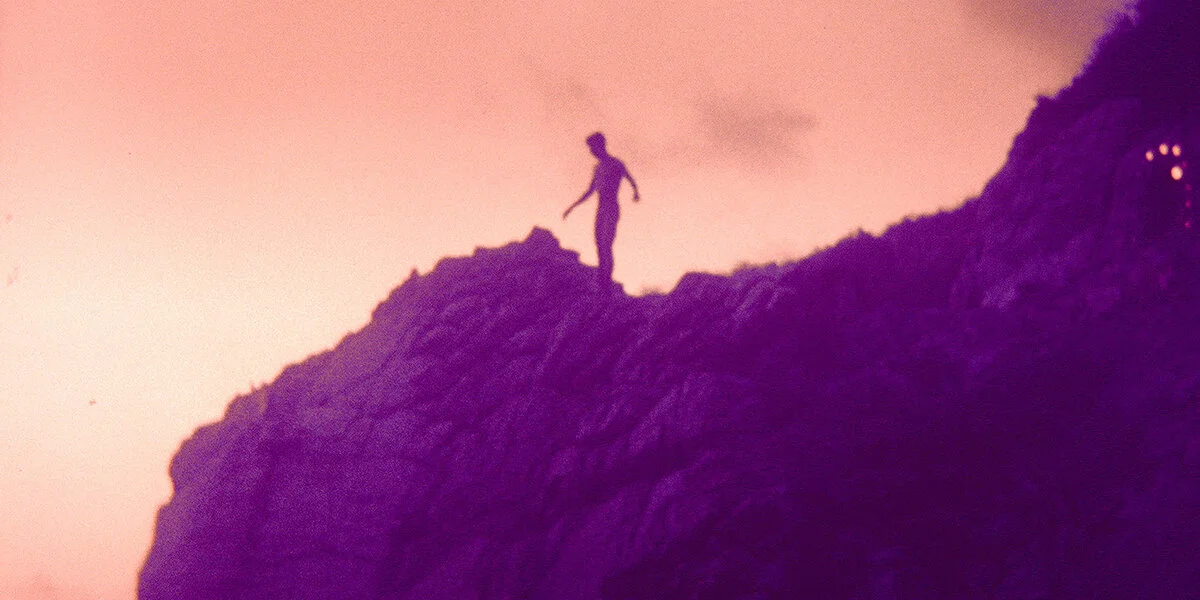
Andrew: To talk about Neptune Frost is to knowingly or unknowingly talk about Saul Williams, a multi-hyphenate wordsmith who got his start as a slam poet before acting in several films, publishing multiple books of poetry, becoming a critically acclaimed rapper, and has now co-directed his own film. He’s working with a co-director – the relatively unknown Rwandan actress and playwright Anisia Uzeyman – but Neptune Frost feels like it belongs entirely to Saul Williams. Most, if not all, of the music in the film comes from Williams’s last two albums (2016’s MartyrLoserKing and 2019’s Encrypted and Vulnerable), and the storyline is the realization of an underlying concept tying those two albums together, which involves gender-fluid African hackers rising up against their oppressors as they are exploited by Western industrialism in the extraction of Coltan, a rare mineral that much of the world has become completely dependent on due to its use in the manufacturing of mobile phones and laptops. 

You’d be forgiven for not being able to figure out that’s the premise, however, due to the obtuse  and elliptical plotting of Neptune Frost. The characters, when they speak to each other, speak in quasi-mystical language that doesn’t always hold together logically – if its holding the audience’s attention at all. And despite being grounded in a very material political situation that Saul Williams cares deeply about, the characters of this world exist in a parallel universe where computers and the internet function very differently. The citizens of Neptune Frost have internet-enabled devices coming out of their arms or wound up in their hair, which is all very cool to look at and is part of a grander tradition of afrofuturism, but the worldbuilding is yet another layer of narrative that is being held at arms length from the viewer. 

To be blunt, I was deeply lost watching Neptune Frost. It could be due to my own unintelligence or inattentiveness or it could have been my cultural ignorance as a White American watching a film set in a world that has been systematically hidden from my own due to my world’s sinister reliance on its continued exploitation. But as someone who has been listening to Saul Williams for over 15 years, I have another theory: this is Saul Williams’s version of Mamma Mia. And by “this is Saul Williams’s version of Mamma Mia,” I mean that it is an attempt to retrofit a logical narrative reality onto a collection of songs originally written in abstract/poetic language, however conceptual. Poetry, by its very nature, can be free-associative and assumed to be metaphorical, whereas narrative films are weighed down by a certain level of foundational concrete reality. They don’t have to be, of course, but Neptune Frost makes the bizarre decision to weave a narrative out of individual Saul Williams lyrics, even putting them in the mouths of characters in dialogue with one another, and it just doesn’t make for a cohesive or comprehensible film-world. 

The presence of the music in the film didn’t really help carry me through it, either, as none of it is performed by Williams himself and very little of it is performed in its original language. As a result, the music lacks that commanding presence that Williams brings to his albums and the auditory wordplay can’t really be enjoyed on an aesthetic level by his primary fanbase of English-speakers. The beats and melodies do get more engaging in the second half, however, as the music shifts from being pulled primarily from Encrypted and Vulnerable (which I found to be an inscrutable and unsatisfying record in its insistence in relying on spoken word over rap) to being pulled from MartyrLoserKing (which absolutely rips). I have no idea why Williams decided to structure his story in this way – working backwards through his last two albums – but it makes the film feel somewhat off-balance due to the two halves’ stark stylistic differences.

The film’s visual language felt very low-budget and lackadaisical to me, too, despite the futuristic concept and occasional montage of digital effects collapsing in on each other. But Zach, I know that you vibed a lot more with the aesthetics of this movie, so I’m curious: what worked for you about it?

Zach: I don’t know if this makes all that much sense, but to me, this film just kind of vibrated throughout. I think I was very forgiving of Neptune Frost constantly feeling a bit like nothing I’d ever seen before. I said as much when I gave an instant reaction after watching the film, and while I may not be incredibly high on it overall, I think that statement still holds truth.

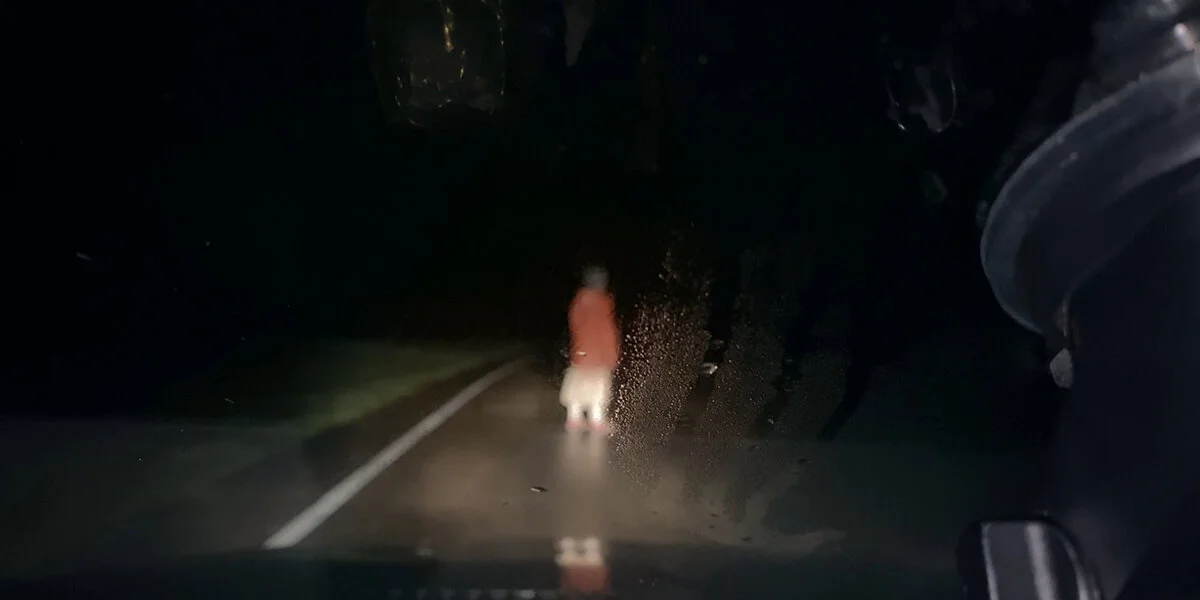
You think about some of the design with some of the characters, specifically the mystical being they speak with that has the wheels on his head. That might be something that doesn’t lead to much, as you’re describing, but to me, it was at least visually evocative and held my attention in place.

It does drag, though. You get these very spiritual moments where it seems like our main character is going deeper into this world and then we muddle about for a while before a new piece starts playing. I agree that I felt lost, but I also didn’t find it so far off other projects from musicians that are similar. Not that they’re really the same, but think of something like David Byrnes’s American Utopia from last year. I think Byrne is working a bit like Saul Williams in that film where there’s a slim narrative connecting one piece to another, but the whole concept is really just a way to experience (or re-experience) his career work in a different space than before (in that case, more of a interactive theatrical setting rather than a more traditional concert one).

I think that’s one way to view Neptune Frost: as an experiment in experience by Williams, and a reason to re-purpose some of his work within a new form – but whether that’s successful or not is a different story.

Tags tiff2021
Comment
Dear Chantal by Nicolás Pereda

Dear Chantal by Nicolás Pereda

Wavelengths: Present, Tense (2021) by Various Filmmakers

October 7, 2021

Review by Zach Dennis and Andrew Swafford

Andrew: Wavelengths avant-garde shorts have been a highlight of attending TIFF for the past few years, and this program (offered virtually so that I could watch while being stranded in Tennessee!) was no exception. I was astounded by the new work presented by familiar names Michael Robinson and Peter Tscherkassky and fascinated by filmmakers who hadn’t been on my radar before, especially Daïchi Saïto and Kim Min-jung. 

Taken together, one thing I found surprising about this set of shorts was the unusual amount of text and narration that accompanied the image and sound, and I imagine that was one of the program’s unifying ideas, alongside the idea of presentness and pastness evoked by its title. Two years back, I noted that Sky Hopinka’s Fainting Spells did some really interesting things with scrolling text on the top and bottom of the frame that ended up feeling like sprockets running across a film strip, and I feel that similar games were being played with words here in a film form more commonly associated with silence.

‘earthearthearth’ by Daïchi Saïto

‘earthearthearth’ by Daïchi Saïto

Two films in the program, Nicolás Pereda’s Dear Chantal and Kim Min-jung’s The Red Filter Is Withdrawn., were both constructed around written texts associated with famous experimental filmmakers. 

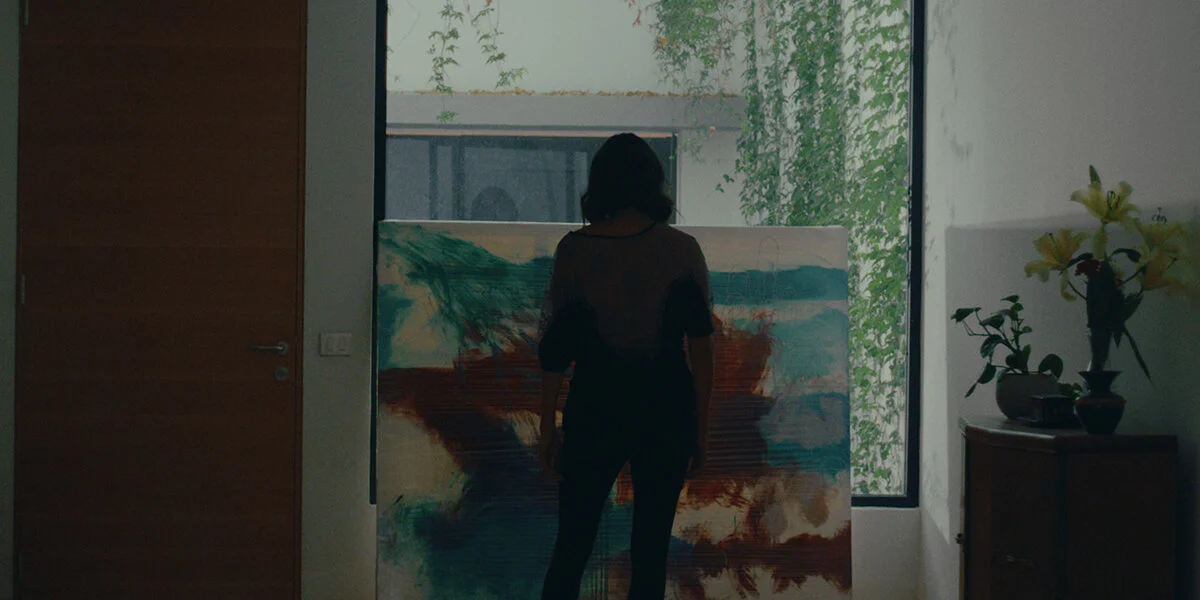
Pereda’s film, which visually consisted of Pereda herself decorating and cleaning up a stylish loft, was accompanied by a reading of letters penned to the Belgian filmmaker Chantal Akerman as she prepared to rent an apartment from someone who was not-so-subtly enamoured with her work. The decision to include these narrated letters, and to only include Chantal’s incoming letters, will read to Akerman fans as an obvious reference to News From Home, which is carried by letters Akerman recieved from her mother while living in New York. This connection of three dots – from Akerman’s mother, to Akerman’s temporary leaser, to Pereda’s own experience of nesting – makes for a tender, communal rumination on the spaces we temporarily inhabit throughout our lives. I loved the overhead shot of Pereda cleaning fallen leaves off of the sky-light in her ceiling. 

Kim Min-jung’s The Red Filter Is Withdrawn., on the other hand, is narrated by a lecture by Hollis Frampton, read in Korean over images of the natural landscape angled to look like frames and windows. In the lecture, Frampton talks about color theory, specifically the false conception that individual colors like red are more colorful than white, which is in reality a combination of all colors and therefore the most brilliant color of all. As Frampton’s lecture develops, Kim plays with the filter on her camera lens, allowing us to see the images with different hues alternatingly added and subtracted. The TIFF-provided synopsis says this short also serves as a commentary on colonialism in South Korea, but I wasn’t quite able to pick up on that layer of the film without more context. For me, it still worked as a wonderful experience for the eyes, and a reminder that we’re always looking through a lens and having our visual experience limited by various frames and filters.

What felt to me like the centerpiece of the program, Michael Robinson’s 23-minute Polycephaly in D, also played with text in an interesting way, as it was framed as a dialogue between two men speaking to one another telepathically across a vast distance of time and space, their exchange only depicted through subtitles. One man wades in a neon-lit pool overlooking a nocturnal cityscape, while the other holds his ear to the ground in a barren mountainous land. This already very strange and intriguing dialogue is grossly overshadowed, however, by the bulk of the film, which is an ever-morphing free-associative montage of footage pulled from seemingly hundreds of media sources. The fact that the film includes footage from the sexually transgressive videos for Cardi B’s “WAP” and Lil Nas X “Montero” would be a footnote in a full catalogue of all the absolutely wild shit going on here – and that catalogue is not something I have a good enough memory to write. I have no idea what Polycephaly in D is about, but I know that every match-cut was inspired and every minute is hysterical in new ways. Michael Robinson is so undeniably fun that he’s one of the few avant-garde filmmakers I believe avant-garde skeptics should be forced to reckon with (which I made happen on our podcast episode on “Avant-Garde for People Who Are Skeptical About Avant-Garde”), and this is one of his most monumentally bonkers works. I hope it becomes available for widespread viewing soon, along with the rest of his catalogue.

‘Polycephaly in D’ by Michael Robinson

‘Polycephaly in D’ by Michael Robinson

I’ll briefly mention the shorts I haven’t paid much attention to here before wrapping up: Vika Kirchenbauer’s The Capacity for Adequate Anger was an interesting, if somewhat droll, confessional piece about her childhood experiences as a queer woman and the anger she reflectively and viscerally experiences/represses as an adult. Laida Lertxundi’s Inner Outer Space is a collection of chapters moving in and out of layered representations of reality: viewing photographs, viewing footage of where those photographs were shot, then seeing that footage projected as an installation piece. Neither one of these shorts spoke to me personally (I thought both could have felt a bit more cohesive), but I could appreciate what they were going for.

I loved, however, the last two shorts of the program, which were surprisingly wordless after all the text-based shorts that had come before. Daïchi Saïto’s earthearthearth is a 30-minute odyssey of psychedelic imagery pieced together by footage of mountainous landscapes and soundtracked by a single jazz fusion piece. 30 minutes is a long time to watch something like this, but I loved the structural arc of this thing: the soundtrack gradually grows more cacophonous as the color grading gradually sinks into a deep red as the images become more chaotic, which struck me as perhaps an attempt to visualize the slow creep of destruction wrought unto to the beauty of the natural landscape due to climate change. By the time it had reached its final stretch, I felt as if the screen in front of me was shaking.

Finally, the program closed with Peter Tscherkassky’s Train Again, a black-and-white montage of train footage found in all sorts of movies, from The General to Johnny Depp’s The Lone Ranger. Far from a supercut or a loose narrative made out of a collection of match cuts like in Michael Robinson’s Polycephaly in D, the images here are stacked atop each other and often feel as though they’re crashing into each other, creating a visceral sense of momentum and movement and even violence. I’m unfamilar with Tscherkassky’s other Train film that this is apparently riffing on, but this film on its own makes a strong case for trains being the ultimate cinematic image, as they are both a symbol of mechanical motion and also run along tracks not unlike celluloid film itself.

Zach: I think you perfectly summarized those early shorts, Andrew. I’d like to just add some to the final shorts you mentioned, which I think were the standouts for me along with Polycephaly in D.

‘Train Again’ by Peter Tscherkassky

‘Train Again’ by Peter Tscherkassky

You had caught earthearthearth before I had, and so I had your interpretation of the film as an allegory on climate change on my mind as I watched it. I think it’s an apt way to interpret the film as Saïto draws your focus to what feels like the inside of these landscapes rather than focusing on the beauty of the exterior. When climate change is depicted visually, we see a lot of images of pristine beauty, and so it’s an interesting route to take for Saïto to focus on what I’ll describe as “the inside” of these landscapes because their importance to the natural system and how the earth works is more important than the National Geographic photo that is usually propagated to energize outrage over a specific issue.

The real issue with climate change is what it’s doing to the systems that generate life, not an Instagram shot of a national park. I feel like Saïto gets at that point in the film.

As for Train Again, I’m a big supporter of the idea that a train in a movie is perfect cinema. From the Lumière brothers, to The Great Train Robbery and The General, Tscherkassky both evokes that locomotive cinematic history while also tracking it in a way that makes my case.

His choice to overlay images builds this loose narrative of connectivity between these images through time, displaying that connection within film history of the train from the earliest days of film to something more recent like Unstoppable. There’s a consistency to this machine in movies — which is a nice parallel to the function of the train as a reliable transportation device.

I’m also unfamiliar with his other Train film, and would be curious to see the two in tandem.

Tags tiff2021
Comment

I'm Your Man (2021) by Maria Schrader

October 7, 2021

Review by Andrew Swafford

In I’m Your Man, a woman agrees to take part in a scientific study in which she enters into a temporary relationship with an android designed to be her dream partner. 

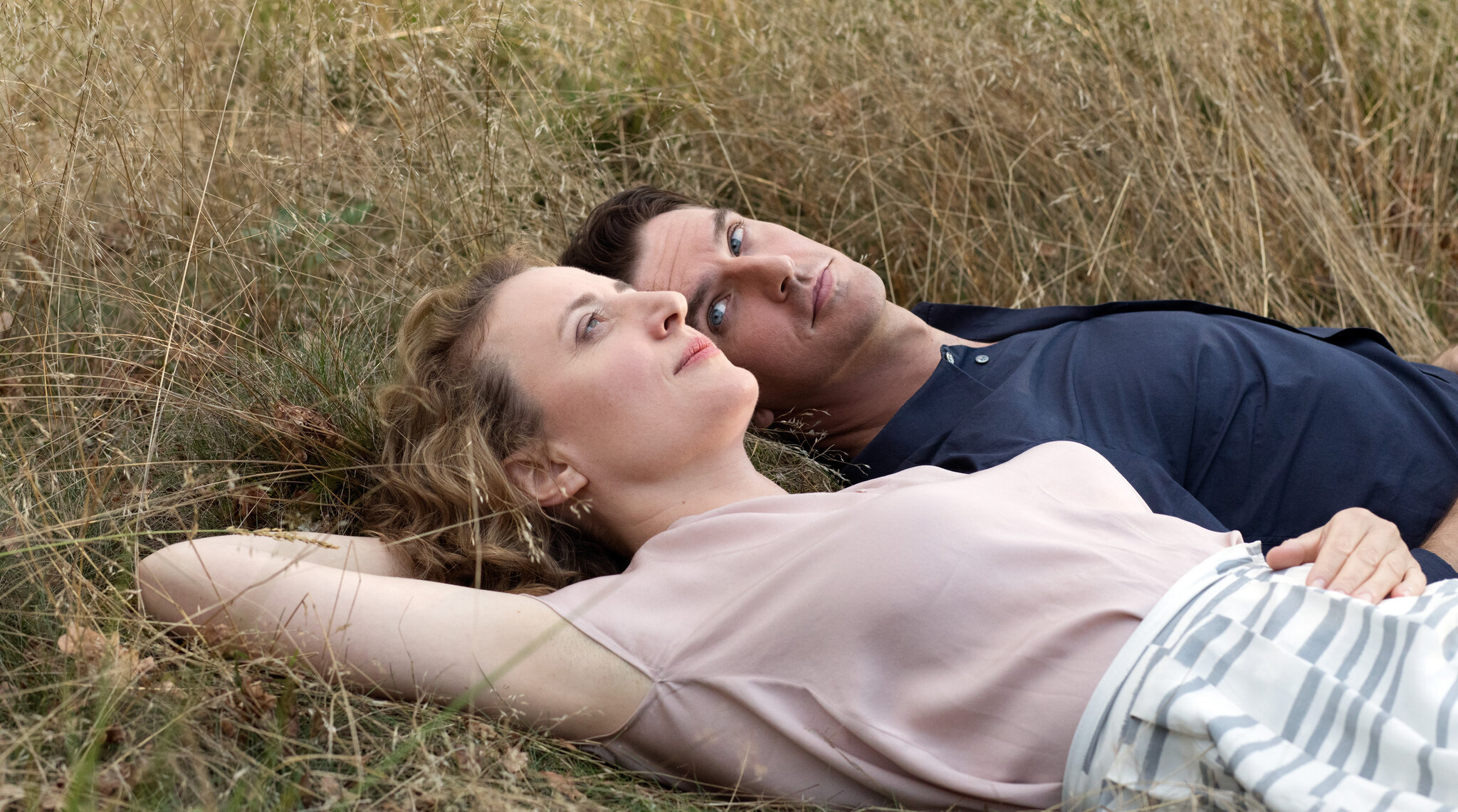
More importantly, though, the android in question is played by Dan Stevens, a ridiculously handsome British actor who turned in one of the greatest performances of the 2010s with The Guest, a throwback action-horror film about American Imperialism that was way better than it had any right to be. In The Guest, Stevens’s character is secretly a genetically-enhanced supersoldier who can both become a killing machine at the drop of a hat and charm the pants off anyone he talks to, whether the person is looking for a sexual partner or a shoulder to cry on. He nails this performance, as Dan Stevens has a steely charisma about him – at once disarming and menacing – that hasn’t felt quite right in the middling projects he’s taken on since. Playing the Beast in Disney’s live-action Beauty and the Beast remake and Charles Dickens in a Christmas Carol making-of biopic just feels like a waste of this actor’s very singular talent.

I’m Your Man, however, is a great showcase for Stevens. This is a sci-fi film with no real special effects, so he has to sell an early malfunction with just his body language, and does so perfectly. Playing an android designed to be marriage material, he trades the burly, imposing posture of The Guest for one that feels more slender and soft, though I’m not sure if he’s gone through any sort of actual bodily transformation – it may just be the way he holds himself. Stevens’s character, Tom, wears button-ups and asks politely curious questions and smirks gently and respects boundaries and leaves rose-petal trails to candlelit baths. He’s designed to be the average woman’s fantasy, based on the supposedly extensive research of the company who created him. The conflict of the film, however, is that its protagonist, Alma (played by Maren Eggert), isn’t actually interested in love – she’s a workaholic who only took on this project for the grant money it would provide for her anthropological research. After bringing Tom home like a foster dog, she restricts him to sleeping (which, for an android, looks a lot like standing stock still) in a cluttered guest room, paying as little attention to him as possible. Tom’s attempts at winning her heart are met with complete disregard for a very long while; it’s as if the rom-com trope of “eventual lovers who can’t stand each other at first” is stretched out to the furthest extent possible. 

I’m Your Man is a kind of a rom-com, of course, in addition to being a soft sci-fi film, and the protagonist does eventually drift towards her humanoid admirer. It’s a melancholy sort of drifting, however. The film culminates with lilting monologues about the true nature of love, desire, and loneliness, but I didn’t come away from it with any sort of profound insight about these things. The film tells much more than it shows, which is in stark contrast to another movie I couldn’t help thinking about while watching: intentionally or unintentionally, I’m Your Man feels like a response or elaboration on the ideas about human-AI romance laid out in Spike Jonze’s film Her. Unfortunately, Schrader’s film is a bit too low-key – both visually and emotionally – to ever reach the emotional heights of Jonze’s film. I was excited by the idea of a woman director tackling themes so similar to Jonze’s male-centric romantic lament, but this ultimately felt like a somewhat underwhelming riff on familiar subject matter. 

Tags tiff2021
Comment

Bergman Island (2021) by Mia Hansen-Løve

October 4, 2021

Review by Zach Dennis

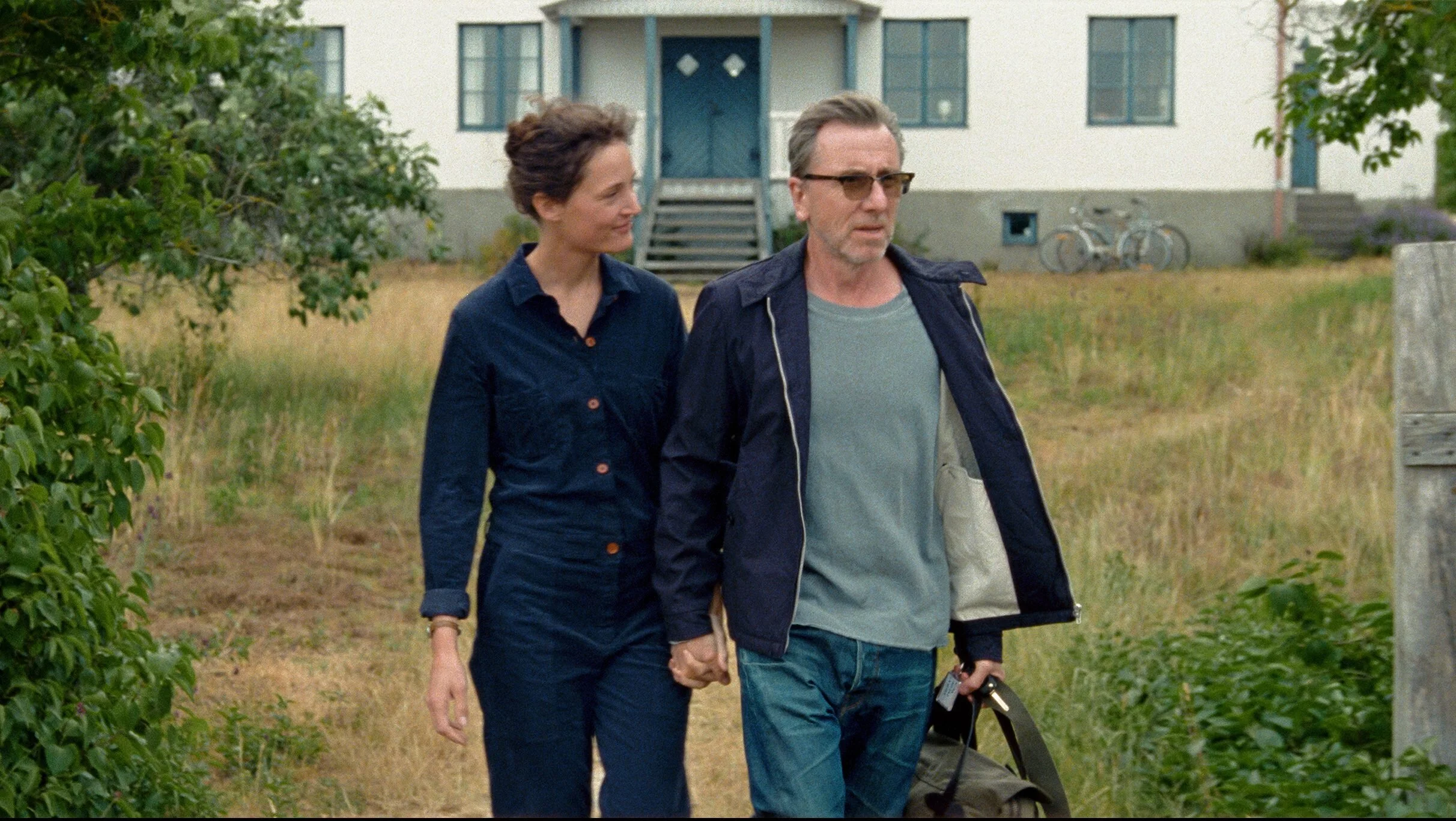
A ways into Bergman Island, the latest from French writer/director Mia Hansen-Løve, the central couple, Chris and Tony (Vicky Krieps and Tim Roth), are at a dinner with a number of members from the Ingmar Bergman foundation at the island and are talking more about their escape into the home and life of the Swedish director.

Chris is confused because all of these people laud Bergman for his work, including her partner, but none of them really seem to take the time to ask themselves whether or not all of that was worth it due to the distance it created between Bergman and his family.

Vicky Krieps and Tim Roth in ‘Bergman Island’

Vicky Krieps and Tim Roth in ‘Bergman Island’

The question lingers on in Bergman Island, a film with a central couple that isn’t on the rocks necessarily but one that is weighing the pursuit of legacy and accolades in against fostering a community or family. I’m not sure the film ever takes a stance or even posits a statement on this question, but Hansen-Løve still allows to linger in this meta-film narrative that’s breezy, comfortable, and unchallenging.

It’s clear that Chris is behind Tony in the eyes of everyone else on the island. Tony hosts screenings to talk about his movies and is lauded over afterwards by adorning fans. Chris struggles at her desk to come up with something compelling, and whenever she thinks she does, she doesn’t necessarily garner the attention from her partner that she’d like. He isn’t like her, he says. He likes to keep his work to himself rather than workshopping it with someone else.

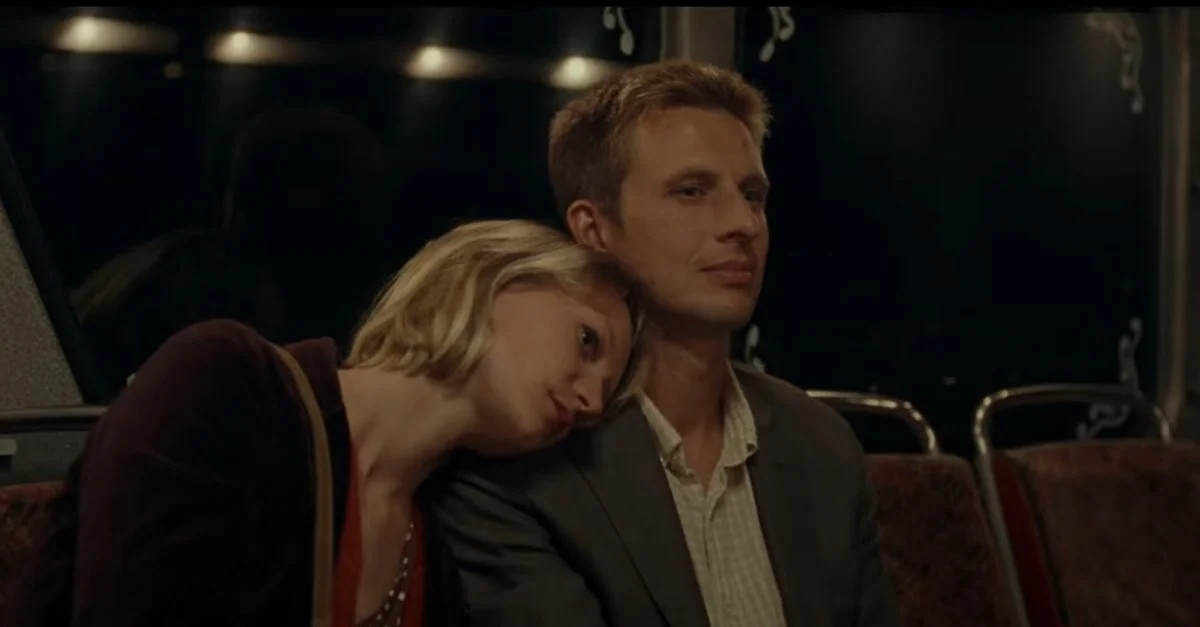
The workshopping, though, transports us to another narrative on the same island, as Chris explains her story of lost romance between Amy (Mia Wasikowska) and Joseph (Anders Danielsen Lie). The two were a former couple who return to the island as separated to celebrate the marriage of a mutual friend. Naturally, old feelings simmer to the surface, and sex and drama ensues between the two.

Mia Wasikowska and Anders Danielsen Lie in ‘Bergman Island’

Mia Wasikowska and Anders Danielsen Lie in ‘Bergman Island’

As that story concludes, we kind of wrap up Chris and Tony’s plotline without much fanfare. Instead, in a somewhat Kiarostami-in-Certified Copy sort of way, we work our way into the filming of the story that Chris has spent the majority of the second half describing.

I’m a fan of Hansen-Løve, but her post-Things to Come output has been a bit meandering. I’m not complaining, as I would happily glide across the Swedish isles in this film compared to the much more convoluted Maya from two years ago – but it’s also a tough movie to grasp onto as it feels like it always has it’s foot out the door to move on or finish without completing it’s thought.

I guess Chris and Tony are still together with child when they return to the island for the filming of Chris’ movie, so I suppose that’s resolved with a suggestion that you can find success in both life and in work. But this still feels unsatisfying.

I was never bored with Bergman Island, but I hope Hansen-Løve returns to where she was at with Things to Come an Eden, which also feature a large degree of compelling meandering but also feel like they has a central narrative line to follow. Bergman Island is wonderful to live in for its runtime, but feels a bit more of an exercise or excursion rather than a plotted journey.

Tags tiff2021
Comment

Sundown (2021) by Michel Franco

October 4, 2021

Review by Zach Dennis

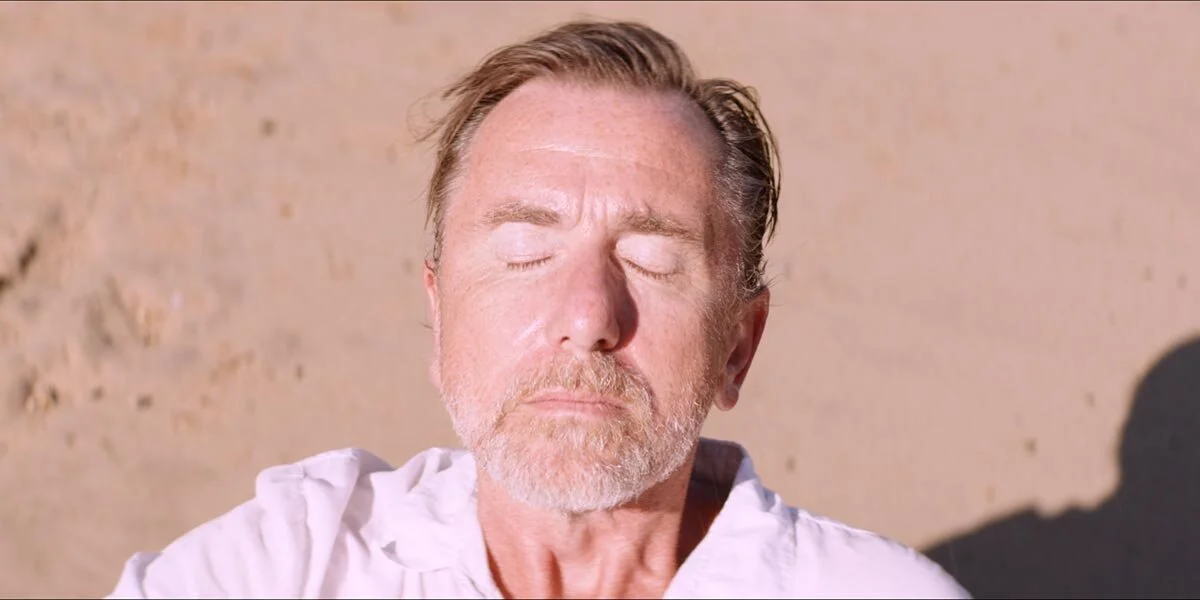
While vacationing in Mexico with his family, Neil’s (Tim Roth) sister Alice (Charlotte Gainsbourg) gets a phone call: a family member has died and they need to get back home for the funeral as soon as possible.

As the family heads to the airport, Neil says he just realized he left his passport at the hotel and for them to go on with the flight as he makes arrangements to get home after retrieving the identification. Only we don’t see him rush back to the airport; instead, he heads for the beach with a beer.

Sundown is a true slow burn film, anchored by an amazingly reserved Tim Roth in the lead role. You constantly are waiting for writer/director Michel Franco to reveal Neil’s motivations for acting the way he does, but the opaqueness makes the film even more compelling.

Why is he doing this? The answer is: why not?

Tim Roth in ‘Sundown’

Tim Roth in ‘Sundown’

It’s worth going in knowing about as much as I’ve divulged about Sundown as the twists and turns of the narrative continues to heighten your frustrations with and curiosity about Neil. It’s clear he and Alice come from a very wealthy British family as money doesn’t seem to be an object and their initial resort hotel is top of the line.

On his return from the airport, Neil makes for a cheaper accommodation in town; electing to spend each day lounging by the beach, drinking beer, telling his sister he’s doing his best to make his return to the U.K. and striking up a relationship with a local woman named Bernice (Iazua Larios).

The two spend most of their time having sex or drinking by the beach, with other locals engaging with Neil, including the taxi driver who takes him from the airport to the hotel. As the narrative ramps up and his sister becomes more despondent with her inscrutable brother, Franco challenges the audience to stick with Neil as he continues to execute the same daily activities as he’s done over the course of the film.

I’ll have to admit I get it to a degree. While never coming out explicitly that Neil wants to get away from (or has a problem with) his family, or has a job with the company that wears on him, to me, I interpret his decision as seeing a way to just escape the monotony that awaits him back at home. Would it be better to go to a job daily and work yourself to death, or would you rather enjoy your days having sex with a beautiful woman and drinking beer on a beach in Mexico?

The choice seems clear in this case, but Sundown adds moral quandaries in your path so that this decision can’t be taken as easily as one would think. Anchored by Roth’s performance, it’s a satisfying rumination on class that should be sought out if you get the chance.

Tags tiff2021
Comment

One Second (2021) by Zhang Yimou

October 4, 2021

Review by Zach Dennis

Known for vibrant landscape and winding epics, Zhang Yimou is more grounded in One Second, a tale that seems to hit close to home with the director’s passion for his craft. While it may seem small on the surface next to other Yimou films such as Hero and Raise the Red Lantern, One Second feels to be a personal project but I’m never sure if we get to the heart of why Yimou wanted to tell this story outside of a love for film.

Zhang Yi in ‘One Second’

Zhang Yi in ‘One Second’

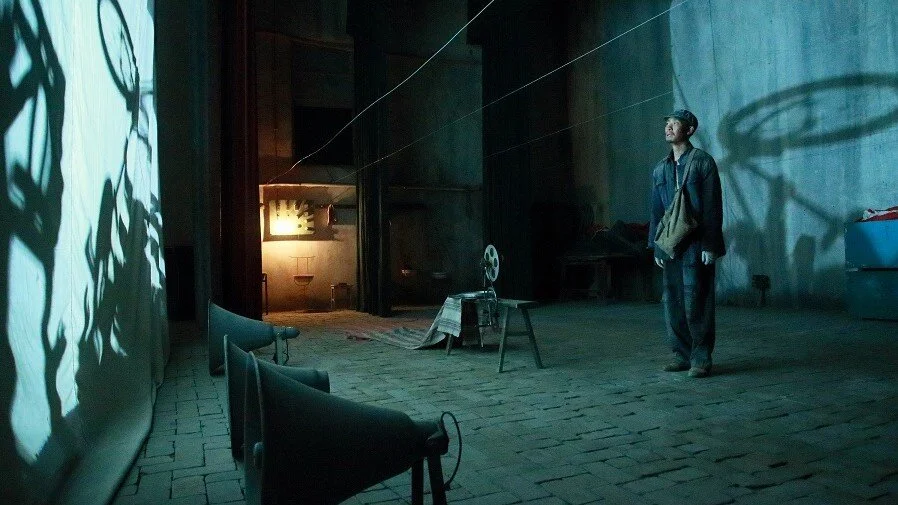
The movie follows a drifter (played by Zhang Yi) who is in search of a movie that he says features a clip of his estranged daughter. It’s the middle of the Cultural Revolution in China and the man has escaped from a farm-prison and is on the run.

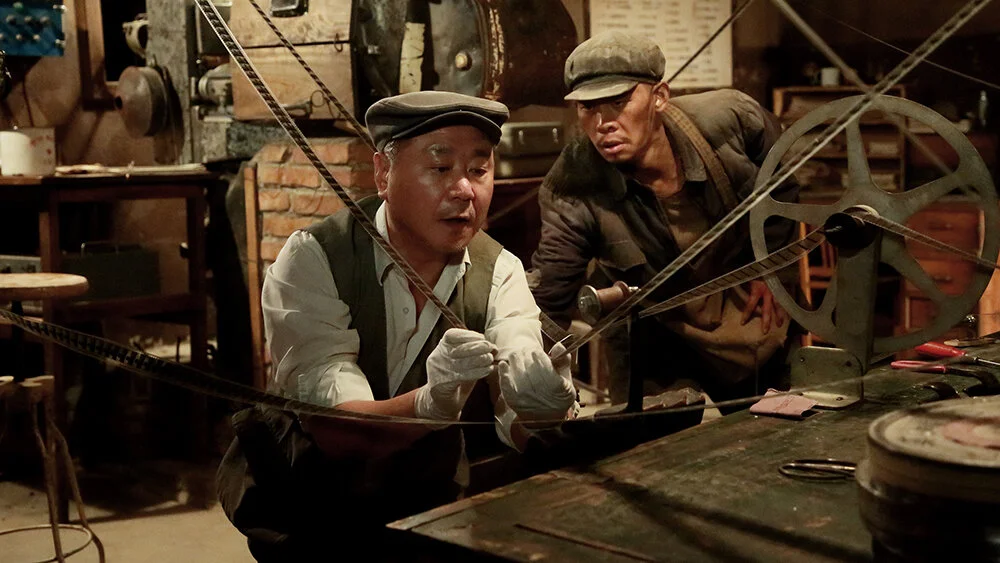
On his journey, he sees a film reel drop from the messenger’s bag and is scooped up by a street orphan (Liu Haocun). After chasing her down and retrieving the reel, he continues his journey to find the famed “Mr. Movie” (Fan Wei), a projectionist who can show the reel that the man is looking for.

The film reel continues to change hands between the man and the young orphan until finally making it to Mr. Movie, who enlists the help of the rest of the town to save the film strips after an accident on the way there seemingly destroyed them.

Initially set to premiere in 2020, the film was pulled from the Berlin Film Festival due over technical reasons with the festival explaining that there needed to be more work on it. Regardless, the film seems minor from the rest of Yimou’s output that I’ve seen and feels more like the director evoking his own nostalgia for a filmgoing past rather than having a narrative that needed to be told.

Fan Wei and Zhang Yi in ‘One Second’

Fan Wei and Zhang Yi in ‘One Second’

As the narrative progresses, there isn’t much to do with the main characters and their paths. We learn more about the orphan girl and her brother, but they get sidelined after a bit. The man is shown to have no relationship with his daughter anymore and the reason he wanted to see the film strip with her in it was to at least see her face one last time before the Communist Party found him after his escape.

It’s touching, sure. But ultimately, doesn’t really lead to much other than a standard “the movies!”

One Second is minor Yimou and one that probably will fall to the wayside as the director also releases his new film, Cliffwalkers, later this year. There are better films about appreciation for the movies, and this one never seems to take off in any way that’s truly that interesting.

Tags tiff2021
Comment

The Wheel (2021) by Steve Pink

October 4, 2021

Review by Zach Dennis

Albee and Walker’s marriage is on the rocks.

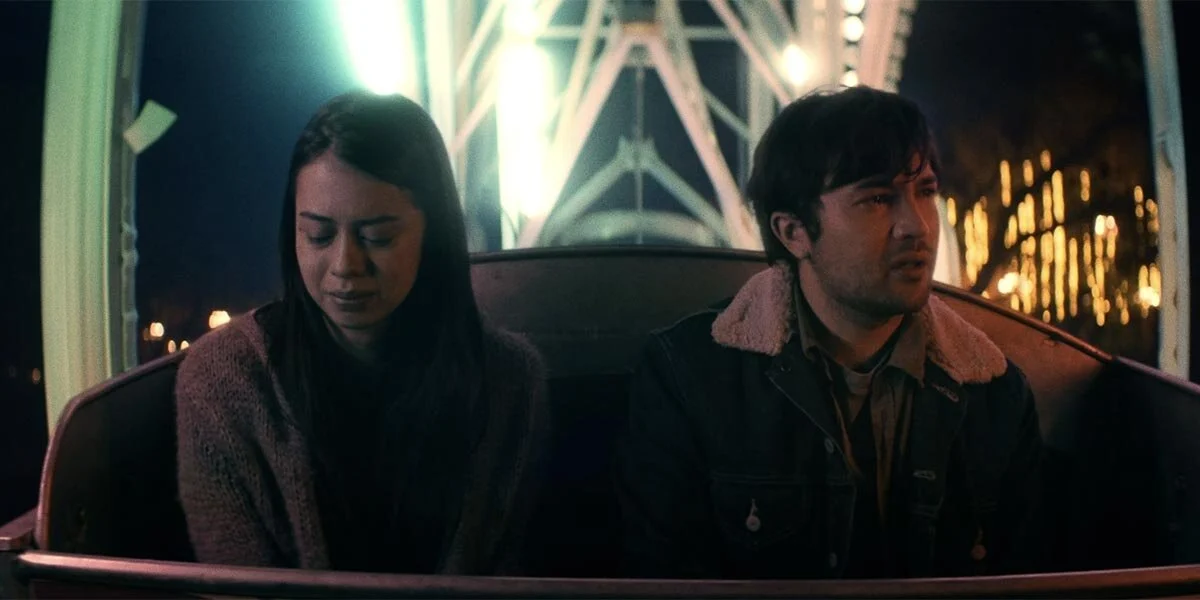
A young couple who married even younger, the two are headed to an Airbnb in the mountains to work through exercise books on staving off divorce and maybe reconcile their relationship. It’s clear Walker (Taylor Gray) is the instigator of the idea, while Albee (Amber Midthunder) is skeptical anything can be fixed.

Once they arrive, they meet their host, Carly (Bethany Anne Lind), who immediately realizes the clear divide among her two guests.

Amber Midthunder and Taylor Gray in ‘The Wheel’

Amber Midthunder and Taylor Gray in ‘The Wheel’

Carly lives with her boyfriend Ben (Nelson Lee) and they’re preparing to get married themselves. While Ben discourages getting involved in these strangers problems, Carly offers help and involves her own relationship in the storm brewing between the married couple.

The Wheel, unfortunately, is one of those movies where you can guess what’s coming next all along the way. Walker and Albee get in a fight and she will react this way. Carly questions Ben’s commitment to their upcoming marriage and this will happen. Over and over again, the plot beats are pretty transparent.

Gray and Midthunder do their best with the material, but I’m not sure there was ever enough here to really make something special. An added piece of plot includes the two meeting while living in a foster home so neither has a family to go back to if they do break up, but that always feels half-baked and never fully explored over the course of the film. Rather, it feels like a plot beat added to distinguish the film from other marriage on the rocks movies.

As the film moves along, it’s clear that the central couple has a chance at reconciliation while the couples around them seem more fraught than they were at the beginning, but that always where this felt like it was headed. If they decided to break up, where would this movie go? Would it just end with the two of them going into different directions? And then what?

It never seemed like there was a clear path to go, and by the end, you half want something to jump out of the woods to shake things up.

Amber Midthunder in ‘The Wheel’

Amber Midthunder in ‘The Wheel’

Comparing this to recent movies of similar ilk, such as Marriage Story, what is lacking in The Wheel is a real sense of history between its two main characters and a way to convey that within the confines of this story. Instead, we’re given small moments where they’re interacting with each other — only to have one thing start them up again and dissolve the whole moment. We’re never really offered a sense of who these people are other than they met at this foster home and have really only known one another.

The idea is sound, but nothing in The Wheel compels you to think more deeply about relationships, communication and marriage overall.

Tags tiff2021
Comment

Where is Anne Frank? (2021) by Ari Folman

October 4, 2021

Review by Zach Dennis

How do we properly teach history so that we not only know what happened but fully understand what led up to it?

where_is_anne_frank_01.jpeg

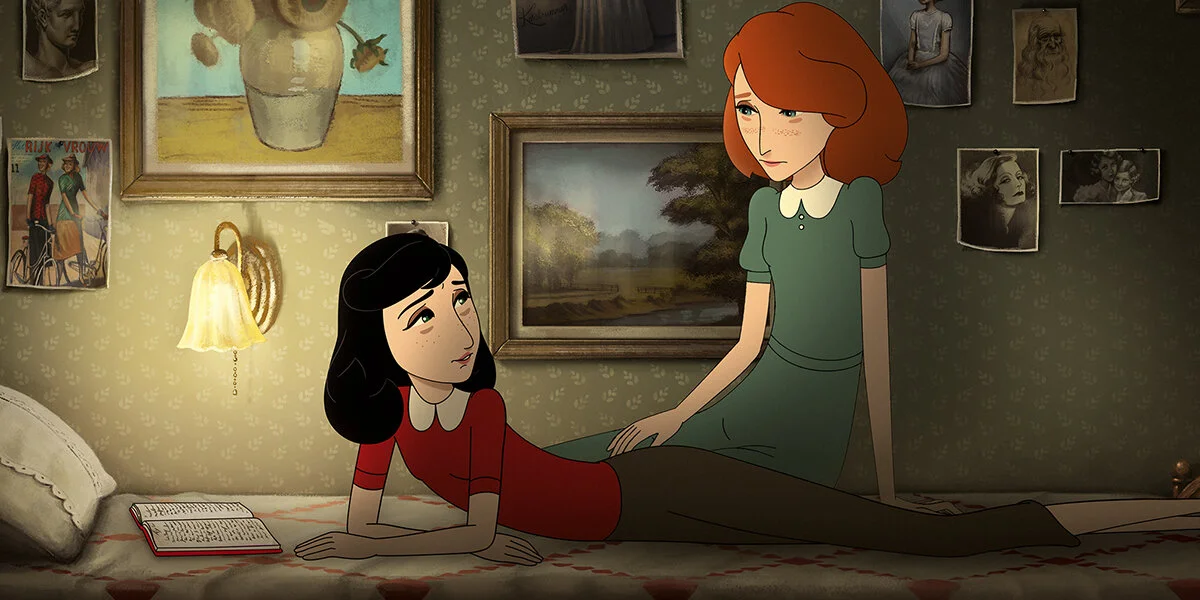
Director Ari Folman was approached to direct Where is Anne Frank? by the Anne Frank Fonds Basel eight years ago in an attempt to re-purpose the story of the Frank family and the Holocaust in a way to better engage with modern audiences. Folman, known for his harrowing use of animation to reenact history in Waltz with Bashir, said he wanted to provide Holocaust education in a way that was more conducive to how young people were engaging with stories.

“To truly imagine what happened is just beyond our reach,” he said. “I grew up in a family of Holocaust survivors and have heard the most horrifying stories a child can ever hear. But our minds are incapable of creating a visual connection to these stories and cannot fully grasp what happened. I would call this a task that is overwhelming to all of us. I therefore created an allegory to relate the story, using the tools animation and drawing provide us with to create imaginary worlds.”

In a recent survey of millennials and Gen-Z participants by the Conference on Jewish Material Claims Against Germany, researchers found that 63 percent of those surveyed did not know 6 million Jews were murdered in the Holocaust. Over half of those thought the toll was under 2 million.

Those stats alone would argue enough to commission a movie like Where is Anne Frank?, which not only tells the story of Anne and her family but also brings the audience into the present day to see how people today engage with the history of the Holocaust. Unfortunately, many do not use the story to construct a better world, but rather use the notoriety of Anne to place her name on buildings, schools, bridges and more around Amsterdam as a way to pay respect without doing any other work.

That’s a real problem, and one that has less to do with the results of the survey on Holocaust awareness and more to do with how we as humans process tragedy. Look at recent remembrances of 9/11 in the United States, which pay respects to those who lost their lives that day and in the years of wars afterwards but lack any sort of introspection on how we might prevent similar tragedies from happening in the future. Let’s not even pretend to think we’ll give the same reverence to those lost in the COVID-19 pandemic if we ever get to a point of some herd immunity.

On the surface, it would seem like Where is Anne Frank? is the perfect way to circumvent a lot of this lack of education, but Folman’s film also suffers from presenting the information on the surface but not providing enough context to understand how we got there.

where_is_anne_frank_04.jpeg

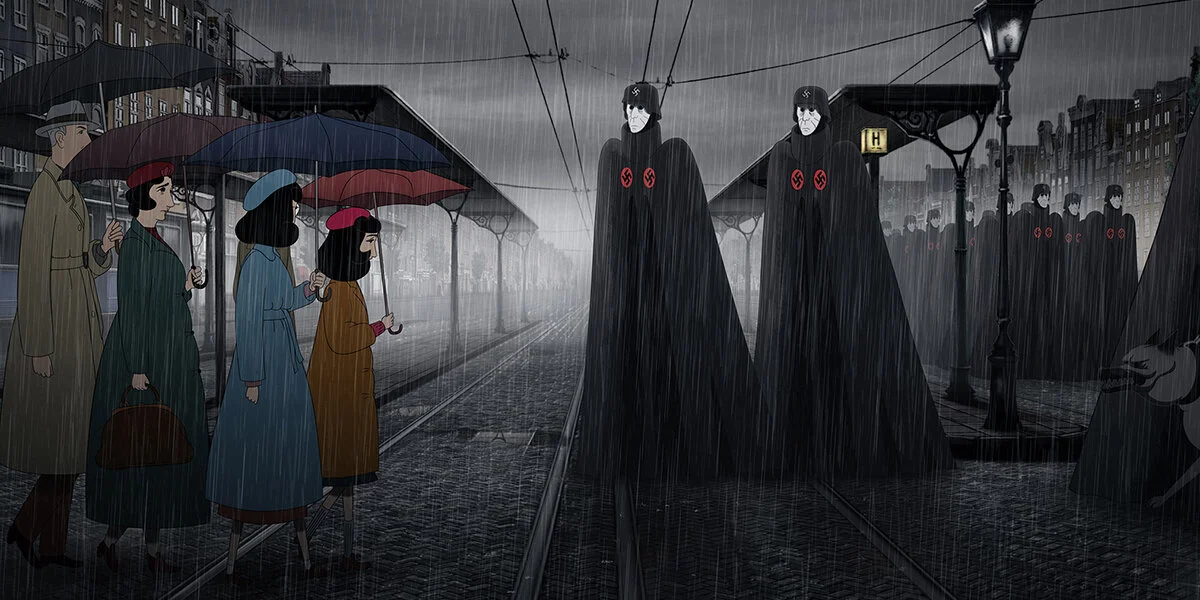
One glaringly poor decision was to present the Nazis as faceless phantoms, as the film consistently evokes Greek mythology and Anne’s fascination with it – they even go as far as to have a scene where Kitty, Anne’s imaginary friend from her diary and protagonist from this film, along with Anne riding alongside figures of Greek mythology and Clark Gable in battle against the Nazis.

Presenting the Nazi forces as phantoms rather than real people reinforces this message that Nazism was a plague from history rather than a still-present ideological problem. If we’re supposed to take away that Nazis were terrible people doing terrible things, that becomes impossible if they’re presented as abstract evil rather than something real, defined and could be anywhere around you.

That becomes more of a problem as the film begins to relate Anne’s story with that of modern day refugees. The villains in that story – the police and Netherlands officials – are given more personality, showing that their institutions that can be reformed rather than faceless phantoms bringing evil.

Holocaust education is imperative, and attempts such as Where is Anne Frank? are needed as we try to explain history to younger audiences. But we also need to reflect and be introspective on how we’re doing that, and whether or not we’re saying that this was the past and we shouldn’t repeat it; when the message should be, this is how we got here and this is what we have to do to avoid it again.

Tags tiff2021
Comment

Benediction (2021) by Terence Davies

October 4, 2021

Review by Zach Dennis

A number of times in Benediction, director Terence Davies cuts between the words of our subject, English poet Siegfried Sassoon, and archival images of World War I soldiers in the trenches. For most of the opening of the film, Sassoon is in a battle with military officials to at least recognize what is being done to these men through the wars they’re fighting. Naturally, they disagree and Sassoon is institutionalized for awhile before going on to be a well-known poet in the U.K.

Benediction seems to be a movie contemplating the concept of being left behind. An older Sassoon (played by Peter Capaldi) starts to find religion in his later years and grows more bitter and short with his wife and son. This is in contrast to his younger self (played by Jack Lowden), who seems constantly in conflict with his fight to live as a gay man in the early 1900s and to find peace with his fellow soldiers, most of who didn’t come home.

There’s a clear line between the fight for equality in the LGBTQ+ community and the lost soldier not coming home that Sassoon is wrestling with. While never explicitly making a connection to AIDS or a similar historical point, Sassoon seems haunted by his friends and fellow soldiers who risked their lives for this country that gave them the bare minimum (if anything at all) when they died and then moved forward.

As an older man, Sassoon seems to be a typical curmudgeon when it comes to near experiences. His son tries to take him to a play and he rejects going to see something he’s probably seen before and better. While it could be read as an older generation rejecting the new, it can also be seen (at least in the context of Sassoon’s life) as a man trying to hold onto the past that he never really got to experience.

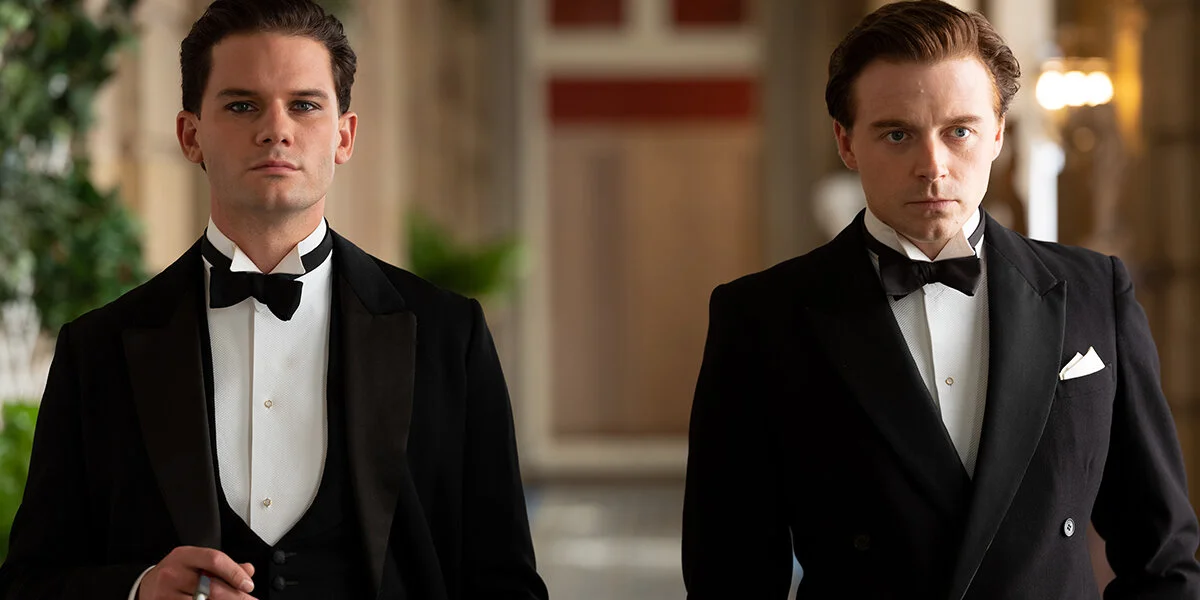
Jeremy Irvine and Jack Lowden in ‘Benediction’

Jeremy Irvine and Jack Lowden in ‘Benediction’

His present is always looking back or looking at ghosts. How is he supposed to enjoy it if it feels so empty?

His various partners throughout the film also speak to this. He never feels like a character tortured inside for being gay, but one that seems to be deeply unfulfilled by the ways of life or personalities of the men he spends his time with. It stems more from their abilities to cast out anything else happening in the world in order to focus on what’s in front of them, and that flippant attitude to life seems to be what Sassoon rejects.

He finds more complete companionship in Wilfred Owen, another closeted soldier who he meets while they’re institutionalized for PTSD, and Bobby Andrews, a man who was dating one of Sassoon’s partners before he was. Both seem to have that present mindset that Sassoon has, and also reject the lifestyles that Sassoon’s partners Ivor Novello and Stephen Tennant take part in.

In this way, Sassoon is a man out of time – unable to accept his present because of the ghosts following him and unable to enjoy the future because it gets him farther away from the comfort of the present that he never had time to know.

Tags tiff2021
Comment

Dear Evan Hansen (2021) by Stephen Chbosky

October 4, 2021

Review by Zach Dennis

Along the same lines as Where is Anne Frank? and the need for Holocaust education, a better understanding about mental health, especially as experienced by younger people, is an issue that needs to be addressed immediately.

But Dear Evan Hansen is definitely not that answer.

Disclaimer: I have not seen the Broadway version, nor have I listened to those original renditions of the soundtrack. I don’t find that to be all that imperative in assessing this work, but I’m sure others will disagree. That being said, it beguiles me that anyone could find this to be an inspirational tale.

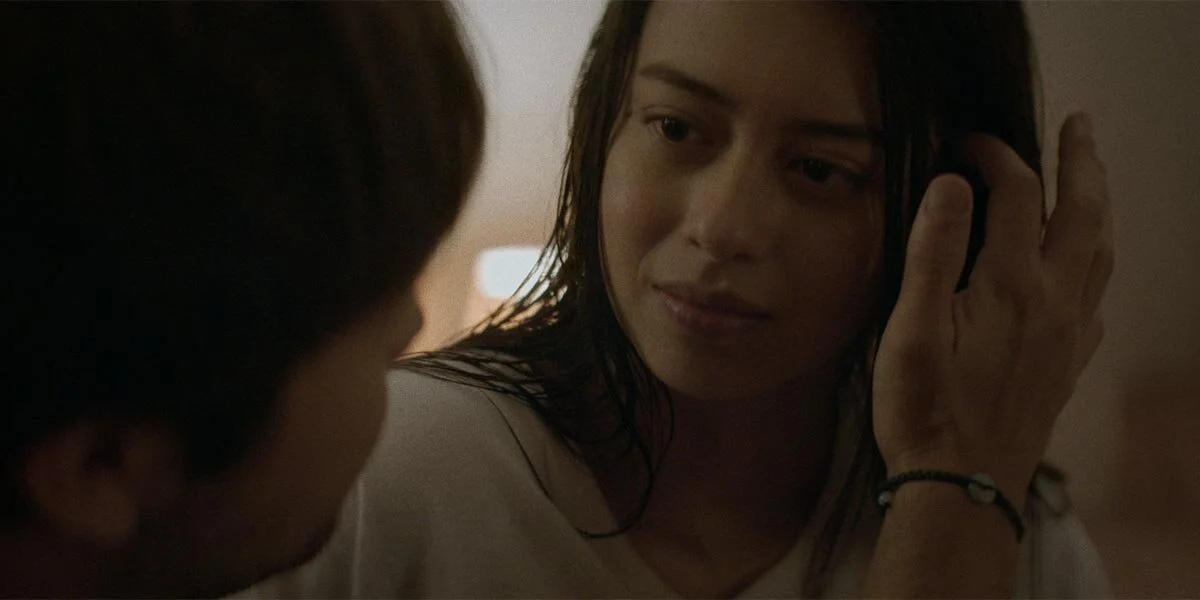
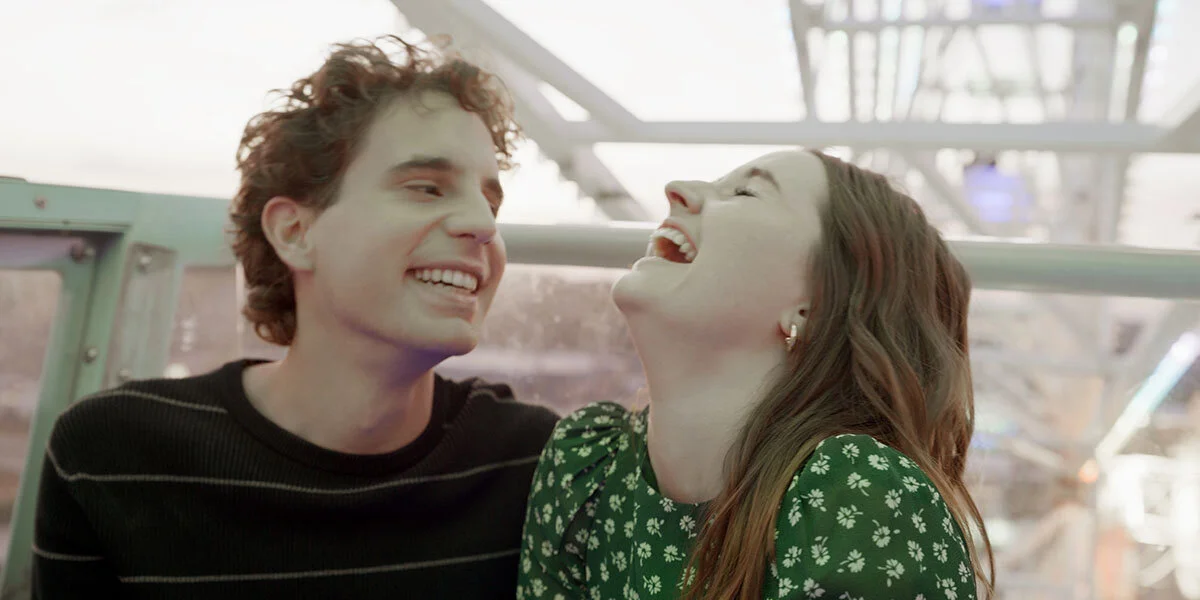
Ben Platt and Kaitlyn Dever in ‘Dear Evan Hansen’

Ben Platt and Kaitlyn Dever in ‘Dear Evan Hansen’

For those like me who are unfamiliar with the story, Dear Evan Hansen follows the titular character (played by Ben Platt) who is tasked with writing letters to himself as an exercise in therapy. Evan struggles with anxiety and depression, and feels like that fabric is ripped apart when an outcast at his high school, Connor, intercepts his letter and keeps it. Evan is afraid that he’ll end up sending it out to the rest of the school and exposing him. Instead, Evan learns that later that day, Connor kills himself and the letter is found on his body and has been interpreted by his parents (played by Amy Adams and Danny Pino) as a suicide note to his only friend: Evan Hansen.

As a way to console this hurting family, Evan constructs a series of these letters between himself and Connor as a way to show a blossoming friendship and that their son was not the angry and unhinged personality that many in school viewed him as. His efforts work, as the family brings him more and more into the world, and Evan gets closer to Connor’s sister, Zoe (Kaitlyn Dever), a person he has had a crush on for a long time. The letters also take a new life among the school and a campaign around mental health awareness becomes a national sensation.

Great, huh? But remember, all of it was a lie.

To call Evan’s path throughout the film as sociopathic would be too kind. It’s one thing to suffer from your own struggles with anxiety and depression; it’s another to gaslight a family into believing that you were friends with their son who committed suicide – all under the guise that you’d love to sleep with his sister and have a family of your own because your working class, single mom can’t be around as much as you’d like because she’s having to work more to pay bills.

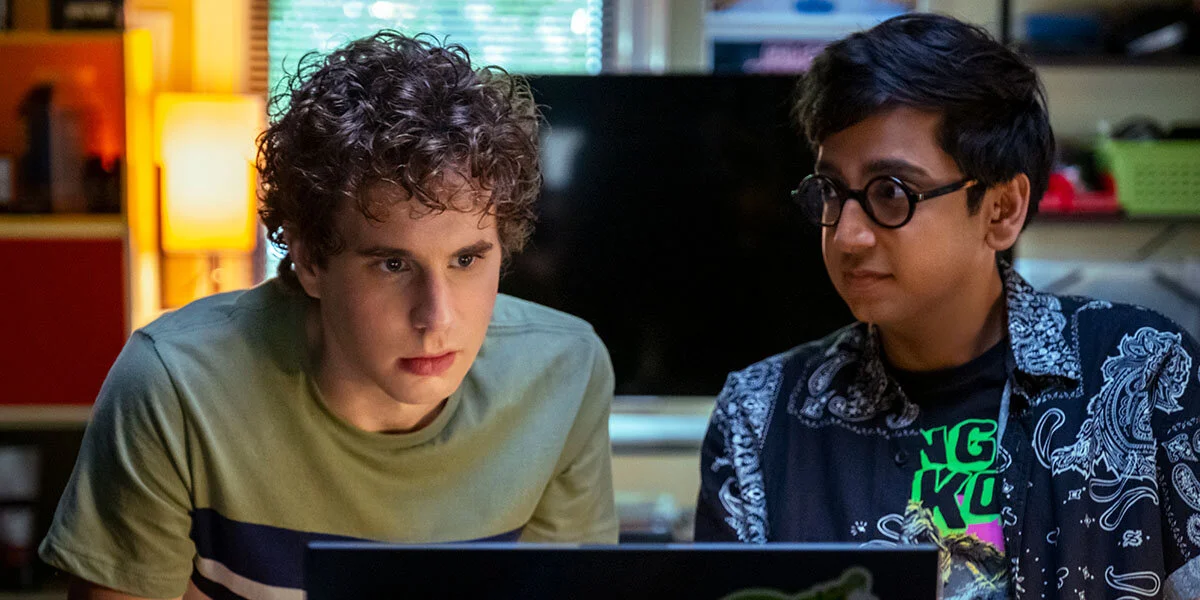
Ben Platt and Nik Dodani in ‘Dear Evan Hansen’

Ben Platt and Nik Dodani in ‘Dear Evan Hansen’

That’s not even engaging with the fact that, as countless others have pointed out before, Ben Platt looks like a 35-year-old man going to high school. This clear dissonance between his age and the age of his other classmates creates this almost Cronenberg-esque spectacle of body horror as he continues to masquerade as a person who cares about this dead teenager when actually the whole thing was constructed through his anxiety-soaked narcissism to get with the girl.

There’s something sinister there, looking back at the course of film history and large age gaps between romantic leads, when you see Platt and Dever together. In a way, this almost tears down the facade that this is something normal and engages on a more real level that this clearly older man is pretending to be a young person to sleep with this teenager.

Regardless of the overall message, Dear Evan Hansen is the work of people in need of serious help. There is no education towards understanding other people’s interior lives here. Instead, it shows the sociopathic tendencies of a leading man who got the role from his executive producer father, who understands mental health about as well as he understands the need to step away from a role for the good of the project.

Tags tiff2021
Comment

Titane (2021) by Julia Ducournau

October 4, 2021

Review by Zach Dennis

Titane is a film absorbed in hyperbole. Praises such as “Most fucked up movie of the year,” “an insane ride,” and “don’t know anything before you watch this!” litter the marketing campaigns and prepare viewers to have a visceral reaction. On the surface, Titane is a lot of those things – it’s grotesque, offensive and egregious. But I would also posit that writer/director Julia Ducournau is trying to convey a deeper message amidst the spectacle of the film.

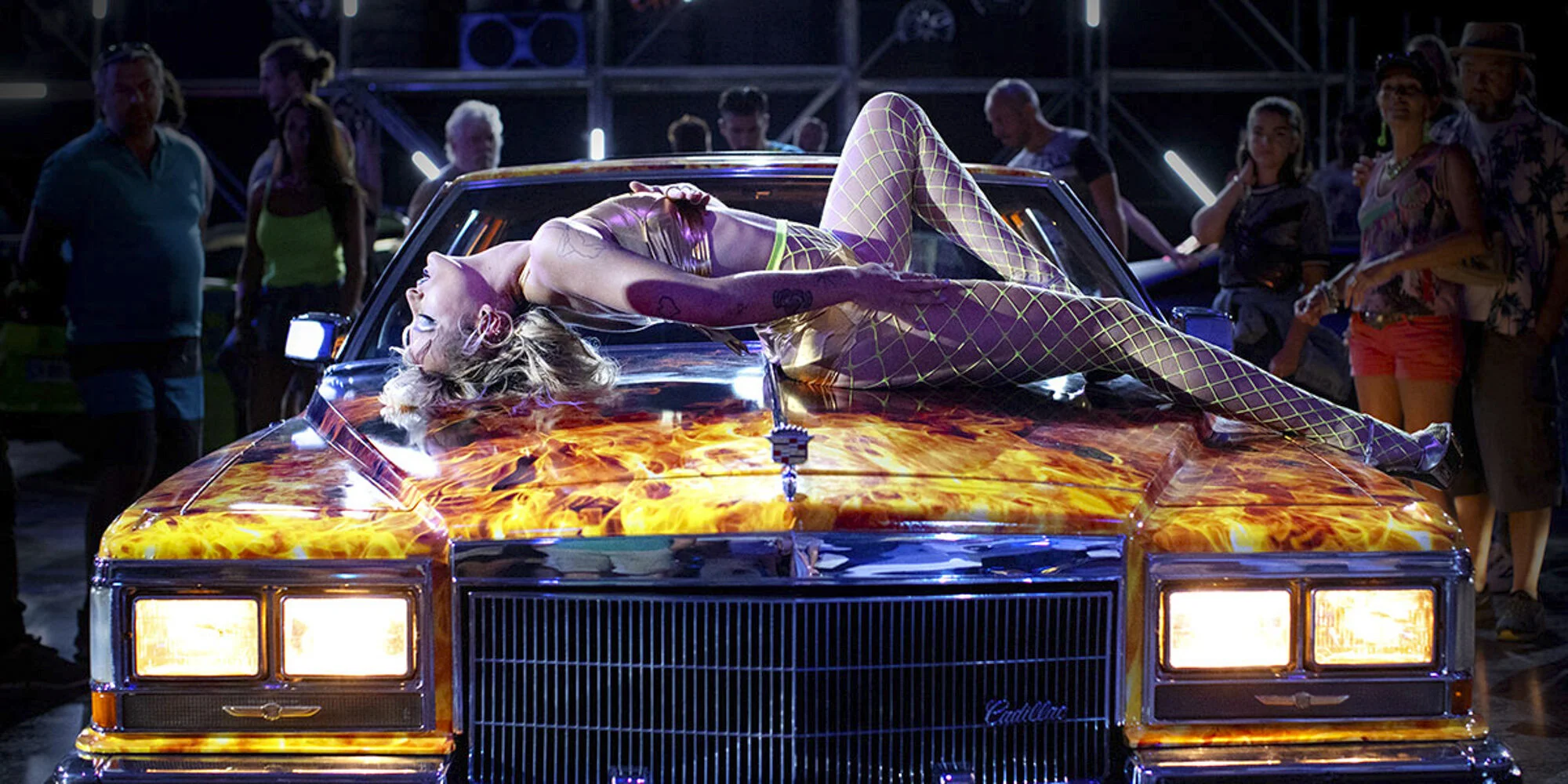
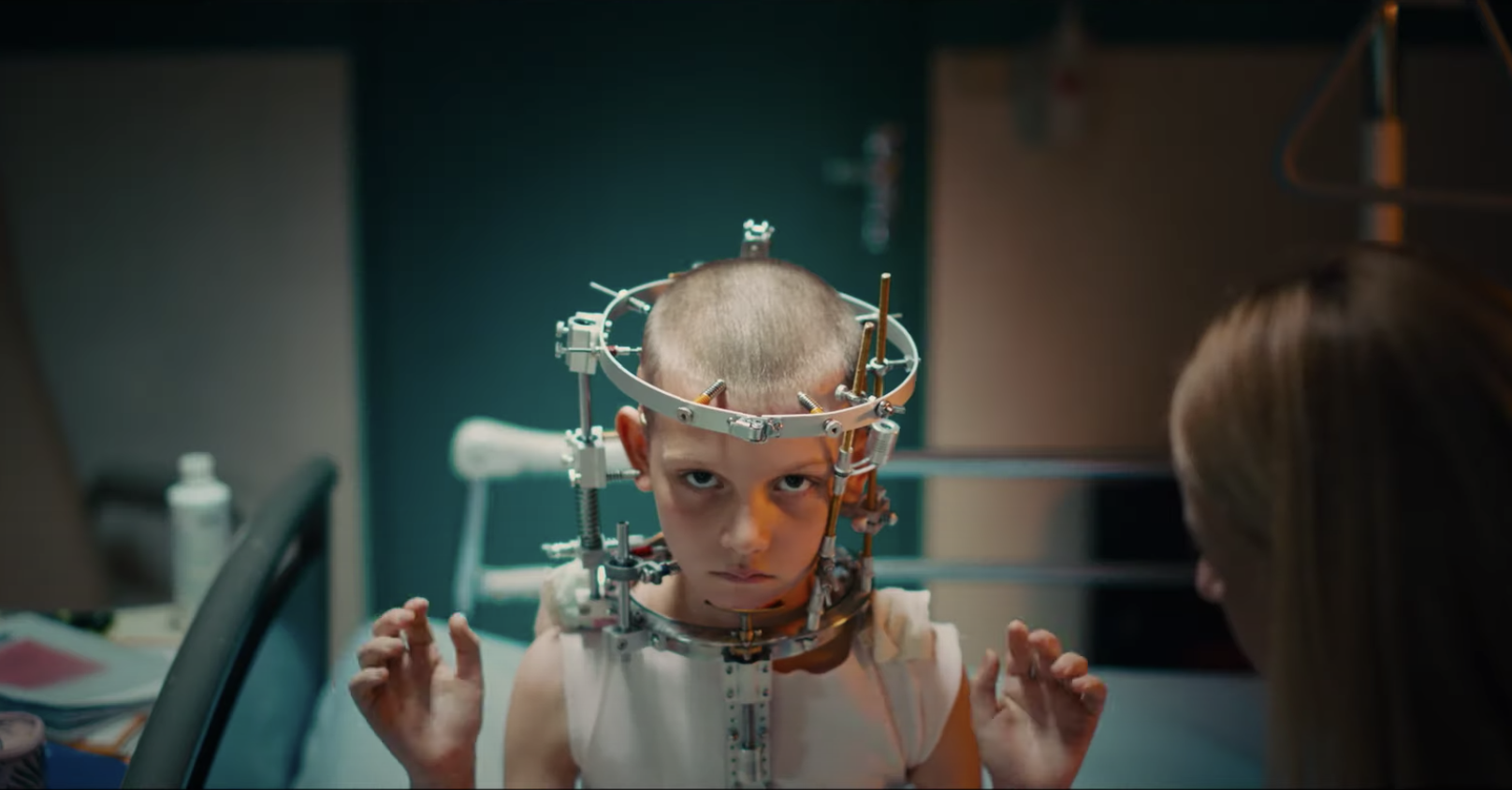
In short, the film is about Alexia, who lives with a metal plate in her head after being in a car accident with her father when she was younger. Now an adult, she is a dancer at what seems like an auto show in town and can’t seem to keep friends for very long.

Oh, and she fucks a car.

Agathe Rousselle in ‘Titane’

Agathe Rousselle in ‘Titane’

I’ll agree with one point above: it’s good to enter this relatively blind because as the movie goes along, the car aspect gets sidelined for another series of sociopathic behavior that would make Evan Hansen jealous.

Ducournau succeeds at depcting the horror of the body. That was true with Raw, and with Titane, she adds the element of machinery and flesh pressed together in an unholy amalgamation. For Ducournau, the machinery of Titane is an extension of the flesh, working as what could be viewed as an improvement on the body.

Met later in the film, Vincent (Vincent Lindon) tries to enhance himself using steroids to keep his body at the physical level that mirrors the firefighters he leads. For Alexia, the machinery in her body is a combination of flesh and metal that could enhance a human so that they wouldn’t need to shoot themselves up like Vincent does throughout the film. Ducournau shoots Vincent’s shotting-up scenes with horror, and a bit of fragility. Will he survive this dose, or will it be his last? The way he contorts after the liquid enters his body says that the absurdity of a woman having sex with a car and then getting pregnant may not be that far-fetched. She isn’t destroying her body any worse than an NFL player does with the health supplements and steroids they use to become better performers.

Adèle Guigue in ‘Titane’

Adèle Guigue in ‘Titane’

On the other side, Ducournau is also presenting a film about fighting through an attempt to change your body. Alexia shifts herself from a more traditionally beautiful woman at the auto show to a woman posing as a man with a broken nose in the second half of the film, and that fight to hide her true identity is a constant struggle for that portion of the film. Whether it is her ever-growing stomach filled with (really) a car-baby, or her signs of femininity that begin to show as she grows larger, this fight to keep hiding who she truly is becomes the struggle of the film’s second act.

At what point do we just stop fighting and allow ourselves to be who are body is telling us to be? And why torture ourselves to hide it?

Sure, Titane is filled with fucked up moment after fucked up moment. A lot of the movie has you squirming in your chair, but it isn’t there to just instigate discomfort for the viewer. If anything, Ducournau understands that the best way to convey this feeling of isolation and pain is to put the audience through the rigors of discomfort that the character is feeling. In this light, she succeeds.

Tags tiff2021
Comment

The Power of the Dog (2021) by Jane Campion

October 4, 2021

Review by Zach Dennis

Any Western is going to be tied to American mythology and the myth of exceptionalism.

Some affirm it, others contradict it and sometimes director John Ford did both. In her latest, The Power of the Dog, director Jane Campion is definitely in the mode of contradiction but also investigates how that myth can infect the person like a sickness.

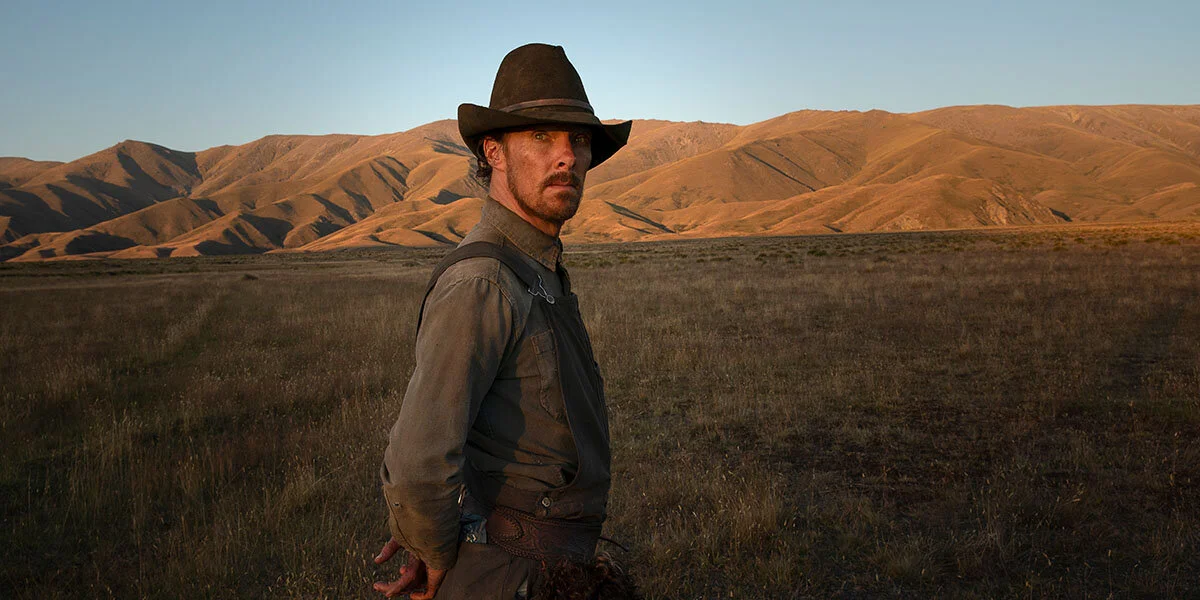
The film, based on the novel by Thomas Savage, follows two brothers Phil (Benedict Cumberbatch) and George (Jesse Plemons), who are well-off ranchers at the turn of the 20th century. Phil lives through mythology, carrying himself with the bravado of John Wayne and regaling the rest of their team with stories of the legendary rancher that trained him.

Benedict Cumberbatch in ‘The Power of the Dog’

Benedict Cumberbatch in ‘The Power of the Dog’

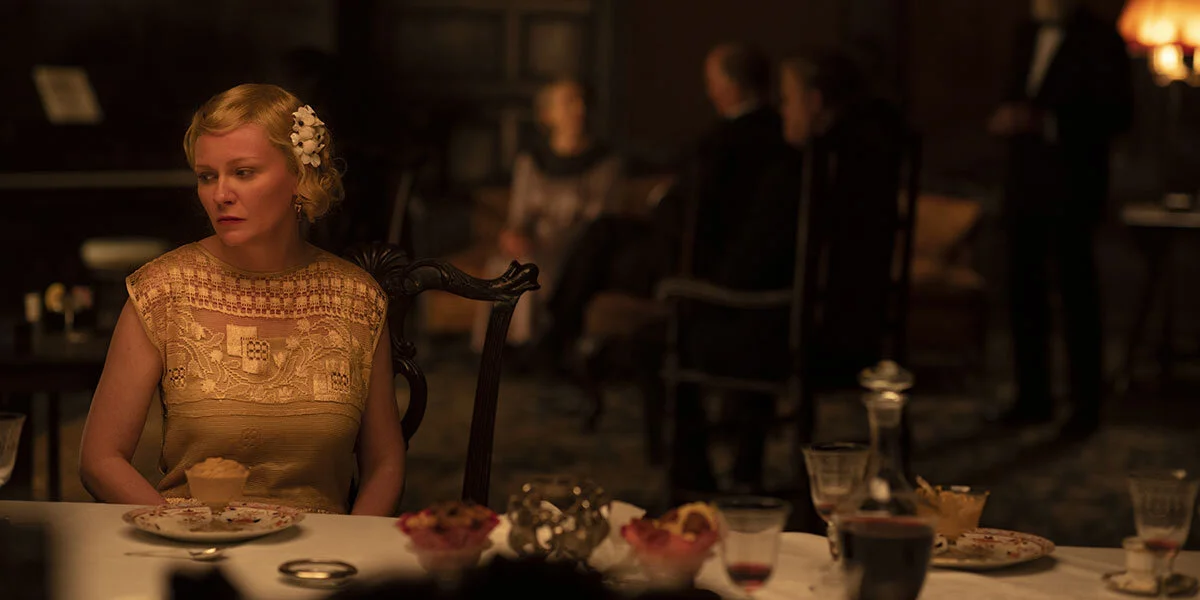
George is less enthused with the lifestyle, electing to instead settle down with a single mother, Rose (Kirsten Dunst), who he meets along their journeys. The two settle into the brothers’ family ranch and Rose and her son Peter (Kodi Smith-McPhee) are immediately made to feel unwelcome by Phil, who sees them as grifters after his brother and their money.

As time passes, Rose’s demeanor worsens and she devolves into heavy drinking to medicate her isolation from her husband, her son and the constant harassment from Phil. At the same time, Peter begins to strike up a friendship with Phil and the rancher takes him under his wing. Unbeknownst to anyone else, the impetus for their friendship comes from Peter learning a bit more about the secret lifestyle of Phil, who had a previous relationship with the rancher who trained him and has hidden away pictures of other men and his queerness in the wilderness near their house.

Phil exemplifies this tether to the American myth as well as the masculine myth commonly expressed through the Western genre. Once we learn this detail of his past, this facade he has created for himself becomes sad, as much of the early parts of the film feature him leaving the revelry of his cowpoke helpers to isolate himself with a guitar in his room.

He rejects his brother’s new life with Rose because he doesn’t know how to handle someone living their life truly. Even before George marries Rose, Phil finds ways to belittle his brother through derogatory nicknames related to his weight and cutting down his ability to handle the ranch jobs as well as Phil can.

Kirsten Dunst in ‘The Power of the Dog’

Kirsten Dunst in ‘The Power of the Dog’

With Peter, Phil clearly sees something of himself, or at least a version of himself prior to his creation of this mythic facade around him and his aide towards the boy seems to be trying to help him follow the path that he took in order to survive this wilderness that is the 1920s west in the United States.

Cumberbatch might be in his best film role to date here, understanding the subtleties of Phil and staying true to what he is wrestling inside even before we learn what his past was. He’s able to play the rancher with this empathy that displays a sense of sadness on a life wasted on hiding and pretending, especially for someone who will never know what life could have been like to live freely as he wishes.

The Power of the Dog is a slow burn, but a worthwhile one. Campion is smart to hold the punches until the end and delivers a critique of both the American west myth along with masculinity that feels apt and well-structured.

Tags tiff2021
Comment
Rebeca Huntt in Beba

Rebeca Huntt in Beba

Beba (2021) by Rebeca Huntt

October 4, 2021

Review by Zach Dennis

Director Rebeca Huntt opens her debut feature, Beba, with a declaration: it’s my time to talk so sit down and listen.

The touch is a charming beginning for a film that didn’t really need that statement. Huntt makes the same point clear through her filmmaking as Beba unwinds into a poignant rumination on existence in America and having the choice to define yourself taken away from you because of the color of your skin and your familial past.

Beba is an autobiographical story about Huntt as she explores her family history as someone in their mid-20s finding themselves after leaving college. At the same time, there are protests after the deaths of Trayvon Martin and Michael Brown, and the director is reflecting on her place in the culture after, as she puts it, she leaves the bubble of her liberal arts college and comes home to New York City and her family.

Shot on 16mm, the film exudes a formal confidence unlike most recent debuts. At times, it feels as if Huntt is pulling scenes from movies of the past, and there’s a timeless quality to the story because of this decision to shoot on film. Much like her fellow New York filmmaker Khalik Allah, Huntt is able to find a vibrancy in her community with her camera and there’s an honesty in those moments when the camera is pointed on her mother or father for an interview.

Those relationships inhabit different spaces. Originally from the Dominican Republic, her father wanted more than anything to live near Central Park, and the family still holds their one bedroom apartment. Talking about his desire to stay there, he tells Huntt that he just felt drawn to this portion of the city and couldn’t give up the deal they got for the apartment they live in despite the fact that he and his wife have to sleep in the living room and the kids inhabit the one bedroom. Her relationship with her mother is different. Coming from Venezuela, it seems that there’s this rich culture that Huntt feels drawn to but there doesn’t seem to be the level of communication with her mother that she has with her father. He seems natural in front of the camera, running through story after story. In the scenes interviewing her mother, it feels like a tug-of-war.

Huntt goes into her experience at Bard College – flowing between her predominately white friend group and the same group of Black students at the college. She found a community with one professor, and she never seems resentful of her fellow classmates but the tension between the differing experiences, on a class level even more than a race level, is constantly apparent.

Huntt makes an interesting decision to stage a conversation between herself and a group of white friends about race. In the staged conversation, Huntt is trying to field questions by her friends about what they can do as white people to help Black people in the U.S.A. While it was not a real conversation per se, the decision to include it provides an example of the explanations Huntt had to provide while at Bard College and the experience of being the Black friend among a predominately white group.

Beba has echoes of the spirituality behind the camera that Beyonce displays in both Lemonade and the flashback or practice sequences in Homecoming, and that seems natural hearing about Huntt’s affinity for music. The original score accentuates the imagery in a way that continues to evoke that out of time feeling.

It’s good to see Beba getting attention (as of writing this, the film was picked up by NEON!), as it is clear Huntt is a voice we need to be hearing more of more in movies. Whatever she does next, I’ll be first in line.

Tags tiff2021
Comment

Petite Maman (2021) by Céline Sciamma

October 4, 2021

Review by Zach Dennis

After giving us what felt like a globe-trotting effort in her last film, Portrait of a Lady on Fire, it was nice to see writer/director Céline Sciamma returning to the mode of her her early films by focusing on a small story about growing up.

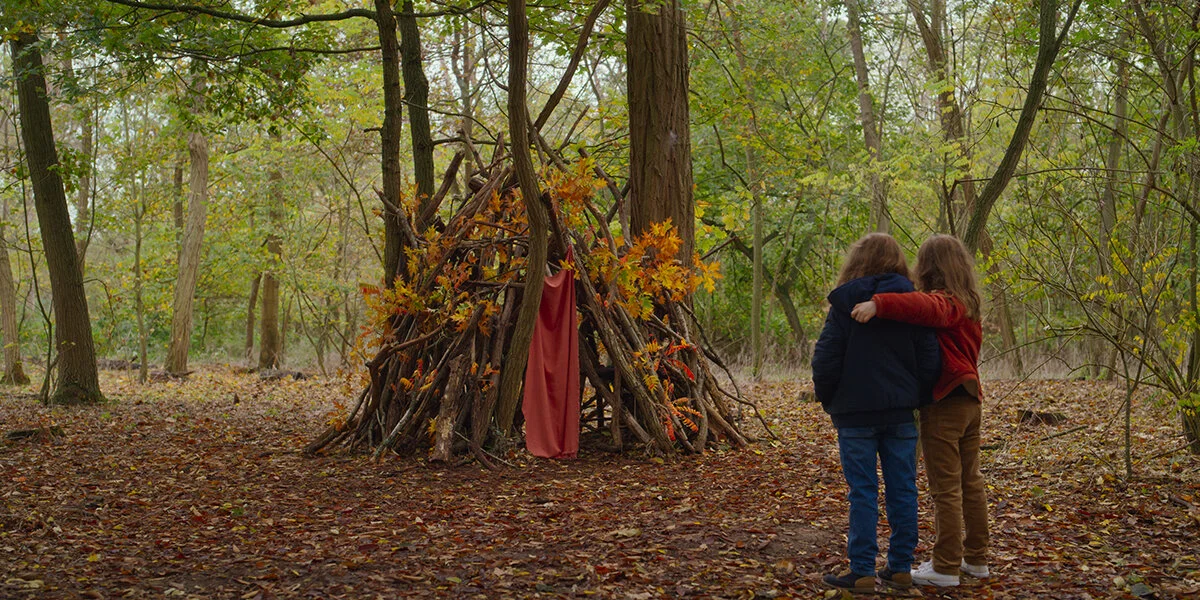
Petite Maman (or Lil’ Mama, for those in the know) follows Nelly, who returns to her grandmother’s house in the woods along with her mother and father to clean out the home after the elder family member passed. Naturally bored with the mundanity of cleaning, Nelly takes to exploring in the woods behind her house and comes across a fort (one referenced earlier by her mother as an object of her creation from many years ago). There at the fort is another girl around Nelly’s age, who introduces herself as Marion, her mother’s name.

The skill of Petite Maman is how simply Sciamma brings us into the fairy tale. Sciamma doesn’t expend any unnecessary time providing clarity to the logic of the situation, which feels refreshing nestled against that incessant need in other contemporary movies. Instead, the situation is what it is.

Joséphine and Gabrielle Sanz in ‘Petite Maman’

Joséphine and Gabrielle Sanz in ‘Petite Maman’

As the fairy tale unravels, Nelly is able to find closure with her grandmother, who died while living in hospice care, and also gets to learn more about her mother, who seems distant and preoccupied in a lot of moments with her daughter. Her father doesn’t offer much help either, outside of providing the basic necessities and engaging with her when she’s not outside in the woods.

Both Nelly and the younger Marion are played by a pair of twins (Joséphine and Gabrielle Sanz, respectfully), and there’s this familiarity and comfort immediately felt between the two that goes beyond the fact that they are technically playing mother and daughter. As the girls talk more, the conversations become more straightforward and frank. It’s probably more of an attribute of conversations between young children, but each actress approaches it with such seriousness that there’s something hilarious about it.

The quality becomes even more pronounced as the two put on a fake narrative between the two of them, and both actresses approach their characters within the narrative with such un-emotive straightness that you can’t help but find it amusing.

A lot of Petite Maman is like this; it feels so small in contrast to the vast worlds that Sciamma has created recently in Portrait and Girlhood that you might feel slighted by how minor it feels, but I think it also shows a director that has come to better understand her strengths. 

Nothing feels half-baked or in need of more time in Petite Maman, instead, it constantly feels measured and genuine, which I feel like Sciamma is finding more success in as she goes deeper into her career. Where early films like Water Lillies and Tomboy have great moments but sometimes fall into rhythms and patterns that don’t go anywhere, Petite Maman feels like a more focused version of both of those. While it may seem slight next to her two most recent offerings, it still displays that Sciamma is a director to follow no matter where she goes.

Tags tiff2021
Comment

Last Night in Soho (2021) by Edgar Wright

October 4, 2021

Review by Zach Dennis

Edgar Wright has always flirted with horror, but Last Night in Soho might be his first fully-fledged horror film. For a guy known for laughs, this probably could’ve used some.

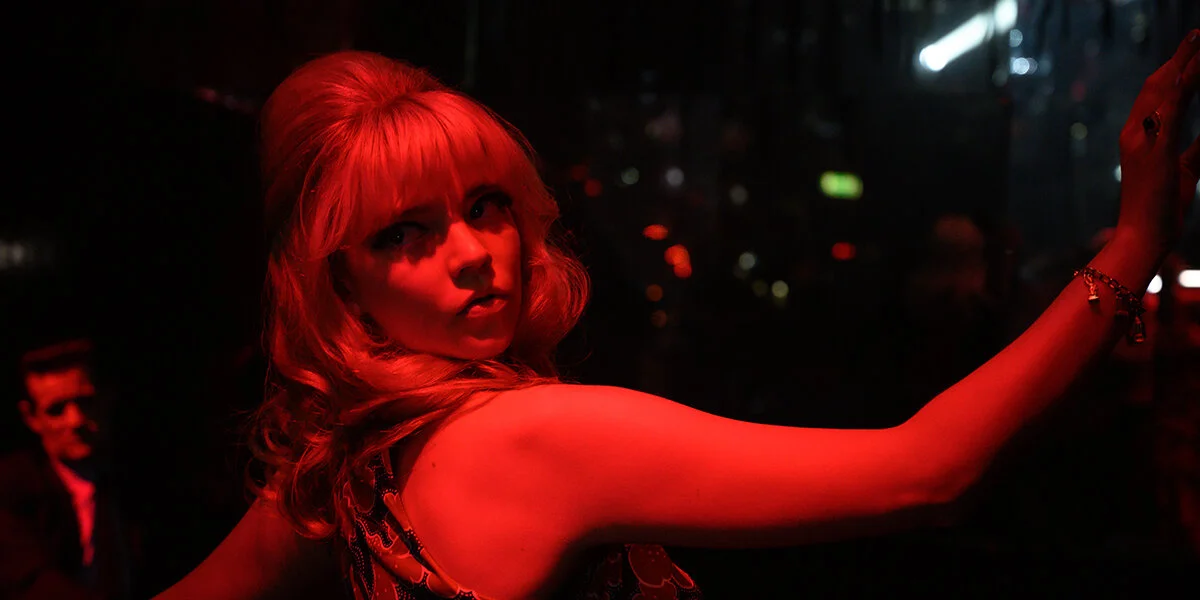
Following young fashion student Eloise (Thomasin McKenzie) as she leaves her small town to attend school in London, the new student quickly realizes that the city is vastly different from her small farm town. Electing to leave the student dorms for another apartment in Soho, she begins to have sleeping visions of Sandy (Anya Taylor-Joy), a previous tenet of her loft who attempted to be a singer with the help of Jack (Matt Smith).

As the visions become more persistent – and even begin to appear as apparitions when she isn’t sleeping – Eloise becomes more unhinged and feels as if the vision of Sandy is coming to overtake her.

Wright is evoking psychological horrors of the 1960s and 1970s such as Don’t Look Now or Possession, but where those have a cutting bite, Last Night in Soho just constantly feels like something going through the motion with no real directive. There’s nothing inherently wrong with the film – you get your usual Edgar Wright needle drops, the camerawork is compelling, and the lead performances by Taylor-Joy and McKenzie are good – but in hindsight, I can’t say it was a movie that lingers. Even now, I’m struggling to come up with what exactly happened beat by beat, and I doubt a few months from now, I’ll remember much from the film.

Anya Taylor-Joy in ‘Last Night in Soho’

Anya Taylor-Joy in ‘Last Night in Soho’

Wright has previously succeeded with finding some satire in his genre exercises, but this one never feels like it had a foundation. We aren’t even afforded enough time to really luxuriate in the 1960's Soho London decor of the clubs and venues that Sandy works at as Wright shifts from those visions of her life into the ones of horror pretty quickly.

It almost feels like Wright loses his own personality in the film, electing to really zero-in on the elements he loved from those films he’s evoking but forgetting to put his own touch on them. It might actually be impossible to guess this was an Edgar Wright film if it were left uncredited.

More than his visual flair, Wright is good at playing against expectations for the genre and eliciting some humor out of that. Think of how he plays with the police procedural in Hot Fuzz or the zombie apocalypse in Shaun of the Dead. Here, it seems like he almost wanted to make a straight psychological horror without infusing any of the elements that make him interesting or worth watching.

Between this and Baby Driver, it seems like Wright has begun to stray away from his past success. With his last two films, he attempts to present more straightforward genre exercises rather than satirical riffs on them. While he does have more original ideas, it seems in line with the methodology employed by Marvel (give them a familiar genre but insert a superhero to spice it up).

I won’t say that he should call Nick Frost and Simon Pegg up just yet for another Cornetto film, but I hope Last Night in Soho isn’t a precursor for the future of Edgar Wright so we can get more high-quality work from the director who provided some of the most well-defined comedies of the past decade.

Tags tiff2021
Comment
dashcam_01.jpeg

DASHCAM (2021) by Rob Savage

October 4, 2021

Review by Zach Dennis

Evoking past staples of the found footage genre, such as Blair Witch Project or Cloverfield, Dashcam is one of the first examples of a 2020 zeitgeist movie – and it isn’t igniting a lot of inspiration in the future of movies about the current “moment.”

This version of found footage horror comes via a YouTube stream with streamer Annie Hardy (playing a version of herself here). As she makes her way from the “restrictions” of the United States to London, Hardy vamps about her anti-vaccination views, calls people cucks and libtards and puts on her Make America Great Again hat a number of times.

Once in London, she breaks into the home of a former bandmate named Stretch (Amar Chadha-Patel), who seems to accept the situation at first until Annie’s behavior becomes more and more unhinged, and she eventually steals his car and intercepts an Uber Eats delivery meant for Stretch after he leaves his phone in his car.

At the delivery location, Annie finds a restaurant that’s entirely empty except for one woman who asks her to deliver a sickly lady named Angela (Angela Enahoro) to an address. True to form, Annie parades the mission on her YouTube stream to the onslaught of comments from her loyal followers until it’s clear that something is deeply wrong with Angela that reaches farther than the coronavirus.

A lot of movies have already attempted to meet the moment when it comes to the 2016 election and American politics. With Dashcam, director Rob Savage seems to want to pull horror from it. I’m not sure if the goal is to constantly be rooting for your main character to get abducted by the creatures attacking her but if so, he succeeds.

There’s nothing wrong with having this character as the lead, but it also seems like Savage doesn’t seem interested in doing anything with it. Annie is despicable, hateful, and frequently cruel in ways that somehow supersede politics. By the end, it felt like Savage and Hardy wanted to revel in the debautchery of this character in a way that will immediately elicit a response on either side of the aisle for a viewer, but that seems to be the extent of their ambition with Annie and her politics.

As a found footage movie, it works fine. The conceit of her filming all of this while on her live-stream seems to be a natural progression of the genre, though the Skype conceit from Unfriended at least felt like it wanted to engage with the platform itself more than this did. Savage has a rolling comments thread from the people watching Annie throughout the film, but Dashcam is also not always “live” and will sometimes cheat with its video conceit. 

By the end, the whole experience is so taxing – between the alt-right streamer personality and the on-and-off conceit – that you’re just excited to be off the ride. Then Dashcam brings you back in to its obnoxious space as Annie proceeds to rap through the credits. By that point, I was most jealous of all the people killed by the creatures. At least they were spared the most egregious horror.

Tags tiff2021
Comment

Memoria (2021) by Apichatpong Weerasethakul

October 4, 2021

Review by Zach Dennis

A good way to describe the affliction that is affecting Jessica Holland (Tilda Swinton) in the latest film from Thai filmmaker Apitchatpong Weerasethakul would probably be a knock.

At first, you think it’s a proverbial “bump in the night,” but the classics being evoked in Memoria, much like the rest of his work, is less Dickensian than that. Instead, it feels like something more celestial and far reaching than than an easy tie to literature.

Memoria, maybe more than the rest of Weeasethakul’s output, feels tethered to another world, or better yet, an alternative universe.

The noise is causing Jessica a lack of sleep as she visits her sister in Colombia, who has been in the hospital for an undetermined amount of time. Her husband, a professor, suggests she bring her problem to a local sound technician. The two are able to identify the noise and strike up a bit of a subtly flirtatious friendship along the way. She also meets a French archeologist, who ends up inviting her to a nearby dig site to see more of the early human remains that she and her team are studying.

This trip into the jungle works as the impetus to further dive deeper into this science fiction landscape that Weerasethakul is taking us into, but what feels so special about the world in Memoria is how the writer/director finds his foundation in the mundane and familiar rather than the opaque and unique.

Tilda Swinton in ‘Memoria’

Tilda Swinton in ‘Memoria’

Most of the first half of the movie is built on silence, which creates a level of fear in the anticipation of the next example of the noise ripping through the screen. Almost as if the noise was Michael Myers in Halloween, the sound is designed to puncture whatever scene it appears in and its randomness and intensity creates this horror effect that doesn’t scare you but really disrupts whenever it appears – for example, it appears at a dinner between Jessica and her sister’s family and while out for food and drinks with her archaeologist friend.

For a movie that moves at a slow pace, this adds some anticipation as at any moment this puncturing noise will jolt you back into reality, much like it does to Jessica.

Once Jessica makes it to a small village, she comes across a man catching and preparing fish along a riverbed. She strikes up a conversation with him, and it seems to transport us. For Weerasethakul, an alternative universe isn’t a new planet or frontier. It isn’t a new land to conquer. Instead, it means spiritually engaging oneself with the world already in front of them and finding solace in that.

It might seem unambitious to lack the desire to create a new world but rather dive more deeply into the one we have, but that seems to also be the most fulfilling part of Memoria and the rest of the work by Weerasethakul. Now, this is aided by an unfamiliar environment (whether it’s his native Thailand or in this case, Colombia – and I wonder what something in the American frontier would feel like with his mind), but never does that take away from what’s being created here.

As the movie goes along, it becomes more about the subtle and unseen (a breath, a memory, a picture). This attention to the small and perceived insignificant is where Weerasethakul excels and taps into a level of engagement with film that I don’t necessarily get to experience as often as I’d like.

Tags tiff2021
Comment

Powered by Squarespace