
Review by Andrew Swafford and Lydia Creech
ANDREW: As we’ve discussed on the podcast, Lydia and I had so much damn fun watching Greta. We knew next-to-nothing about the film going in other than that it starred Chloe Grace Moretz, Maika Monroe, and Isabelle Huppert--we didn’t even bother to look up information about the director, which would have been illuminating, considering he’s the guy behind Interview with the Vampire, The Company of Wolves, and Byzantium. But going into movies relatively blind is one of the real pleasures of film-festival-going, and Greta was my biggest surprise of TIFF 2018. It’s a surprisingly scary film, which seemed to shock not only us, but also many of our fellow audience members who were there to see the latest Isabelle Huppert vehicle rather than the pulpy, campy fright-fest that Greta ended up being.
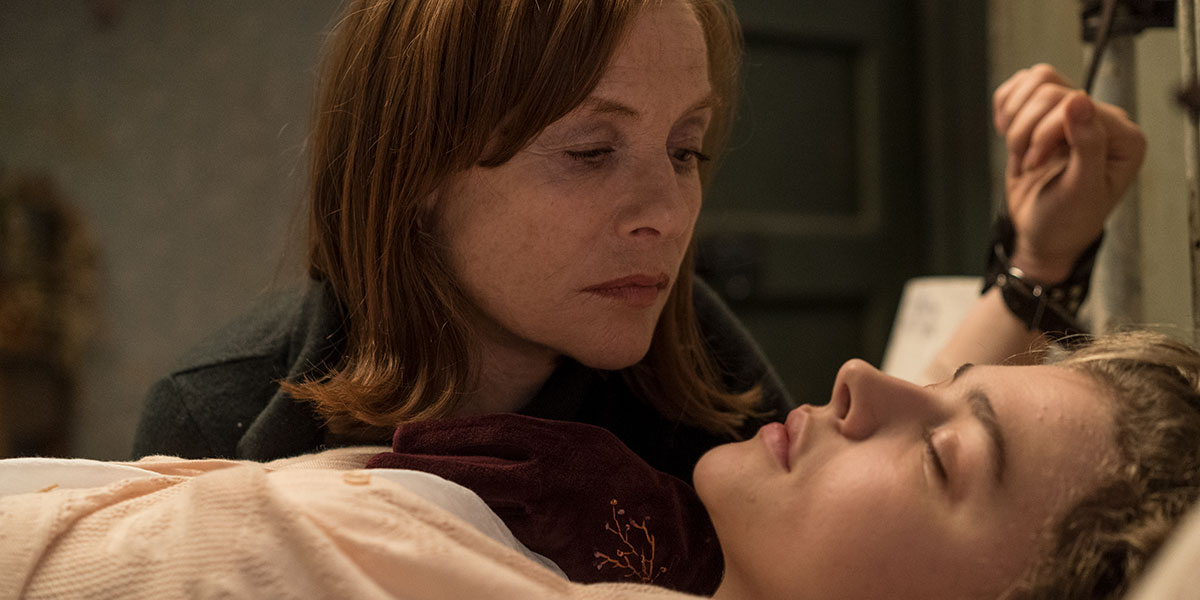
Plot-wise, we can only say so much: Chloe Grace Moretz plays a struggling New York waitress named Frances, who one day finds an expensive-looking green purse left on a subway train. The ID within the bag reveal that it belongs to an elderly woman, and Moretz gets invited in for tea when she returns it. Isabelle Huppert plays Greta, the lady in question--she tells Frances that she’s recently widowed and that her daughter lives abroad. The pair of women end up cultivating an unlikely friendship; Frances has recently lost her mom, and seems relieved to find another lonely soul who also happens to double as a surrogate mother-figure. They’re cute together: Frances takes Greta out to buy a dog, and they go on walks and take selfies on Greta’s Nokia dumbphone. The movie hums along on that cozy little frequency for quite some time before taking a hard left: while over at Greta’s house for a dinner date, Frances opens a cabinet door to find many shelves full of expensive-looking green purses, all stuck with post-it notes inscribed with names of various girls. After this point, the film operates as a pretty nasty thriller that is both twisty and classical--imagine if Hitchcock was working in a world where Audition already exists--and it kept this jaded horror fan jumping for the full runtime.
I could see this movie playing like gangbusters to a wide audience come this October, and thankfully, it got picked up by Focus Features, so my fingers are crossed I get to see it again sooner rather than later. The reviews have been fairly tepid, however, which I tend to think might be because of Neil Jordan’s total willingness to draw inside the lines of archetypal storytelling: he is a fairy tale filmmaker after all, and this ends up basically being a riff on “Bluebeard.” Why do you think other critics aren’t appreciating that as much as we did, Lydia?
LYDIA: I wonder if people just aren’t familiar with the “Bluebeard” fairytale? I don’t know if people found it predictable or not scary or too whimsical from Huppert… Once I realized where Jordan was taking this, many of the “twists” became incredibly signposted, which didn’t diminish the impact for me at all (in fact, that made some things more horrifying).
I’ve been thinking about the value of telling and retelling stories. What Jordan has done here is ditch the sexual dynamic, but it’s still a predatory, age-inappropriate relationship cautionary tale, updated to the modern era. I think some of the scariest stuff isn’t necessarily how Greta was behaving (I meeeeean, that was scary, too), but how other people were responding to Frances’s distress, like the manager of the restaurant forcing her to still serve Greta and the police being useless in stalking situations. I loved the addition of the street savvy best friend character, too.
ANDREW: Yeah, the movie is super-interested in the logistics of handling a stalker--the line between keeping yourself safe at work and maintaining professionalism, the relative in-the-moment uselessness of restraining orders, the permeability of privacy and personal space in the social media era, etc. Greta isn’t a movie with a looot on it’s mind, but I think there are still interesting conversations to have around it, just like with most fairy-tale-inspired stories.
LYDIA: The moral of the story is: If you find a lost purse, just steal the money out of it, kids!
ANDREW: Exactly. Go treat yourself to a colonic.
