• Episodes
  • Festival Coverage
  • Video Essays
  • Writing
Menu

Cinematary

where film criticism goes to die
  • Episodes
  • Festival Coverage
  • Video Essays
  • Writing
waves_0HERO.jpg

Waves (2019) by Trey Edward Shults

October 7, 2019

Review by Zach Dennis

Although I’m someone who didn’t catch the previous two features by director Trey Edward Shults, Waves — from the outside — seems to be his most ambitious. Where both Krisha and It Comes at Night seemed to both feature small-scale, intimate portraits of family, his latest feature looks to examine the same ideas by way of a Magnolia-style sprawling epic.

While fascinating on paper, Waves feels like a story being told by the wrong author.

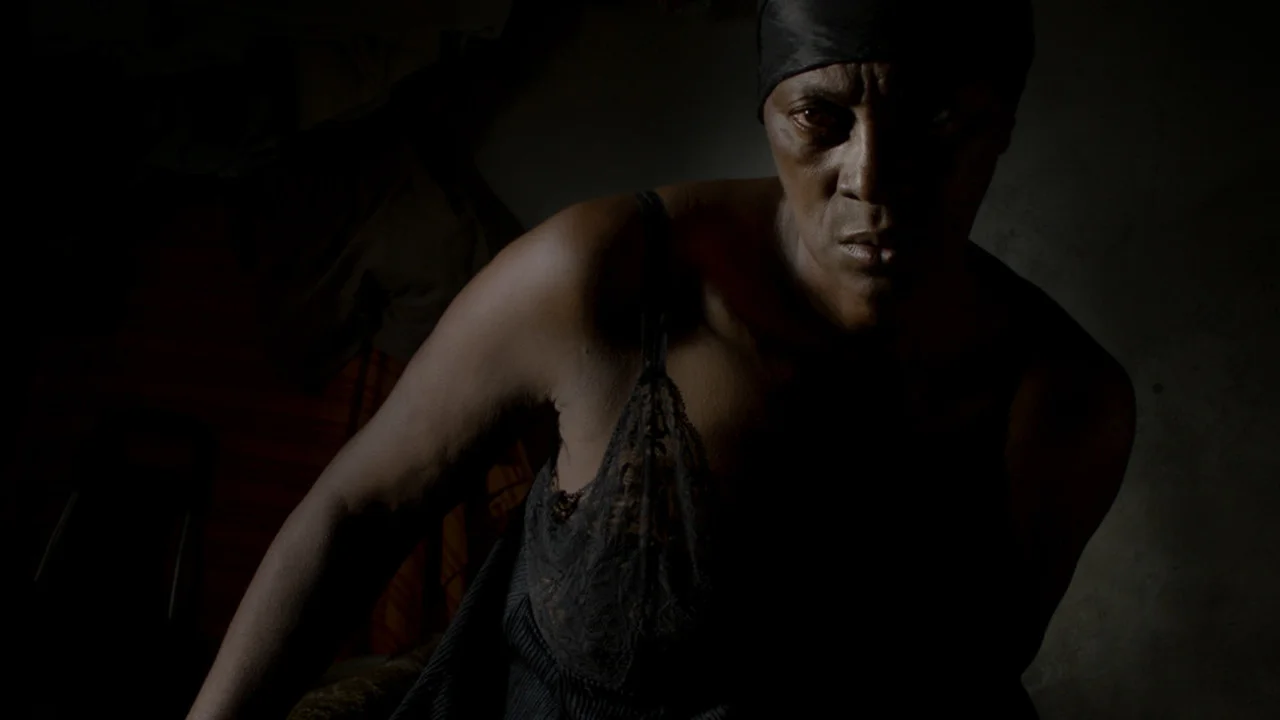
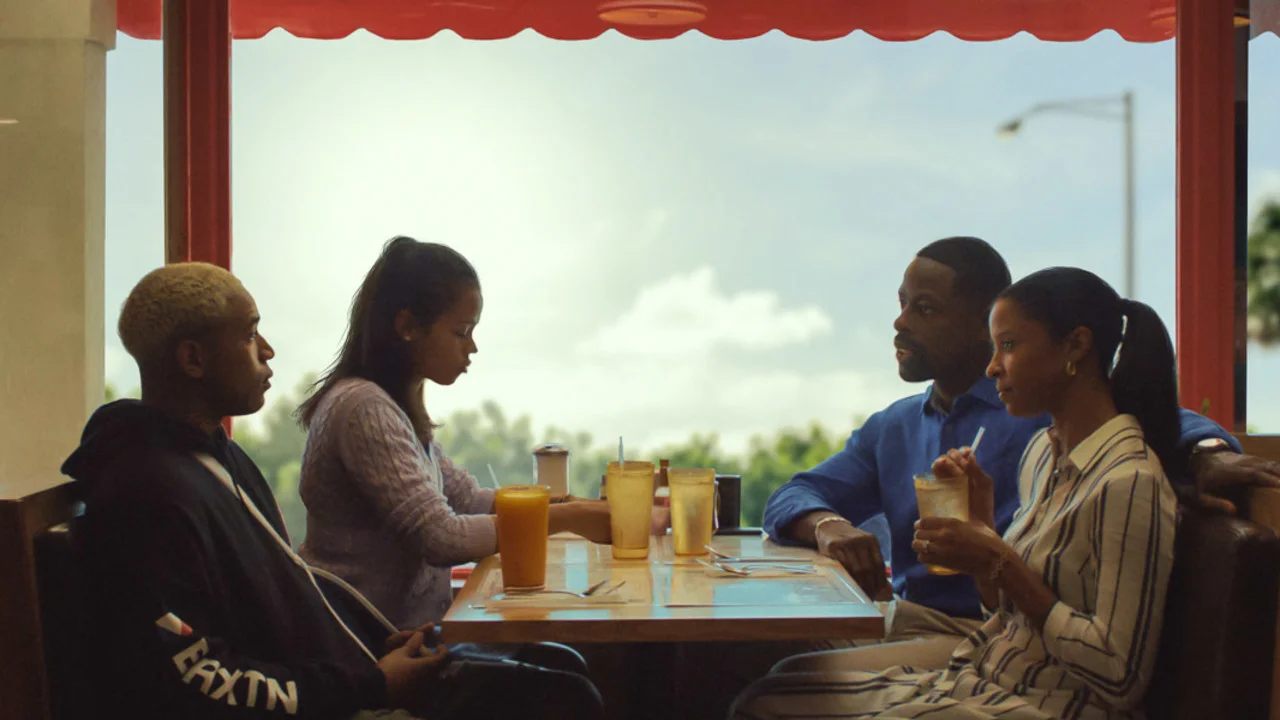
Following an African-American family in South Florida, the film initially is from the perspective of Tyler (Kelvin Harrison Jr.), a promising high school wrestler entering his senior year. Tyler’s journey is relatively unremarkable; it’s no different than those of most other high school athletes. His father (Sterling K. Brown) has an athletic history as well, but a knee injury kept him from pursuing it further and he implants that ambition on his son, who seems like he wants to take the next step – but not as badly as his dad.

His relationship with his mother (Renée Elise Goldsberry) seems fine if not a bit distant, and the same could be said about his relationship with his sister. He has a high school sweetheart and what seems to be a cavalcade of friends to hang out with on weekends, but the cracks start to appear when his girlfriend tells him she is pregnant and intends to keep it, just as he also is hit with an injury diagnosis on his shoulder that could jeopardize his season.

Distraught, Tyler begins to lash out at others until finally, it all comes to a head in an event I’ll withhold for the sake of avoiding spoilers (it is better to go in knowing nothing with this one). From there, and with her brother distant now in her life, the story picks up with his sister, Emily (Taylor Russell), following her as she tries to separate herself from her brother’s behavior and establish a life for herself.

Shults seems keen on investigating the dynamics of the family, but everything doesn’t necessarily come together in a way that feels natural or insightful. Brown gives the more nuanced of performances as the father, but the rest are not left with much meat.

It also is worth pointing out that Shults, a white male, is telling this intimate portrait of a black family, which seems (at least initially) to have aspirations toward investigating toxic male behaviors and the wake that they leave. The subject in this narrative isn’t given the depth it requires, leaving Shults looking like a person who just doesn’t understand the patterns of toxic male behavior among black men specifically — something the black director Ryan Coogler has done masterfully in larger-scale projects like Creed and Black Panther.

This is not to say this story should be off-limits to Shults – but it is a story that requires an intense level of understanding on the machinations of how these things develop and why toxic behavior more generally can have culturally specific incarnations. 

Between that and the littering of Kanye West songs on the soundtrack, Waves felt like the Bradley-Whitford-in-Get-Out of Shults’ output. It’s definitely a film that could have been aided by an African-American voice in the creative process.
Tags tiff19
1 Comment
joker_0HERO.jpg

Joker (2019) by Todd Phillips

October 7, 2019

Review by Zach Dennis


“There is no doubt that this belongs to the realm of the frightening, of what evokes fear and dread.”
- Sigmund Freud, “The Uncanny”

In Sigmund Freud’s essay, “The Uncanny,” he explains that many of the traits associated with this phenomenon deal with the projection of one’s self, the inhabitance of multiple selves or personalities that fester the narcissistic super-ego into forming its own reality. Unfortunately for Freud, 100 years after the publishing of the essay, he couldn’t have anticipated the innovations in media, including the cinema, television or, especially, the internet.

In a postmodernist society, what is true reality is twisted, and our relationship to pop culture and media can distort it to the point of no return — enflaming our anxieties and making those suffering from mental illnesses even more susceptible to feeling isolated despite the inherently more expansive web of connectivity than those in Freud’s age could have even imagined.

What is true in 2019 is vastly different than what is true in the time period inhabited in director Todd Phillip’s Joker, which seems to play in a rose-colored trash heap of New York City in the 70s — a bastion of the unfiltered edge that Scorsese perfected, but without the understanding that he brought to his work.

Despite being tossed into the past, Joker is very much a movie of the present. While lacking the Reddit forums of the current age, Phillips is clearly speaking to the societal angst that a section of the digital landscape bellows out: the world isn’t paying attention to us or our talents, and it will regret it.

At its core, Joker would love to be a movie about the mental health system and the lack of attention or funding to actually help those who desperately need it. But that’s all bullshit. The movie just needed something to make it seem much more nuanced so that it could validate its lust for violence and exhalation of the misunderstood misfit.

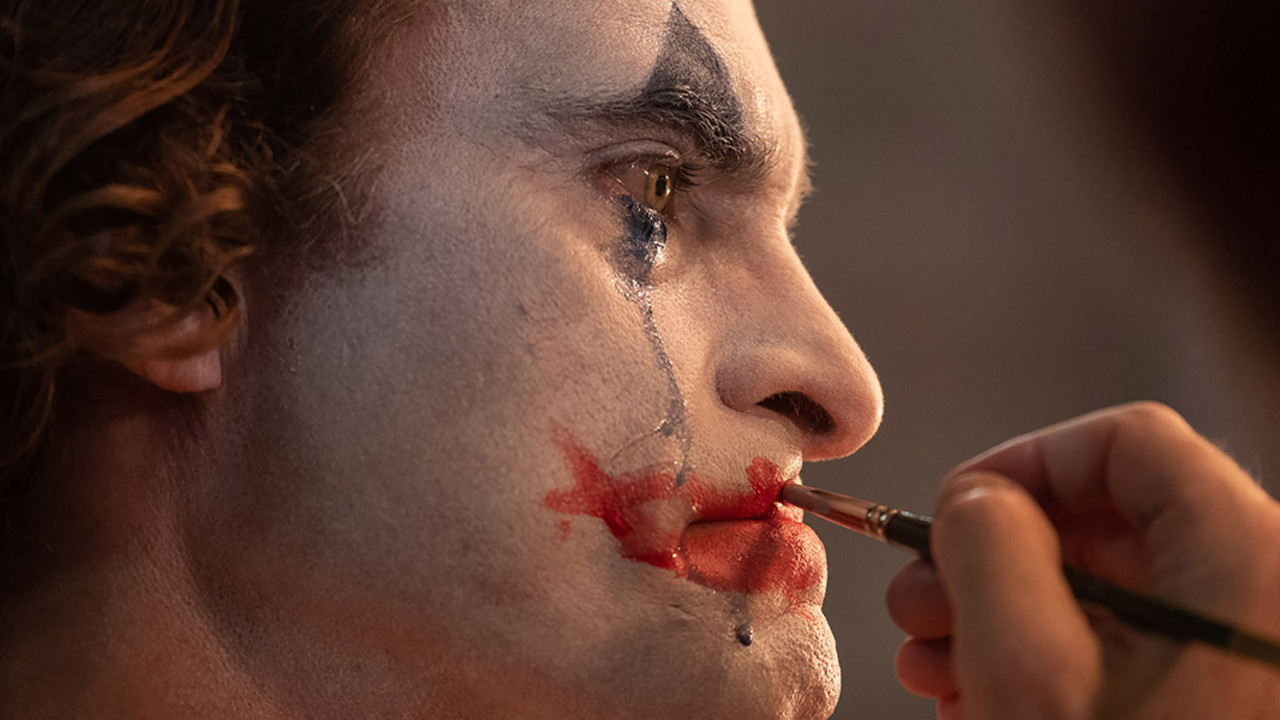
Arthur Fleck (Joaquin Phoenix) lives through pop culture. Every night he comes home to his mother (Frances Conroy) and the two take in the Murray Franklin Show — a Johnny Carson riff with Robert DeNiro playing the titled host. He works as a street sign artist, but is consistently neglected by his co-workers and boss while also being tortured by people on the streets (we first meet him having his sign stripped away and broken by a gang of teenagers before they begin to kick Fleck in an alleyway).

Society has no room for someone like Fleck, but he believes his ability to become a stand-up comedian will pave the way to acceptance. Outside of his mother, and his nightly silver screen correspondence with Murray Franklin, there aren’t many other people in Fleck’s life. A brief encounter with one of his neighbors, Sophie (Zazie Beetz), may offer an escape. As the two stand in the elevator, Sophie shows annoyance over the day, signing a gun to the head to the laughter of Fleck. It is only a small interaction, but enough to light the flame of approval by another person for the generally misanthropic man.

His pursuit of a stand-up career along with his “relationship” with Sophie are two signs of Fleck’s distorted realities as he is eventually invited to join the panel of the Murray Franklin show after clips of a set he did make the airwaves (a jest for the audience in the context of the show, but a point of affirmation for Fleck) while Sophie continues to appear in various points of the narrative alongside Fleck — a friend, or even more, who has become another rock in his life alongside his mother. It isn’t until late in the film when a despondent and disengaged Fleck makes his way into her apartment — alarming the single mother — that we realize that these framed-to-be-tender moments were actual figments of a fracturing mind.

All of these degenerating realities collapse as police close in on Fleck for an act earlier in the film where his un-diagnosed tendency to break into laughter caught the attention of some drunk financial bros, who used the absurd tick to attack Fleck — resulting in him firing back with a handgun, killing all three men. The act became a calling for the disenfranchised of Gotham City to rise up against the wealth dominating the city.

Phillips desperately wants to say something about mental illness, about wealth inequality, and about our inabilities to see past our own echo chambers, but as all of these qualities come to ahead in the final act of Joker, and Fleck continues to fall deeper and deeper into the deranged psychopathic Batman villain most people are coming to see the movie for — it defaults into the violence. Because in the end, that’s what you come to a movie about this character, right?

It’s unfortunate that this movie would become such a hot-button for debate because there is nothing even remotely profound about it. Phoenix drips with inklings of better performances while Phillips allows the rest to be a dress-up for a poor rip-off of better screams into the infinite void. 

In the current age, it’s easy to channel the uncanny. Go from tweet to tweet, post to post, and you’ll find most people vocally dealing with insecurities, anxieties and uncertainties. But Joker never speaks to any of those — as Fleck pulls the trigger and murders more and more people, culminating in a revolt to decency and the status quo.

When it happens in Ferguson, it’s terrorism. At Stoneman Douglas, it’s a tragedy. When it happens in Joker, it’s cool. And that’s the problem that it’s author doesn’t seem to understand.

Tags tiff19
Comment
UncutGems_0HERO.jpg

Uncut Gems (2019) by Josh and Benny Safdie

October 7, 2019

Review by Zach Dennis

Rumbling through your psyche like a bull spewing anxiety, Uncut Gems feels like the a natural progression for the Safdie Brothers’ career: an unfiltered meltdown for two hours coupled by bouts of insecurity and the glam of the underbelly.

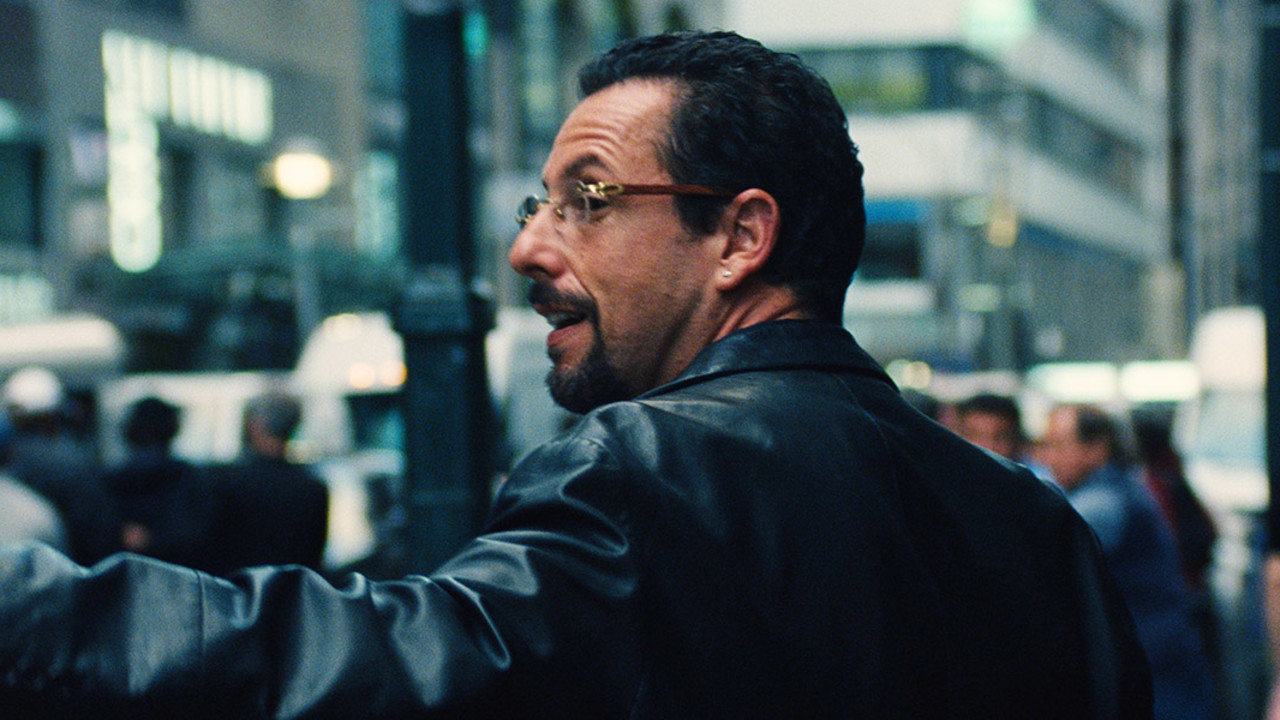
It’s easy to seal Adam Sandler’s appearance as stunt casting, but it makes sense that the Safdies would want to tap into Sandler’s abilities, not so much as an actor, but as a presence. His character, Howard Ratner, is not really fun or attractive but has a natural charisma — this aura drawing in people to buy into whatever he’s selling, whether that’s through his merchandise, his promises or just whatever web he’s spinning.

But Uncut Gems isn’t interested in giving you that one big score that Howard is chasing over the course of the film. Despite the lengthy, near-psychedelic dip into the titular gems that are uncut, Howard never really nails down what that big score will be. It could relate to working with Kevin Garnett, who during the narrative’s time period of 2012, is in the midst of his NBA playoff run with the Boston Celtics and is currently in a series with Philadelphia. Garnett visits Howard prior to one of the game’s and comes across the newly acquired gems that have this spiritual attraction to him — he can’t keep his mind off them — so he gives Howard some collateral to keep them for luck in the night’s game.

The allure of the gems is an easy connection to Howard’s business — selling and trading jewelry and other goods in order to score something more. You keep looking for the bigger deal, as if eventually the answer or “the score” will appear.

But Howard isn’t in the clear — he has some loan sharks (including one of his relatives) on his tail, and his family is slowly breaking apart as his wife (Idina Menzel) wants nothing to do with his games anymore.

Sandler fits perfectly here, embodying someone whom you can see has the allure and interest of those around him, even if trust or stability don’t seem to be a part of anything he does. He’s constantly skimping on deals, missing deadlines, leaving people hanging, and taking great offense if any of the same acts happen to him.

Uncut Gems drags you along the way — making you another accomplice to Howard’s grifts and hustles, hoping that they won’t finally catch up to him and leave you with nothing.

It never quite allows you to take a breath while watching it, and to say that you don’t leave constantly thinking about Uncut Gems is an understatement. Compared to their last film, it lacks the flash – but there is something that churns differently in Uncut Gems rather than Good Time that feels more ancillary: that uncertainty of the score or whether or not the grift will pay off keeps you, like Howard, always wanting to seek more and more. You become one with the need to finally reach that pay-off, no matter the cost.

Tags tiff19
Comment
lemans66_0HERO.jpg

Ford v Ferrari (2019) by James Mangold

October 7, 2019

Review by Zach Dennis

Ford v. Ferrari is the ultimate TNT movie.

Take that as you will but it’s true. It’s 3 p.m. on a Saturday. Your partner asked if you wanted to go to the store with them. You say no and sit in front of the TV instead. There’s nothing on any channel: your best option is an Eastern Washington versus Miami of Ohio college football game from three years ago. You wonder what movies are on. You’ve seen Now You See Me 2 enough times for one lifetime and just aren’t in the mood for a re-watch of X-Men: Days of Future Past.

There’s where Ford v. Ferrari comes in.

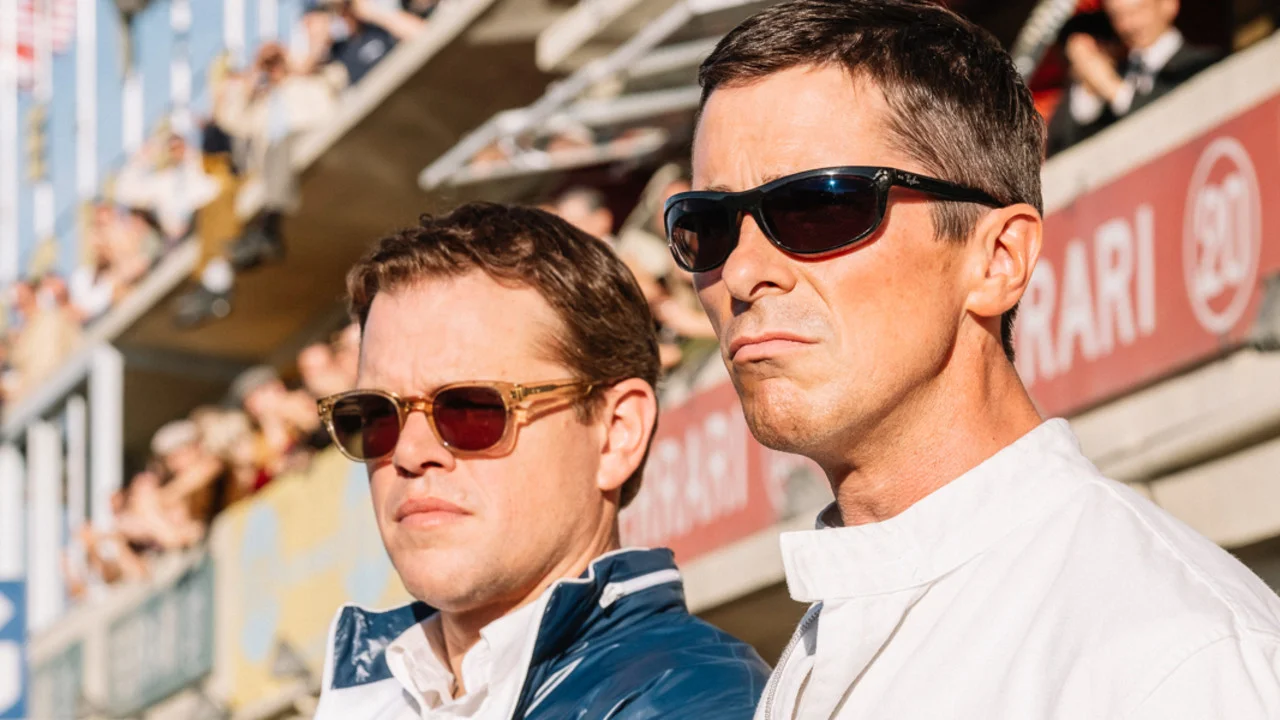
Nothing is bad in this movie. You can see why all involved got the job — Matt Damon chews up scenery with charm and movie star bravado while Christian Bale gets to play off that with his own tongue-in-cheek charisma. James Mangold brings a certain adrenaline to the racing sequences that makes it worth seeing on the big screen before your future lazy weekend afternoon.

But overall, Ford v. Ferrari is just fine.

Chronicling the battle between the Ford Motor Company and Ferrari in 1966 to win the 24 Hours of Le Mans, Damon plays Carroll Shelby, a former contestant in the race who now specializes in designing and selling racing vehicles. He’s approached by Ford to construct their racing vehicle and given as much leeway as possible to make it happen — and quickly.

The only hiccup seems to be his choice in driver — Ken Miles (Bale), who has a wildcard streak, even if he is the most skilled racer to take the job. A wrestling match between the crew trying to make the vehicle the best it can be and the Ford executives (made up of Josh Lucas, Jon Bernthal, and Tracy Letts as Ford) .

Mangold sets up the film as a parable of creativity vs. business. The creative team of Shelby and Miles are not making the car to necessarily make Ford look better, but because they want to see if they can accomplish the goal and win the race. The same can’t be said for the other side, which is set on the idea of creating a racing team as a way to instill some cache with the younger crowd looking for hot, fast cars and the air of cool that comes with the racing scene.

This jockeying never quits, even when (spoiler alert: but come on, this is history…) they end up winning the race and Miles decides to concede to the request made by the Ford executives – the point being that unless you have a seat at the table, you’re always on the menu.

It goes a bit too long, but Ford v. Ferrari flows due to two true movie star performances and a guiding hand from Mangold that knows what beats need to hit when. Maybe it is dismissive to call it the ultimate TNT movie – because I would probably do the same thing and check in on it if it were playing – but that doesn’t mean I’m standing down my claim.

If I did, I would be making the same mistake as Ken Miles.

Tags tiff19
Comment
image-asset.jpeg

Weathering With You (2019) by Makoto Shinkai

October 7, 2019

Review by Zach Dennis and Jessica Carr

Zach: I’m relatively new to the work of Makoto Shinkai, as I caught up with most of his films prior to the festival, but am aware of the box office power that his latest, Your Name, had in North American and overseas. This one feels somewhat along the same lines: a runaway boy finds himself trying to survive in Tokyo and strikes up a friendship with a girl who he discovers has the abilities to control the weather. We can dig into the weather aspect later – because I think that was our largest takeaway – but I enjoyed the film outside of its ending. It seems very typical Shinkai fare and the three kids at the center are charming and fun to watch explore this ability that the girl has.

Did you like it, Jessica? And how does it stack up against his others in your eyes?

Jessica: While I agree that this film is very fun and the characters are charming, Your Name is a much, much better film. The female character in Your Name has more of a fleshed-out personality, for one thing. I think most of that is due to the fact that the male and female characters switch bodies, so we get a glimpse into not only both of their lives but also what it would be like for the male lead to live as a female and vice versa. There’s a lot of really good gender stuff in Your Name and we lose ALL of that sensibility and nuance in Weathering With You. 

Instead, we are plunged into the brain of a teenage boy who is willing to do whatever so he can have a girlfriend...and that's just not very interesting to me. The problem here is that perhaps Shinkai didn't want to completely make an allegorical film about climate change, but there really is no way this movie isn't read that way. So instead of committing to that completely, he just confuses all of us with his ending. Without giving spoilers, Zach how did you feel about the ending of Weathering With You? 

Zach: Uhhhhhhhhhhhhhhhhhhhhhhhhhhhhhhhhhhhhhhh…

download.jpeg

I agree with you that I’m not entirely sure of the point Shinkai was trying to make with this ending. From his past work, it seems like he wanted to lean into the power of choosing love over the everyday struggles of life, but to link that with the effects of climate change seems incredibly ill-advised and in bad taste.

Whereas his other films seem to take into account not only the love story, but also the greater good of those around them (especially with Your Name), I don’t know why this one decided to cast all other aspects to the wayside. He also seems to hint multiple times throughout the story that these climate effects are a natural cycle in the world, and not the direct result of the past century, which almost made me fall out of my chair.

It’s really unfortunate, because I think the central tale of the boy and girl being outcasts in Tokyo is great on its own, and I don’t know why he decided to take it in the direction he did. And we didn’t even mention the entire subplot related to a handgun…

Jessica: Yeah….I felt like that was completely unnecessary. Shinkai really needed a female writing partner on this one. Someone to consult and say, ''Hey, maybe you shouldn't put that in there." These movies take so long to make, so it's just frustrating when they have several problems that stop them from being great. I feel like when this hits theaters in America, I will still join my friends in watching it. At the very least, it's gorgeous to look at even if the ending may have everyone throwing up their hands in dismay.

Tags tiff19
Comment
Screen-Shot-2019-07-02-at-6.57.23-PM.png

Knives Out (2019) by Rian Johnson

October 7, 2019

Review by Zach Dennis

A sentiment that seems to placate any real conversation around a movie is the statement: “They don’t make them like they used to.”

Generally reserved for those only visiting the multiplex for the latest blockbuster fare, it could also be related to the mid-budget multiplex movies that seem to come and go as Marvel or Disney hits completely dominate the market. So please forgive me when I say that Knives Out falls within a large category of movies we need more of.

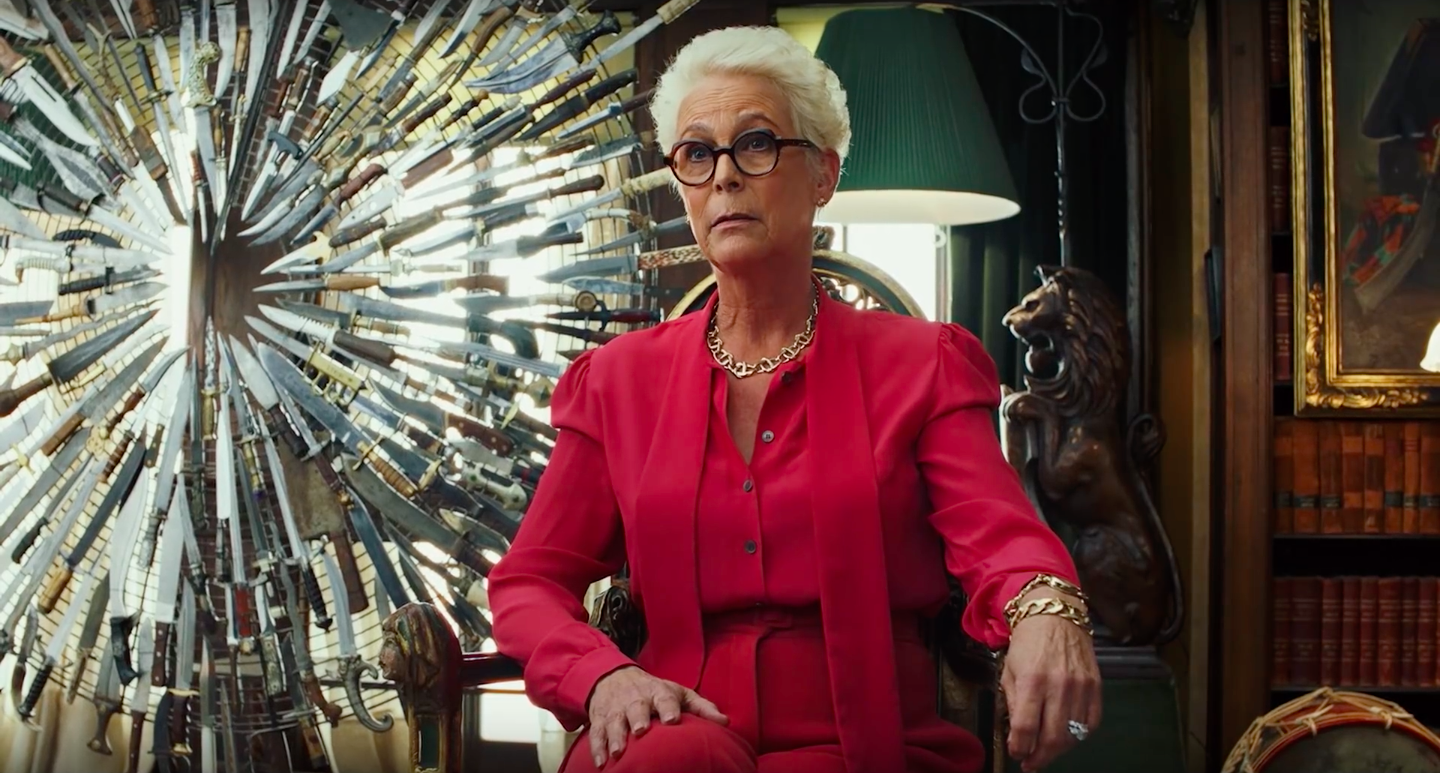
Among the onslaught of superhero properties, Knives Out is full of reasons to make the trek to the movie theater: recognizable movie stars (Daniel Craig, Jamie Lee Curtis, Chris Evans) playing it up, a clever script that never really gives itself away, and a premise that is simple enough to contain itself within one narrative (not feeling a need to expand into a multiverse) with a satisfying conclusion.

This is no outlier for writer/director Rian Johnson, who has made a knack of doing that even before Star Wars: The Last Jedi with The Brothers Bloom and Looper. His latest feels like a breath of fresh air among the shuffle of big-budget blasters and awards-fare dress-ups; a reminder that the moviegoing experience should be communal and also be one that keeps you on your toes with the goal of surprising you.

The death of patriarch and famed mystery novelist Harlan Thrombey (Christopher Plummer) brings his entitled – oops, typo – entire family together. Leading the pack is his daughter, Linda (Curtis) and her husband (Don Johnson). But they’re fighting off her younger brother Walt (Michael Shannon), who runs Harlan’s book empire, and Joni (Toni Collette), who was married to their deceased brother but latches onto the family like a tumor.

Various other faces include Ransom (Evans), the child of Linda, and a medley of other off-spring. There for the death are two detectives (LaKeith Stanfield and Noah Segan), and the decorated investigator Benoit Blanc (Craig).

Blanc is not entirely sure why he is there, but he feels like something is stirring within this family dynamic that may lead to the reason Harlan is dead, and not many believe it was a suicide. Stuck in the middle of the chaos is Marta (Ana de Armas), Harlan’s caretaker with a habit of unloading her lunch at the hint of a lie.

It’s easy to compare Knives Out to an Agatha Christie novel and be done with it, but Johnson modernizes it enough to not simply be “a statement on 2019” and more of a natural accumulation of current qualities that one would be led to by people of this financial stature. 

It also plays into the natural inclination that we, as movie-viewers, have with wanting to solve the mystery. This doesn’t only to a mystery narrative, but the desire to problem-solve through cinematic narrative often drives the most satisfying films, and when done on a large-scale, movies that indulge it can become our most treasured viewings.

Knives Out holds that trait and is yet another reminder of what makes movies of this ilk so fun to watch. It isn’t doing anything particularly new — this could easily have been a product of Lubitsch, Wilder, Hawkes or even Sturges if it were in the early days — but it is a welcome update that affirms how to make a winning piece of entertainment.

Tags tiff19
Comment
jojorabbit_01.jpg

Jojo Rabbit (2019) by Taika Waititi

October 7, 2019

Review by Zach Dennis

At this point, Hitler really isn’t that funny.

Now, it isn’t because we’re so constricted now that we can’t lampoon the famed dictator, but more that it has been done again and again and again and again — and better than this. Start with Chaplin in The Great Dictator and move through To Be or Not To Be or The Producers: I think we’ve thoroughly stuck it to the pencil-thin mustached leader.

So what Taika Waititi is doing in Jojo Rabbit is not so much terrible and moreso just uninventive — something that could be viewed as a searing indictment on a director that has been heralded for his inventiveness through his work to date: Eagle v. Shark, Boy, What We Do in the Shadows and The Hunt for the Wilderpeople.

Either way, Jojo Rabbit isn’t the blistering middle finger to Nazism and its modern day evocations that Waititi would probably like it to be, instead, it is yet another example of the nearly fetishistic fascination with lampooning the German national socialist movement of the early 1900s by relying on its symbols rather than its ideology or acts.

Jojo Rabbit’s titular character earns his name when he doesn’t follow through with killing a rabbit — despite the jeering and pressuring from his young commanders at Hitler Youth camp — and becomes seen as much more soft in the eyes of his Nazi superiors than he would like to be. Jojo (Roman Griffin Davis) desperately wants to fit in with the Nazis. He’s so dedicated that his imaginary friend is their leader — Adolf Hitler (played by Taika Waititi) — and he tells everyone in his town, including his mother (Scarlett Johansson) how much of a good Nazi he is going to be.

His talk falls short in camp after a faulty choice to be in the area of a bomb explosion earns him a trip to the hospital and relief from any military duties in the battlefield. From here, he works in an office in town with a few of his commanders — all demoted for poor conduct watching the children in the camp — such as Captain Klenzendorf (Sam Rockwell), Fraulein Rahm (Rebel Wilson) and Finkel (Alfie Allen).

Due to his new position, Jojo spends a lot of time at home and discovers a secret of his mother’s — a young Jewish girl named Elsa (Thomasin McKenzie) is living behind the wall boards of his late sister’s room. Initially, Jojo spends his time threatening Elsa, because as a Nazi-in-training, he has to assert his authority to the movement’s number one enemy, but the posturing doesn’t work. Eventually, the two settle into spending time together or as Jojo (with the aid of imaginary Hitler) sees it as a chance to learn and document observations on the enemy.

This sets up a lot of the distance Jojo Rabbit wants to make between actual Nazis and the Nazis inhabiting its world. The film is very aware of what makes a Nazi a Nazi — the swastika, the uniform, the accent and the salute are easy signifiers of the most-recognizable villains in human history. But by reveling in this, it gives itself a pass to not interrogate what it really means to be a Nazi and the atrocities that come with it – namely the Holocaust, which is but a whisper (if that) among the narrative.

It’s easy to see what Waititi is trying to do — implementing his style of comedy and commentary to show how absurd and silly the Nazis were, but this brings everything back to the starting point — but we already knew that.

What Jojo Rabbit doesn’t understand — as do many other modern Nazis stories — is that the surface of the Nazis isn’t lost on the public. If anything, we have superseded that into becoming the token “bad guy” for most pop culture stories since the 1950s or 60s. The real threat of the Nazis comes through their white supremacist ideology and the ways they chose to implement cleansing the rest of the world to fulfill this. So, again, Jojo Rabbit isn’t terrible because its is playing with Hitler as the comedic partner to the film’s main character; it is bad because it shows a base level and limited understanding of what needs to be deconstructed and mocked from the Nazis.

Everyone knows (or should) that the Nazis are bad, but the actual points to mock are too real, too scaring and too visceral to mine any comedy from (just ask Roberto Benigni or Jerry Lewis). And unless you’re going to reckon with that, you aren’t saying anything at all.

Tags tiff19
Comment
dolemiteismyname_02.jpg

Dolemite Is My Name (2019) by Craig Brewer

October 7, 2019

Review by Jessica Carr

According to Dolemite, good movies need “Titties, funny, and kung-fu.” It’s probably good then that Dolemite Is My Name has a potent combination of all these things. I was pretty sure by watching the trailer that this would be the beautiful beginning of an Eddie Murphy renaissance and I’m happy to report that I was right! 

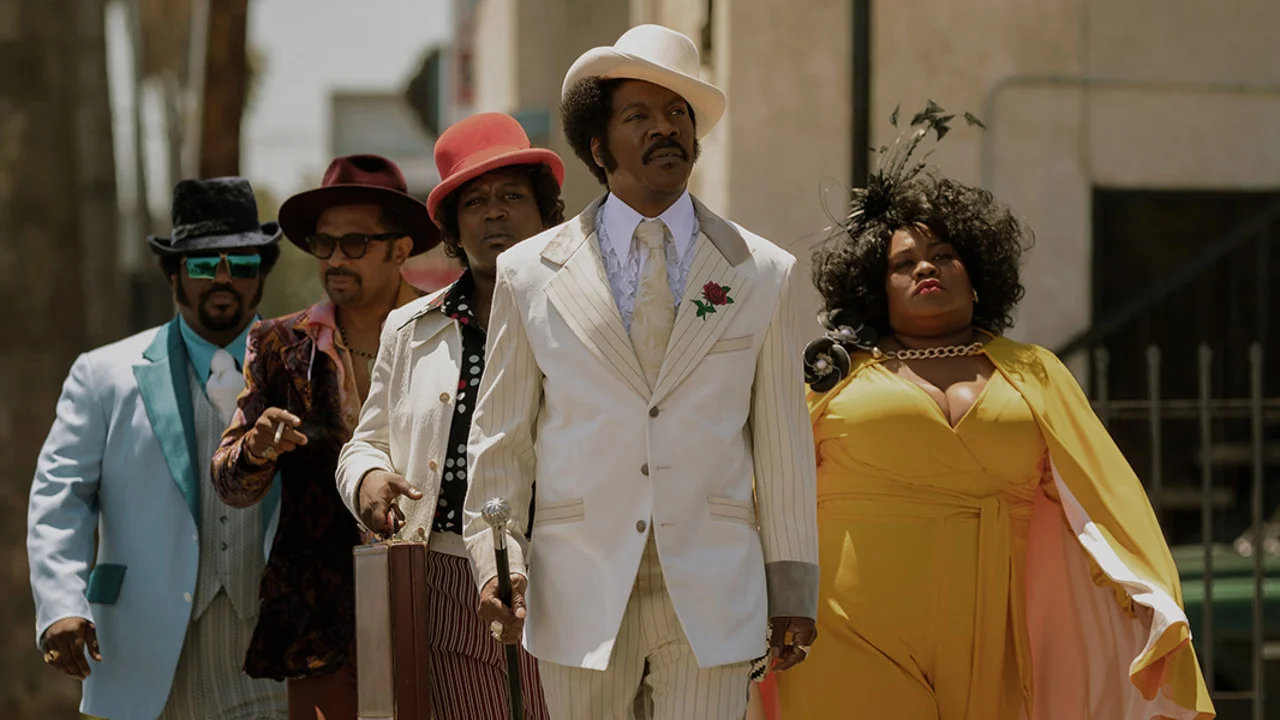
Murphy kicks ass as performer Rudy Ray Moore, a man who most people probably wouldn’t know the name of unless they were a fan of 70s blaxploitation cinema. Moore was hitting a slump in his comedy career, so he created a character: Dolemite the pimp. Then he did something outrageous; he tried to make a movie. The film is a beat-by-beat telling of Moore’s journey as he made the first Dolemite film, which led to him making more films in the Dolemite series. 

This biographical comedy is really about persistence. When we first meet Rudy, he is getting to be one of those washed up comedians who nobody really pays attention to. He believes in his dream to make a film even though he has absolutely no experience in it. To me, casting Eddie Murphy in this role was a perfect decision. After all, the movie is about a guy who everyone has stopped believing in, much like Murphy, whose film career has dwindled in the last decade. But through perseverance and passion, both Rudy in real life and Eddie in this film are able to make audiences believe in their talent again. 

In terms of technicality, the film doesn’t really do anything out of the ordinary. Director Craig Brewer seems to look at Rudy’s biography as story already laid out for him. It is a lot like Disaster Artist, where the film is showing how a cult classic was made – so the scenes with the actors are often almost exactly like the original.

However, I like Dolemite is My Name more than Disaster Artist because it shows the film industry through the African-American perspective. One scene that comes to mind is when Rudy and his friends go to a theater and watch Billy Wilder’s The Front Page. They’re surrounded by white people roaring in laughter, but Rudy and his friends just don’t find the jokes funny. So Rudy grabs his friends and a bunch of film students and sets out to create something that they would enjoy watching. 

I also love the supporting cast in this film. My favorite person was Lady Reed (Da’Vine Joy Randolph), a talented singer and actress that becomes both Rudy’s protege and possibly his best friend. He looks to her for advice and support especially before shooting his sex scene when he worries that he doesn’t have the right figure for a romantic male lead. She tells him to not take the scene so seriously – to play it funny instead of straight – which makes for one of the best scenes in the film. 

Overall, Dolemite is My Name is very funny and ultimately inspiring in the way it tells the true story of a man who created art against the odds. I think it also sets the stage for a much anticipated comeback from Eddie Murphy, another talented guy who still deserves your attention.

Tags tiff19
Comment
greed_0HERO.jpg

Greed (2019) by Michael Winterbottom

October 7, 2019

Review by Zach Dennis

A lot of people seem to be attempting to find a way to talk about excess.

On television, you have Succession and Billions; in the movies, you can look to recent films such as The Wolf of Wall Street and Nocturama, which both examine the need to consume. But those can turn serious, and in his latest, Michael Winterbottom attempts to look at conspicuous consumption and the one percent through his own satirical lens.

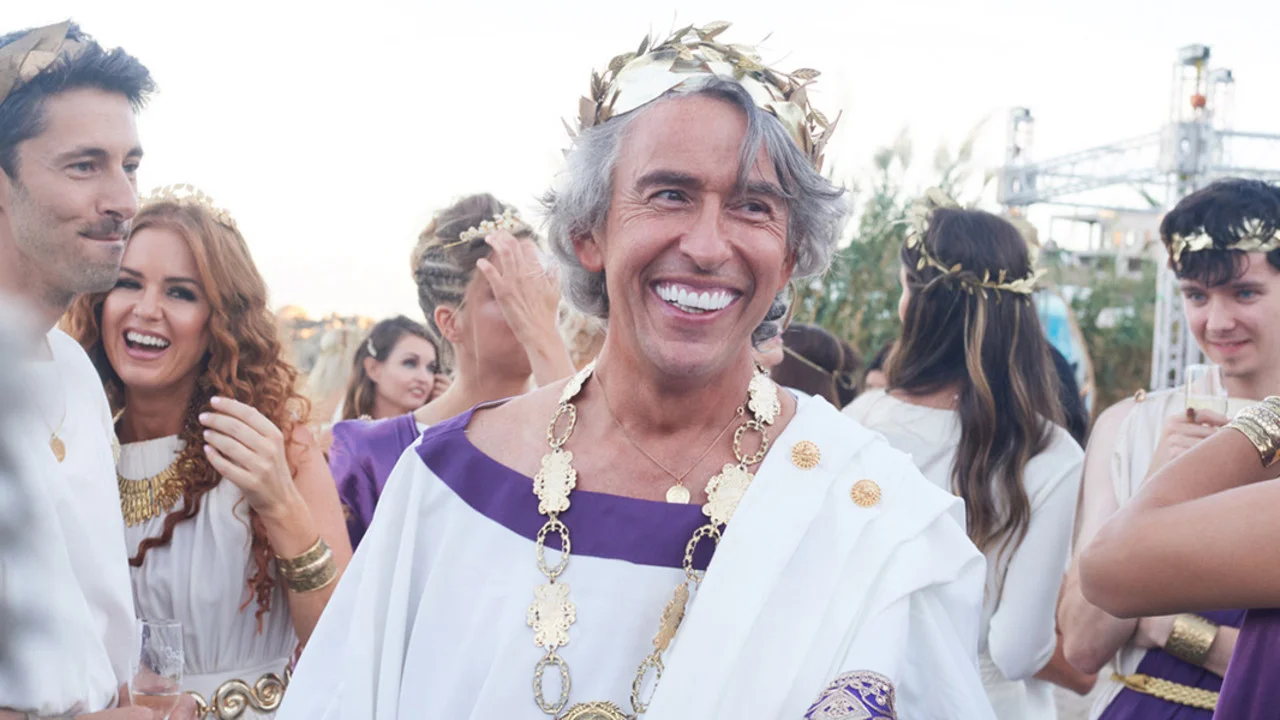
Greed doesn’t leave any room for interpretation. Starring frequent collaborator Steve Coogan as Sir Richard McCreadie (or, as most call him, McGreedy), the story follows the setting up off his birthday party in Greece while also bouncing back and forth throughout his life because of the inclusion of his biographer (David Mitchell) on the trip.

McCreadie is a fashion store mogul, with Winterbottom and Coogan framing him in the same mold as H&M but with the bite of Logan Roy.

The first half of the film plays on Coogan’s strengths: he gets to him and haw, similar to his elevated self in Winterbottom’s The Trip films but without the melancholy and more of a distance. Along for the ride is his ex-wife (Isla Fisher) who has helped to filter his money into various properties, including a yacht in Monaco.

Between the flash-backs as well as the struggle to implement McCreadie’s birthday plans in Greece — he has requested a replica of the gladiator pit from the movie Gladiator where he and his guests will watch someone fight a lion in full ancient garb —the film also includes a subplot between one of McCreadie’s staff members, Amanda (Dinita Gohil), who is helping to work on the birthday party but also is torn between the way they have dealt with a group of refugees who are on a nearby beach to the behest of McCreadie.

The situation calls back Amanda’s own past in Sri Lanka, where her family worked in the same factories that McCreadie used to funnel out his clothing at a much cheaper rate than working through the U.K.

At this point, Greed pivots to speaking on international labor and how it has allowed the most powerful rich to exploit that labor in order to make more products for less, but it never seems to have a real punch. As the party naturally goes a bit awry, the power in the family shifts from McCreadie to his initially apathetic son (Asa Butterfield), who sees it as an opportunity to get back at his family but also sees the rewards possible with that amount of power.

Greed never seems entirely misguided, but feels less striking for an age when more eyes are on the degrees of wealth of the top one percent than ever before. As it concludes, it plays a number of stats on international labor, which seems strange for a plot that was only given much due late in the film and, even then, never felt like it was fully developed to begin with.

The satire between McCreadie and his family never really had much to say about the laborers or the refugees who were on the beach. In all, it seems like the film wanted to find its heart by the end, but really forgot to establish it because the narrative came from a place of wanting to spit in the face of the rich rather than draw attention to the disenfranchised.

It isn’t a complete misstep for Winterbottom and Coogan, as the actor does give a lively and wonderful comedic performance, but it is a tame entry into the recent pop culture annals on monetary consumption.

Tags tiff19
Comment
coloroutofspace_0HERO.jpg

Color Out of Space (2019) by Richard Stanley

October 7, 2019

Review by Andrew Swafford and Zach Dennis

Andrew: H.P. Lovecraft’s 1927 story “The Colour Out of Space” is so perfectly suited for its original medium that it’s basically unfilmable. The premise – that a recently-crashed meteorite brings with it a color humans have never seen before – entirely resists cinematic depiction, as filmmakers can’t simply rely on their audience’s imagination to speculate about unimaginable visuals. So if you’re Richard Stanley, how do you engage Lovecraft fans if you can’t live up to that premise? You cast Nicholas Cage. 

With the release of Mandy last year, we crossed the rubicon from the era of peak-memeified-Nicholas-Cage into the era of post-memeified-Nicholas-Cage. That film knew that meme-lords and film-bros everywhere wanted to see Nicholas Cage fight bikers wielding chainsaw swords and watch commercials about goblins vomiting mac and cheese and, most importantly, lose his mind. Cage is good at that, which theoretically makes him a good fit for a Lovecraft story, all of which tend to center on the dissolution of their protagonist’s sanity. And when Lovecraft does this, in his singular voice and with his incomprehensibly intricate vocabulary, it’s downright chilling. However, the Lovecraftian descent into madness can’t happen particularly organically with the film constantly trying to squeeze laughs out of its audience with incongruous hammy lines about Alpacas and zero-to-sixty outbursts from Cage. I can see the bones of a good Lovecraft movie here, space colors be damned, but it leans so heavily on pitching to the lowest common denominator that it never quite lives up to its promise.

Zach: Yeah, the casting of Cage really places this movie in a certain realm before the actual narrative can enter its own crazy realm. I did not read the story, but after watching this and getting a sense of the narrative, I think a greater sense of the unknown would have aided this. Casting Nicolas Cage immediately conjures up an expectation and that was to the detriment of this film, which never really settled for me.

Honestly, I came away feeling like this was more an episode of a modern anthology series like Black Mirror or Doctor Who rather than a feature-film version of a Lovecraft story. I’m not saying that as an insult to either series, but those are built on producing hour-long stories that fit that model, while this is a nearly two-hour long story that doesn’t quite work. I think this also speaks to the effects, which at times remind me of the early revival of Doctor Who, which lacked the funding it currently has.

Overall, I thought this was fine but think it’ll be destined for Shudder or Hulu. Outside the inability to really sell the unknown color, what did you make of the collective descent into madness with Cage’s family as someone who read the story?

Andrew: It’s just too immediate and tonally inconsistent to really feel convincing. The way that Lovecraft’s characters experience their descent into madness is (a) kept at a distance by the aloof narration and (b) actually gradual, to the point where you’re not quite sure how much of the mental disintegration is real and how much is projection at any given point. Here, we just have characters chopping their own fingers off and Nic Cage shouting outlandish things out of nowhere (as he is wont to do). The more I think about it, the more I feel convinced that Cage is the completely wrong choice and that this story is best kept on the page in the first place. It may very well be the case that extremely online Lovecraft stans also tend to be Nic Cage memelords (I’m guilty of enjoying Vampire’s Kiss myself), but do we really have to encourage that?

Tags tiff19
Comment
lighthouse_0HERO.jpg

The Lighthouse (2019) by Robert Eggers

October 7, 2019

Review by Zach Dennis

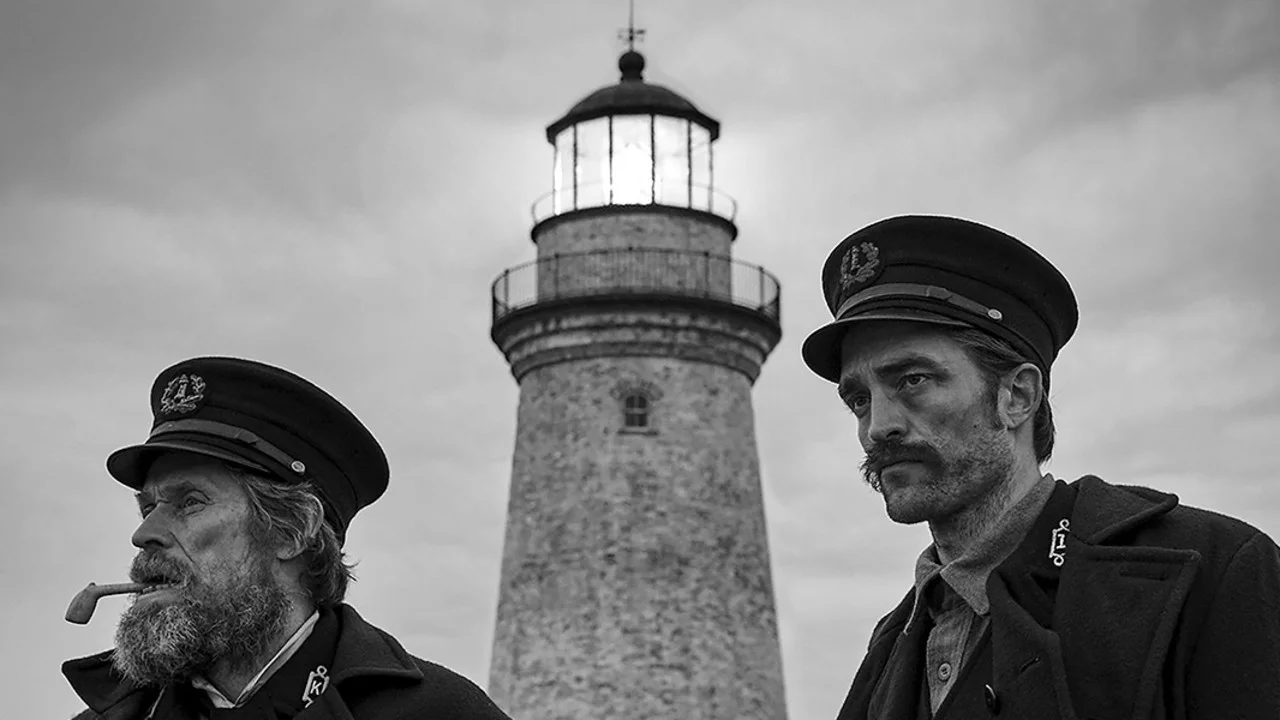
Where The Witch found humanity trying to fight the untamed nature through civilization and religion — only to fail — director Robert Eggers’ latest, The Lighthouse, pushes forward in history and updates this clash with the addition of industrial innovations.

Siloed in the post for four weeks, Ephraim Winslow (Robert Pattinson) enters the job just looking for a steady line of work. He doesn’t offer much background, but mainly because he seems unsure and equally annoyed with his partner, Thomas Wake (Willem Dafoe). Wake is a veteran of nautical work, and instructs the new hand that he’ll be handling the various outside duties while the veteran takes the post in the light.

Lacking the experience or backbone to argue, Winslow complies but immediately regrets it as he labors through chore after chore, including cleaning and up-keeping the mechanical equipment for the lighthouse. All the while, Wake seems to wistfully move through the assignments — sequestering himself in the light room to the curiosity of Winslow.

Eggers immerses his audience yet again in the period jargon and design, but with the added caveat of the film being shot on black-and-white celluloid film — creating a surreal element that ramps up the film’s third act as the textures begin to tear apart.

While The Witch seemed to draw you closer to the evolving supernatural elements happening around the family’s homestead, The Lighthouse constantly keeps you at bay. Not offering any concrete answers or stable mythology to what is happening on this island, only that being inhabited between two worlds — industry and myth — makes it indistinguishable. Are we supposed to believe what happens is due to the punishing labor and machinery, or is it just an effect of being lodged on a rock – practically alone – for weeks and weeks?

Eggers walks both lines — presenting more nautical mythology to answer the longing of Winslow to find the more humane comforts while using the drudge of their work to explain why he may enter his breaking point sooner rather than later.

It makes sense why the director would shift focus in this way after his first feature. Much like the family in The Witch, who seek religious purity in the wilderness of God, it seems as if Winslow wants to find some sort of solace in what he thought the piece and quiet on the ocean would bring. Instead, he finds madness as he has to fight his own human urges and match them against the seclusion.

There’s probably a lot more to be said about The Lighthouse, but one viewing isn’t enough. Like The Witch, a deeper examination and understanding of his overall goal should uncover more, but his follow-up doesn’t lack the mania of his first film even while it adds a bit more prestige with its on-screen personalities and secludes you even more.

It’s interesting that even with more technology and machinery to make things more efficient and global, Eggers understands that we are still as human, alone and untethered as we would be without any of it.

Tags tiff19
Comment
2008_0HERO.jpg

WAVELENGTHS 2: SUN RAVE, avant-garde shorts program

October 7, 2019

Reviews by Zach Dennis and Andrew Swafford

Andrew: This program consisted of 6 short films: 2008 by Blake Williams (friend of the pod), Amusement Ride by Tomonari Nishikawa, Black Sun by Maureen Fazendiero, A Topography of Memory by Burak Çevik, Sun Rave by Roy Samaha, and (tourism studies) by Joshua Gen Solondz.

For me, this shorts program can be neatly divided into two categories: films that messed with my depth perception (2008, Amusement Ride, Black Sun, (tourism studies)), and films that made me unexpectedly emotional (A Topography of Memory, Sun Rave).

Amusement Ride and Black Sun both disoriented me just by aiming cameras at oddly moving surfaces/objects. The former mounts a camera somewhere on the inside of a ferris wheel and observes all the circular mechanics of the ride rotating in different directions and at different speeds/distances, all the interlocking parts slowly going in and out of phase with one another. Black Sun, on the other hand, accomplishes this just by observing nature. Shooting on low-res, scratchy celluloid film that is bleached in various monochrome colors, Maureen Fazendiero points her camera at clouds, waterfalls, and, at one point, a river glistening in the sun, which was moving in such a uniform manner that I stopped seeing the water entirely.

(tourism studies) was something else. It’s hard to say what we were ever looking at at any given time because the rapid fire editing made for a strobing effect, often between images that were of different aspect ratios, which ultimately made for an experience of visual whiplash. I’m not sure what more to say about it than that, but it sure was a visceral ride. 

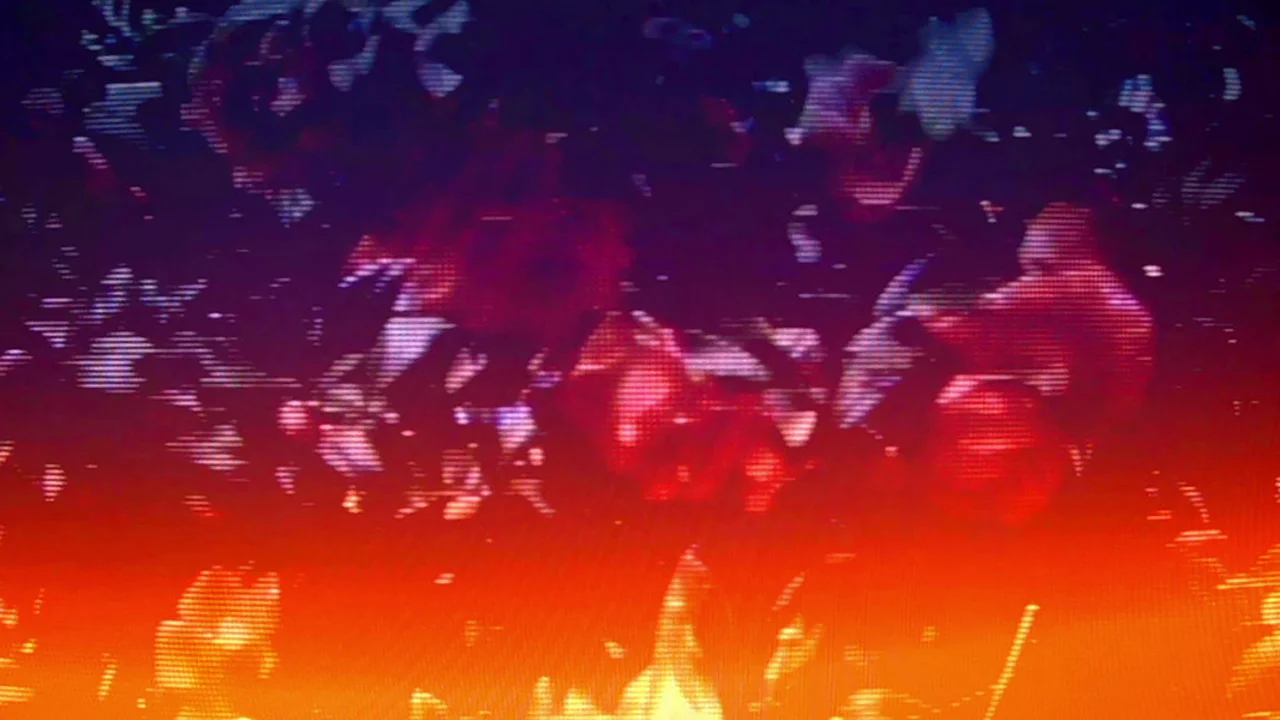
Another disorienting one was Blake Williams’s 2008, which consisted mostly of 3D images of VHS scanlines crawling up and down a bulbous analog television screen. This was one of my favorites, and I know it was yours, Zach. Care to give a quick breakdown of how that one affected you?

Zach: During 2008, I was thinking about how Williams meshes the reality on screen with the effect you described, which seemed to merge real life with digital in this astounding way. I was thinking about how, even though the year is 2008 in the title, it seems to speak to an even more modern sensation of seeing reality through a digital lens whether just regular photos or video, but also Instagram and Snapchat.

It was as if these moments were taking place but the effects he placed on it – be they 3D images of the VHS lines or just the analog screen – kept you from really emotionally investing in what the images were. I found that really perceptive.

I wasn’t as high on Amusement Park as you were, but did enjoy Black Sun quite a bit as it seemed to accomplish the same effect as 2008 but in a different sense. I’m curious to get your perspective on A Topography of Memory, which a movie you enjoyed but I found to be an absolute drag.

Andrew: With a 30 minute runtime, A Topography of Memory was the longest film in the program by a considerable margin, and I think I needed the time to really figure out what I was looking at and process it emotionally. The films sound and image operate completely independently of one another, and neither really announce their purpose immediately. 

Visually, the film is comprised of surveillance cam footage that slowly pans back and forth across various landscapes of Istanbul, Turkey. However, it didn’t immediately register to me how the images were captured – I was seeing low-res vistas captured with these repetitive camera movements, but what I assumed was a cerebral pursuit at the hand of an artist trying to create interesting textures and movement eventually turned out to be completely robotic, automated, and sinister. 

Sonically, the film is overlaid with a conversation from a family driving in the car together that at first seemed completely banal, but later became deadly serious as they began discussing the election that (we discover) they are driving to participate in. The son has a very different perspective than his mother, who believes one candidate to be a literal murderer. I don’t know nearly enough about the political landscape in Turkey to be able to say which of the speakers has been consuming misinformation, but one of them certainly is. The conversation is given a great amount of weight by the fact that we experience it alongside the visual machinations of the surveillance state – and yet, it’s just a casual family conversation, like most casual family conversations. 

It reminded me of Frank Borzage’s The Mortal Storm (a quiet family drama set in Germany during Hitler’s rise to power), another film that brings into clear focus how most people experience the rise of authoritarian governments: as a mundane part of everyday life, to be balanced with obligations to family and one’s own immediate concerns, only becoming obviously malicious when it’s already too late. It, uh, hit a little close to home, and I wasn’t expecting to have to deal with all those emotions during a program of avant-garde shorts.

The only other film we haven’t talked about is the program’s titular short, Sun Rave, which also featured narration over landscapes. In this case, the narration was about the speaker’s experience listening to number stations during political unrest in Beirut (there’s a joke in there about him being interested because he overheard something about “Magnetic Fields,” thinking it was in reference to the band) and his family’s experience uprooting itself many times over. It didn’t move me quite as much as A Topography of Memory because it felt much more fragmented, but it was the short that played directly after Topography and I was still in my feelings enough to be affected by this, too.

Tags tiff19
Comment
disco_0HERO.jpg

Disco (2019) by Jorunn Myklebust Syversen

October 7, 2019

Review by Andrew Swafford

With neon lights, glittering cosmetics and shimmering sequins, Disco begins as a glitzy and impressionistic dance film. Its protagonist, Mirjam, is a competitive solo dancer, and she spins like a whirling dervish, putting herself in a trance-like state of higher consciousness through movement only to be hrown off her groove by needling thoughts. But Disco isn’t really a dance film, and only ever returns to the dancefloor once or twice throughout its runtime. The ever-shifting focus of Disco could be seen as a type of dance, however, as the film spins in a circle around its true subject – three different realms of contemporary Christendom – and ultimately collapses to the floor in a state of despair. 

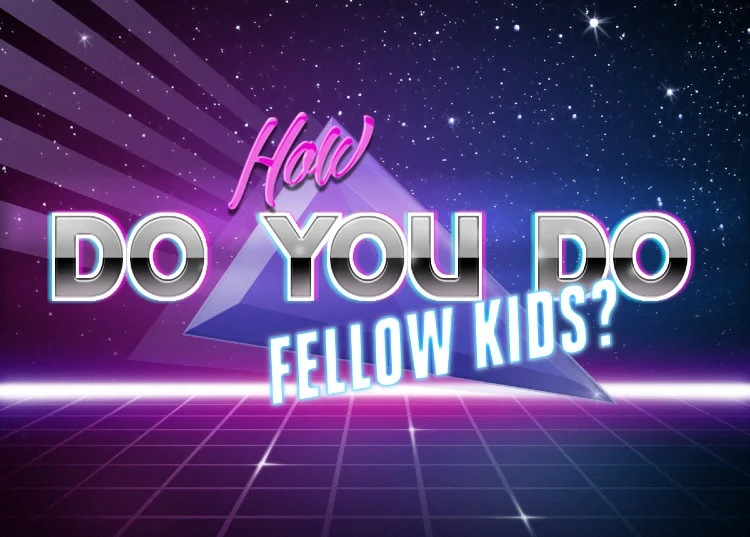
First, the film occupies a bizarre space constructed by Mirjam’s youth pastor father: a vaporwave-aesthetic church illuminated by triangular pink neon lights and energized by Christian EDM. (There are also a lot of television screens, plus a particularly sleek coffee bar.) This is easy to see through as clout-chasing gimmickry in an effort to shapeshift evangelicalism into whatever’s most marketable, basically making this church a physical manifestation of this meme made for the purposes of furthering God’s kingdom:

Speaking of marketable, though, the second realm of contemporary Christianity Disco explores is televangelism, as Mirjam’s maternal uncle hosts exorcisms / laying-on-hands-ceremonies on live television. This is similarly easy to see through as an obvious scam, what with the call-in number to donate money flashing on the bottom half of the screen at all times. 

Like many Christian teens her age, Mirjam wants to hold strong to the faith she’s been raised with – some of the film’s most affecting sequences are those in which she listens to podcast devotionals in an attempt to stay connected to this part of herself – but both her father’s youth group and her uncle’s televangelism present surface-level, unfulfilling versions of Christian doctrine. Outside of just their marketing ploys, these men are also morally repugnant to various degrees: her father being a controlling, manipulative patriarch (especially when it comes to micromanaging his daughter’s media intake, as is often the case in evangelical homes) and her uncle being a raging homophobe.

This is where the film steps in to offer a third alternative: an old-fashioned mahogany church with a congregation that is seemingly humble and reverent. There are no bells-and-whistles and no intrusive music here: just a serene space in which to practice prayer and fellowship. One interesting shot in this section – posing the congregation like Da Vinci’s Last Supper before an enormous set of stained glass windows – simultaneously suggests pure faithfulness (by the shot’s symmetrical beauty and hushed tone) and heresy (by the pastor being seated in the place of Jesus).

I won’t spoil exactly what happens when Mirjam goes on a spiritual retreat with this church in order to escape family drama back home, but rest assured: Disco purports that churches like this are not what they seem. The film frames this group as vicious and aggressive in their demands for submission, making the other two realms of Christendom explored here look tame by comparison. According to the comparative study presented by Disco, all Christian institutions are suggested to be fundamentally malicious in nature, existing solely to brainwash others into supporting evil power structures.

The quality of the film aside (it’s done perfectly well), I’m torn on how to feel about this: on the one hand, it is absolutely true that evangelicalism has invaded so many parts of public life that it can feel inescapable – and Disco gives viewers the tools to identify this type of brainwashing when they see it, which is unquestionably valuable. On other other hand, I’m troubled by the ultimately reductive way Disco places all of contemporary Christianity – the most widely practiced religion in the world – into a single box labelled “bad.” 

I’m not a practicing Christian myself, so I’m probably not the one to write the apologia this film provokes – but I know from so many friends and public figures I admire that Christianity can absolutely be a radical force for liberation and social change. This is the religion centered around the guy who said, “It is easier for a camel to go through the eye of a needle than for a rich man to enter into the kingdom of God.” (I would also point readers toward the writings of David Dark, a Nashville theologian who speaks the language of evangelicalism to fight back against what he calls “White Supremacist Antichrist Poltergeist.”) Although Christendom’s organized institutions may have largely ignored Christianity’s more radical implications in order to graft themselves onto secular social hierarchies, I do strongly feel it is painting with too broad of a brush to imply that that every road paved by faith is a dead end.

Disco may be, on another level, representing the view from the inside of a goldfish bowl: Mirjam is a character who, like many young people like her, can only see the options that her sheltered community chooses to allow her to see. If this is indeed the case, I might have appreciated a little more distance to show the audience that this perspective is limited, not absolute. Doing so feels important, because while the fate of Mirjam by the film’s end is not completely clear, earlier, skimmed-over scenes showing her disordered eating and suicidal ideation suggests that she can do nothing else but spiral into self-destructive hopelessness. From the perspective within the film, what else can she do?

Disco is not a dance film; Disco is an argument. And maybe I’m projecting (it hits a bit close to home), but if I’m reading this thing right, it’s an argument for why a world driven by religion (our world) is so fucked that suicide is the only rational response to it. And to me, that sounds like a reductive reading of our present situation that both ignores a lot of reasons to live and lets the bad guys win. Deeply uncomfortable with this one.

Tags tiff19
Comment
cominghomeagain_0HERO-web.jpg

Coming Home Again (2019) by Wayne Wang

October 7, 2019

Review by Jessica Carr

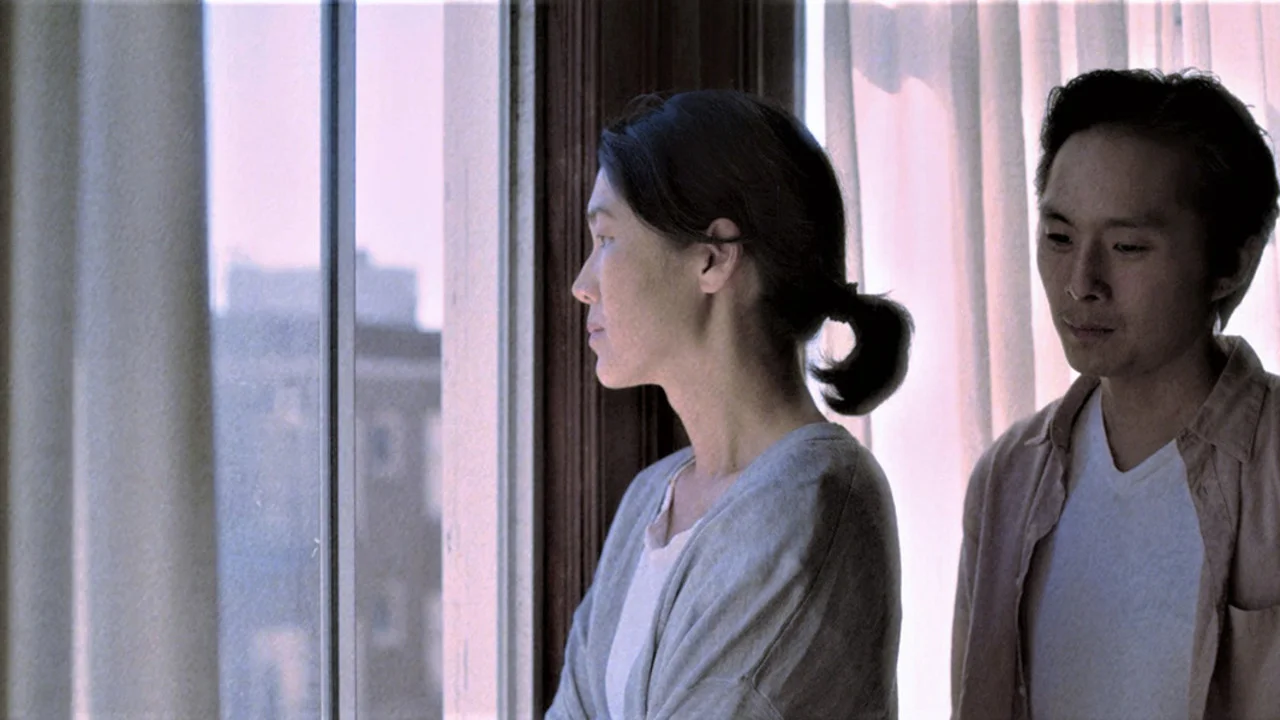
There is an intense anger brewing under the surface of Wayne Wang’s Coming Home Again. You can feel it even in the opening shot as Chang-Rae Lee (Justin Chon) runs up a hill. The camera is positioned far away at the top of the hill. As Rae gets closer to the camera, we realize he is sobbing. He pauses halfway up and screams out. Then it cuts to black. 

The unease and tension just increases from there. Coming Home Again is based off of a 1995 New Yorker essay written by Korean-American novelist Chang-Rae Lee. Rae quit his job and moved back home when his mom was diagnosed with stomach cancer. The film focuses on the relationship between Rae and his mom as he tries to cook all the traditional Korean dishes she used to make him when he was young. Rae becomes his mom’s sole caretaker, making sure that her feeding tube is working properly and that she is as comfortable as possible. But he isn’t happy to be the dutiful son; instead, he seems resentful. As the movie progresses, we find out that his parents sent him to boarding school and he has resented them ever since. 

That resentment can be felt throughout the whole movie. Its cold atmosphere falls over the audience and makes the viewing experience very uncomfortable. And the anger makes sense, right? It is understandable for someone to be angry that their mom has been diagnosed with stomach cancer, especially since she was a woman who loved cooking. It’s unfair that she was dealt these cards to deal with. But the movie doesn’t do a good job of trying to get the audience to connect with these feelings. The relationship between Rae and his mom isn’t explored enough. The two characters don’t feel like people I know; istead, everyone is cold and disconnected. They keep their feelings to themselves and they do everything robotically. After I watched the film, I had to wonder…was this what the essay was like? Did he mean for this experience to be presented so coldly? And after reading the essay itself, I don’t think it was. This seems to be a weird affectation from director Wayne Wang – one that doesn’t really match the source material or make the movie a space where audiences can come together and try to understand a story about grief. All of these things were really disappointing to me, especially right after watching the premiere of Blackbird, an American movie about a dying parent that is able to connect with audiences much more effectively.

Tags tiff19
Comment
blackbird_01.jpg

Blackbird (2019) by Roger Michell

October 7, 2019

Review by Jessica Carr

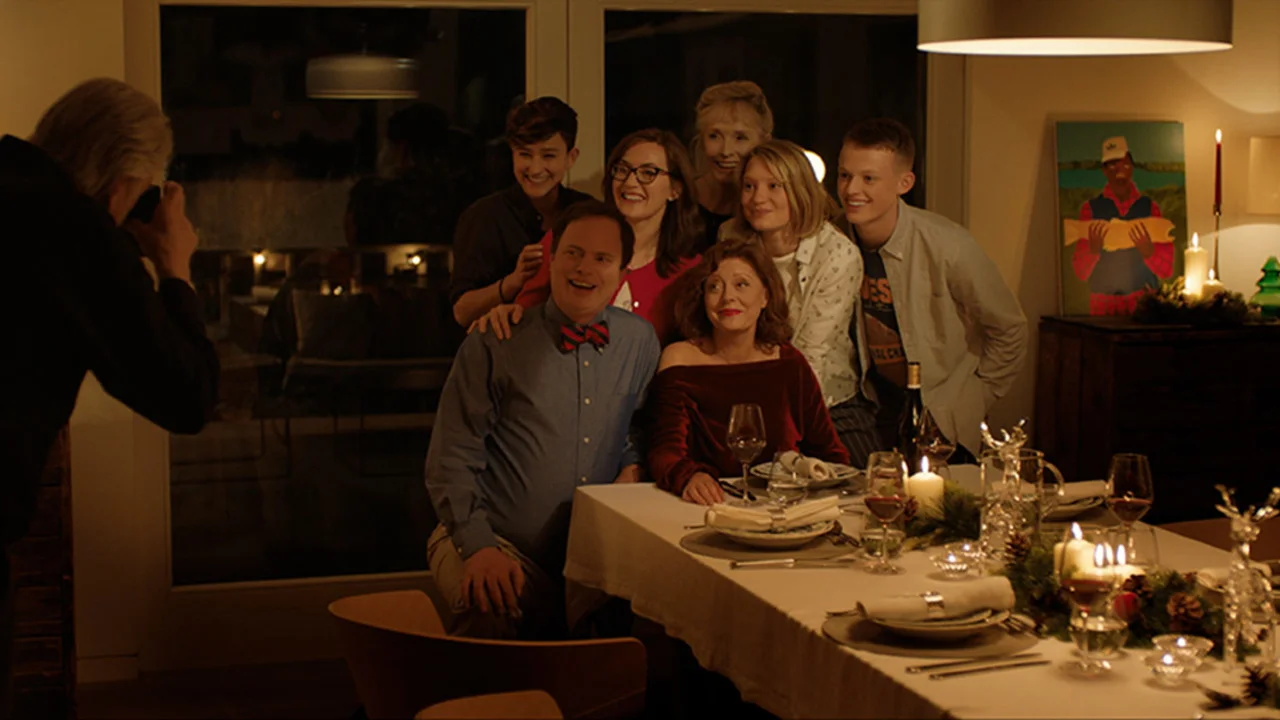
If you knew that your parent invited you to their home for the weekend because at the end of it they were going to commit physician-assisted suicide, what would you do? This is the big question at the center of Roger Michell’s Blackbird. The dark comedy stars big names like Susan Sarandon, Sam Neill, Kate Winslet, Rainn Wilson, and Mia Wasikowska. It is effective at making the audience care for the characters even if the film borders on being overly melodramatic at times. 

Blackbird centers around Lily (Susan Sarandon) and husband Paul (Sam Neill) as they summon their two daughters Jennifer (Kate Winslet) and Anna (Mia Wasikowska) to come home for the weekend. Lily is terminally-ill and wants to spend time with the family before she takes her own life at the end of the weekend. It is unclear exactly what Lily has been diagnosed with, but the film alludes to ALS, as Lily is starting to lose control of her motor functions. She cannot use her left hand and wants to end her life before the disease causes her to lose control of her body completely. 

There are lots of dark comedy bits that can be found in the script, and it’s one of the film’s most endearing aspects. It helps the audience connect to the characters and allows them to bond with Lily and her family – which isn’t to say that the movie is doing anything new with familial drama. It has the overbearing older daughter (played by Winslet) who is uptight and walks around with a stick up her ass, and in contrast, there is the wanderlust younger daughter who smokes pot and doesn’t know what to do with her life. These are characters we’ve seen before, but the different personalities coming together is really what builds the tension in the movie. The best moments in the film are the ones where everyone is spending time together; they understand that their moments are precious, and they take full advantage of that. 

Overall, I don’t think Blackbird is reinventing the wheel or anything. However, it does create a film that is a good meditation on grief and what we do with the time we have with our loved ones. I think it’s effective at what it’s trying to achieve, and it does so with the audience in mind. Something that the next movie I’m going to cover doesn’t do so well...

Tags tiff19
Comment
madeinbangladesh_0HERO.jpg

Made in Bangladesh (2019) by Rubaiyat Hossain

October 7, 2019

Review by Andrew Swafford

Perhaps the most widely known film about union organizing is 1979’s Norma Rae, which we covered on the podcast earlier this year and which chronicles the unionization of a textile factory in small-town North Carolina. In many ways, Made in Bangladesh feels like a spiritual successor to that film – not least of which is the fact that many of the American factories that people were working to unionize in Norma Rae’s day have now imperialized countries like Bangladesh, where not even America’s minimum wage can get in the way of unfettered profit extraction. 

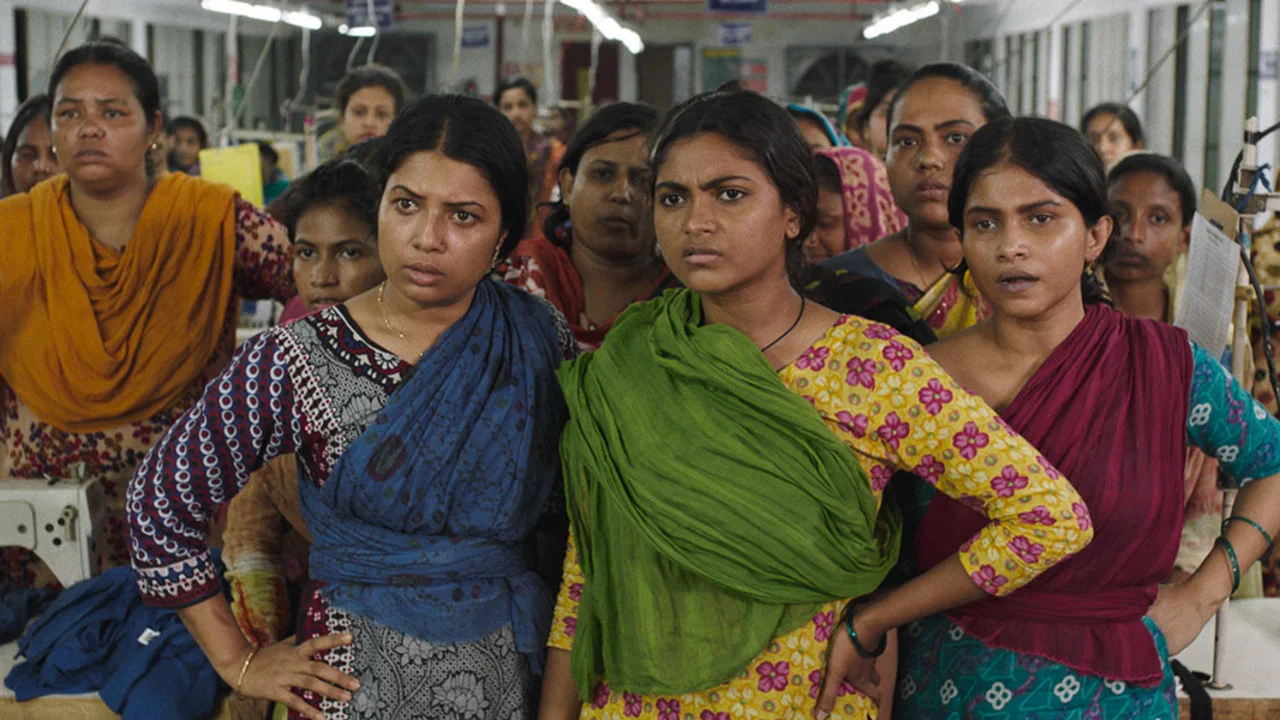
Director Rubaiyat Hossain’s film takes an empathetic and methodical look at the act of upsetting this power structure from the ground level; the factory floor is entirely made up of women who are exploited by a small number of male supervisors (making Made in Bangladesh a great case study in the way in which feminist identity politics and Marxist economic theory share a common goal). When a factory fire ends up killing a woman employee but management carries on with business as usual, the protagonist’s sudden jolt of class-consciousness sets into motion the slow, difficult process of organizing with her co-workers. 

The film is hardly idealistic about how attainable this is, however, as the women at its center face roadblock after roadblock on their way to attain the slightest bit of dignity – one of the last ones being a darkly hilarious bureaucratic office space stacked to the ceiling with rotting brown files. Hossain’s camera gives images like these a lot of power, and I really admire how well she uses color throughout Made in Bangladesh. Her entire cast of women are always seen adorned with ornate saris of different colors, and she makes a point of consistently putting several women in the frame together to make these colors pop even more, celebrating the products of these women’s labor. She’s great at depicting scenes of togetherness – like the colorful wedding scene that takes place in the second act – and then cutting through it with scenes of gray isolation, giving visual language to the factory’s “divide and conquer” mentality as contrasted with a more joyful and collective one. 

I’m also impressed by the performances here, which are fierce and laced with a lot more profanity than one might expect. Overall, Made in Bangladesh is a very solid piece of work – maybe even a stronger movie than Norma Rae?

Tags tiff19
Comment
our-lady-of-the-nile.jpg

Our Lady of the Nile (2019) by Atiq Rahimi

October 7, 2019

Review by Zach Dennis

We are all beholden to our environments — whether we want to be or not.

The girls (on their way into becoming young women) who inhabit the Our Lady of the Nile boarding school are unaware of this fact, but it won’t take long for them to learn. For most of us, we engage with lessons in time but never in the fashion as these girls do in the latest film from director Atiq Rahimi, Our Lady of the Nile.

The school sits in the forest of Rwanda — hidden from the world as a way to become more engrossed in the faith teachings. It doesn’t stop the outside world from coming in. One of the girls, Frida, has a family that works in the international relations section of the Rwandan government, and she tells the others about her romance with the Ambassador of Zaire — someone she goes and visits when everyone is offered a quick reprieve from the woods.

Outside influences are repressed as much as possible while the girls are within the confines of the school. Its leader, Mother Superior, forbids allowing the outside to creep in as an effort to allow the girls more chances to get closer to God, but even she can’t keep them from the curiosity of the local French coffee plantation owner, Fontenaille, who catches the eyes of Veronica and Virigina, the school’s only two Tutsi students.

Upheaval between the Tutsis and the Hutu is manifesting outside, but the girls aren’t aware of that. Instead, they enjoy the fancy foods Frida brings from her ambassador love, they explore the forest and its inhabitants, and in the case of Veronica, they learn more about their ancestral inheritance within these lands. Fontenaille is an aficionado of Tutsi culture, as relics and art pieces scatter his plantation home. He takes both Veronica and Virginia to the back of his home where he shows them the spot where he believes he has uncovered a great queen of Tutsi lineage — a Nefertiti in her own right.

But an appreciation for this land is not felt by everyone. Gloriosa finds the entire enterprise repulsive and through the help of her father (a political opposer of the Tutsis), she begins to infect the school and build it up in the Hutu image. It starts by enlisting Modesta, a girl who is half-Tutsi and half-Hutu, by playing on her guilt to get her to take part in her plans to reclaim the land to its rightful owners.

Modesta is timid — trying to manage and navigate the natural progressions of a young girl becoming a woman, not to mention a civil war within her home country — but she goes along, afraid of what her refusal will lead to with Gloriosa. The two girls deface the Virgin Mary statue prior to a ceremony — replacing the nose with “a more correct one” in Hutu fashion — and craft an illustrious tale of fighting off Tutsi raiders in the hills when their first attempt at changing the nose results in a muddy wrestling match between the two.

The tale earns both girls high honors with Gloriosa’s father and brings military hands to watch the school. From there, the seclusion of the school is broken and the civil war comes to the girls.

Although heritage and lineage seemed so far away when they began school, it becomes their scarlet mark as the school is overtaken and the opposition is eradicated. Opening as a genial and sweeping coming-of-age story, Our Lady of the Nile quickly becomes a dark, morbid tale of hatred and lust.

The film is able to balance the sweet with the more dangerous, and allows this tale of the Rwandan civil war to be seen more through the eyes of its inhabitants rather than outside observers.

Tags tiff19
Comment

Castle in the Ground (2019) by Joey Klein

October 7, 2019

Review by Jessica Carr

Not gonna lie, I came super close to skipping this movie entirely. I had a full day of movies and this one was my third AND it was at 10:30 p.m. For the sake of cinema and giving new filmmakers a chance, I still went...but I kind of wish that I hadn’t. 

Castle in the Ground is a film that wants to shed light on the growing opioid crisis, specifically among young adults. While I think this is definitely a topic that deserves some attention, I don’t really think director Joey Klein knew exactly what he was getting into. He creates a film that gives the audience about 2 hours of young adults crushing, snorting, and injecting drugs into themselves but not much else is achieved. I left the film feeling like there was no light left in the world, and I don’t think that really adds anything new to the opioid crisis conversation. 

The film follows Henry (Alex Wolff) as he takes care of his ailing mother (Neve Campbell). After graduating from high school, Henry didn’t go to college like the rest of his friends so that he could instead be a caretaker for his mom. Once his mom dies, Henry is left with nobody else, so he starts taking her leftover painkillers to ease his grief. Not long after, Henry begins to get involved with Ana (Imogen Poots) a recovering drug addict who lives next door. Soon, the two begin to barrel each other into the ground as Ana introduces Henry to the fucked up world she has become accustomed to. 

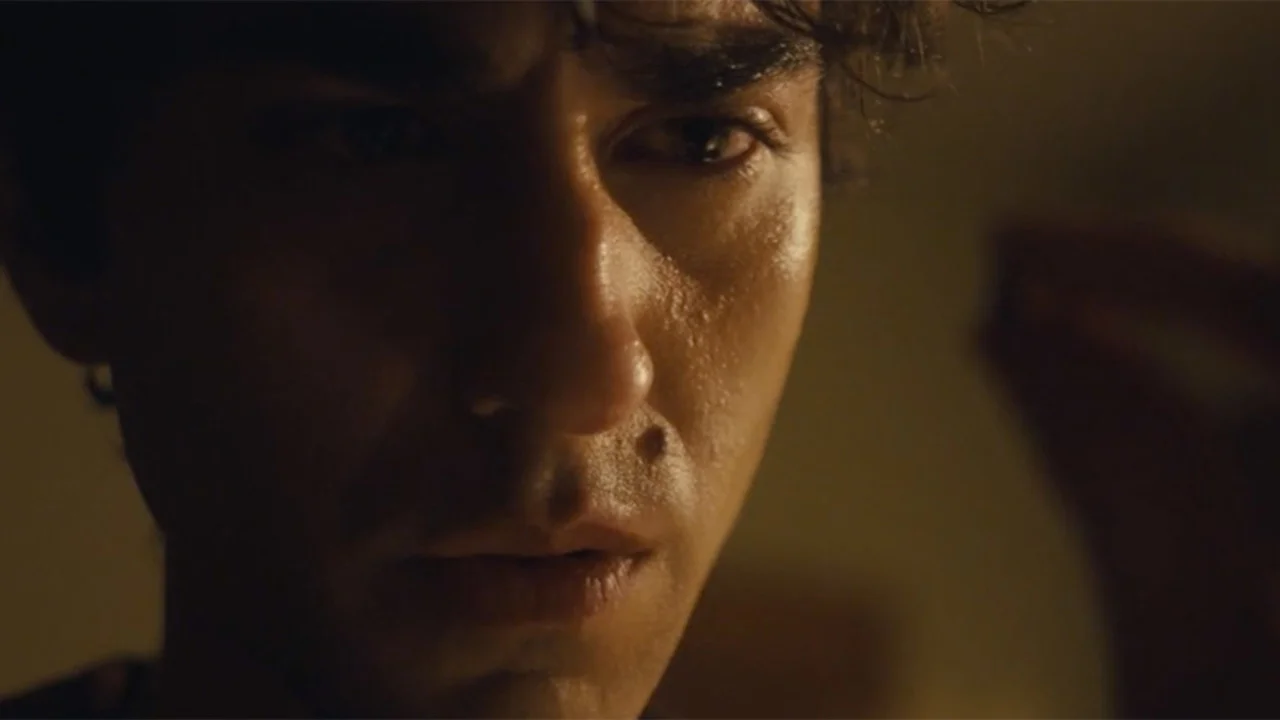
I’ve seen quite a few films that center around drug addiction, most notably the Safdie Brothers’ Heaven Knows What. That film manages to create an intense atmosphere in which you do feel sympathy for Harley while also being angry at the bad decisions she is making. With Castle in the Ground, there is no build with the characters. They just feel like people who are doing drugs over and over again. I just felt bad for them and not much else. Another big difference between these two films is that Heaven Knows What is an autobiographical story written by Arielle Holmes who experienced it first-hand. That itself makes the film feel genuine, and you can see towards the end that she is fighting to change her life. There is no hope or light at the end of Castle in the Ground, and there isn’t even any kind of solution presented. Where can people go for help? What are their resources? Castle in the Ground doesn’t seem to be interested in answering those questions. Instead, it ends with an artsy shot of Henry high out of his mind with the flicker of a flame from a lighter reflecting against his face. It looked cool I guess, but what’s the point?

Tags tiff19
Comment
vitalinavarela_0HERO_RGB.jpg

Vitalina Varela (2019) by Pedro Costa

October 7, 2019

Review by Andrew Swafford and Zach Dennis

Zach: For this one, I entered not having seen any of Pedro Costa’s previous work, which – judging from reactions around the festival – seemed to work both for and against me, as this seems to be one of his more accessible films for first-time viewers compared to other entries in his current cycle of films. Even without context, I was wowed by the visual language of the film and Costa’s play with shadows and light, which was unlike anything I’ve seen a modern director do. The central narrative, which follows the titular character coming back to Portugal to stay in the house of her estranged husband who just passed away, seems more concrete than some of his previous films, but I’ll let you expand on that since you went on a Costa-thon (Costa and Chill?) prior to TIFF.

Andrew: Costa-thon seems like a more apt phrase than Costa and Chill, because watching the three toughest Pedro Costa movies in rapid succession to prep for the festival definitely felt more like running a marathon than it did like chilling to some slow cinema. The darkness and silence in Pedro Costa’s movies is absolutely oppressive, reflecting larger structural forces that keep the nonfiction figures at their centers in a state of complete stasis and decay. Vitalina Varela is his fifth film in his cycle about Fontinaus (a slum of Lisbon, Portugal) and if anyone wants to hear me outline my thoughts on the four preceding films (Ossos, In Vanda’s Room, Colossal Youth, and Horse Money), they can check out our second TIFF Diary on Facebook, where I did just that. In short: these are tough movies, and I mostly admire them intellectually more than I enjoy them viscerally – and the cycle includes one film I find downright unwatchable. Still, Pedro Costa has a completely singular approach to filmmaking: dedicating himself to telling the stories of the extremely impoverished, living in the same slums they do, and allowing their personal lives and their ever changing sociopolitical context to dictate where the films go – all the while filming with complete control over the visual aesthetic.

But regarding Vitalina Varela specifically, I’ll echo the sentiment you referenced in your intro: this is one of Costa’s most accessible films narratively, as it has a clear protagonist (Vitalina), conflict (she missed her husband’s burial and wants to have a ceremony for him), dramatic arc (she seeks out Ventura, the protagonist of Colossal Youth and Horse Money, who is now working as a priest, to perform it), and, shockingly, catharsis. Of course, along the way, there are a lot of long, uncertain sequences of nightmarish gloom, but the fact that this movie has that narrative structure to hang onto – as well as a relatively brief running time – makes this a much easier sit than something like In Vanda’s Room, which is almost three hours long and eschews plot and visual beauty entirely. That film is likely supposed to be hard to look at, considering it represents the nadir of its community’s misery, and Vitalina Varela’s gorgeous digital cinematography – the aesthetic Costa has been gradually cultivating for over 20 years now – is similarly well-suited for this film’s life-affirming resonance. In her connection with Ventura, Vitalina finds a sense of closure with the past and hope for the future – two things that have been painfully absent from all of Costa’s work leading up to this point. 

A Letterboxd review that helped crack Costa open a little for me was from Ethan Rosenberg, who called Costa’s cinema “[t]he logical endpoint of German expressionism.” Zach, seeing as you made an entire research-heavy video essay comparing expressionism to LAIKA, I’m wondering: how does that comparison strike you?

Zach: The set-ups of the lighting and shots scream German Expressionism, but to me, I think Costa was also channeling the movement through his narrative beats. As I point out in the essay, German Expressionism is more than just the slanted lines and jagged steps; it also uses its stories to speak to characters’ mental state without forcing that into the dialogue.

Essentially, this is a silent movie. There isn’t a lot of dialogue, and for the most part, you’re relying on these quiet sequences between her and Ventura (and maybe another figure), but for the most part it is her – alone – in this space that wasn’t even meant for her. So how do we understand her mental state? Costa implements these silent and German techniques to offer a glimpse into the tortured or wrestling nature of her mind, and I haven’t seen that much in films outside of that era. Ventura is battling what she feels is her duty as the wife of this man who has died and left not only this space in this nearly macabre neighborhood, but also this space in her life or the life she expected to have with him.

You could sit there and let her monologue her feelings about that, but she isn’t a professional actor and that plays into both her and Costa’s concept as it allows her movements, her eyes, how she envelops a space to tell us what she is thinking or feeling. That all plays directly into what German Expressionism embodies.

I need to re-watch this and more Costa, but was impressed with what I took away from this going in blind.

Tags tiff19
Comment

Krabi, 2562 (2019) by Ben Rivers and Anocha Suwichakornpong

October 7, 2019

Review by Andrew Swafford

For people like me who have been brought up on American media, attending an international film festival like TIFF is a valuable opportunity to see the way that artists from various far flung countries represent themselves, as opposed to the way we may have seen them misrepresented in American media that exotifies or whitewashes their culture. Most English-speaking audiences have probably never been knowingly exposed to Thailand on screen, but they’ve seen it as a shorthand for “exotic paradise” in, to name one example, James Bond films. As a cross-cultural collaboration set in Thailand between a Thai filmmaker and a British one, Krabi, 2562 is largely about the disconnect between what Thailand is and how it’s been sold by the global commercial film industry. 

The film’s protagonist is a location scout, traversing the island of Krabi for ideas about how to visually present a landscape that has already been commodified by global pop culture and, as a result, turned into a tourist trap populated by the mostly-faceless hordes of beach-lounging white folks here captured from a distance and en masse. Along the way, we experience open-ended interviews with locals, a karaoke performance, an obviously problematic commercial shoot (associating the “exotic” locale with Neanderthals) done by Thai filmmakers themselves, many surreal encounters with “real” (?) Neanderthals, and a trip to a symbolically closed local movie theater, with a shrine to the theater’s guardian spirit going mostly unused.

Co-directors Ben Rivers (UK) and Anocha Suwichakornpong (Thailand) are both veterans of the avant-garde and slow cinema cinematic traditions, and present this complex search for authenticity/truth in an appropriately fragmented and patient manner, trusting the audience to piece together a series of sometimes disjointed images into a larger picture. In doing so, they make direct reference to Thailand’s most critically celebrated filmmaker, slow cinema sage Apichatpong Weerasethakul, at one point shooting inside the cave where Uncle Boonmee somewhat famously reincarnates, as well as including a discussion about that film being banned for being too subversive. The problem of respectfully depicting Thailand, the film suggests, is a multi-dimensional one: not only has the space been already appropriated by Americans (et al) seeking to exploit its natural beauty, but the local government is actively squandering attempts to do otherwise – it’s more profitable to go along with reductive appropriation than it is to cultivate artists who might represent their homeland in a way that complicates the status quo. I’m still puzzling over certain elements of Krabi, 2562, but of course I am – it’s an ambitious film that plunges deep into the murky waters of representation and doesn’t bother coming up for air.

Tags tiff19
Comment
Older Posts →

Powered by Squarespace