• Episodes
  • Festival Coverage
  • Video Essays
  • Writing
Menu

Cinematary

where film criticism goes to die
  • Episodes
  • Festival Coverage
  • Video Essays
  • Writing
assassinationnation_still_02.jpg

Assassination Nation (2018) by Sam Levinson

September 25, 2018

Review by Zach Dennis

My first note is that if you pronounce this title like Led Zeppelin sings “Communication Breakdown,” it is kind of entertaining. The same can’t be said about the movie though.

In the intro to the movie, and the Q&A afterwards, director Sam Levinson talked about making this movie in a response to the anxiety and frustration with the current social climate, and that’s pretty apparent from the early moments of movie, which opens with a “trigger warning.” No, seriously, it actually says that!

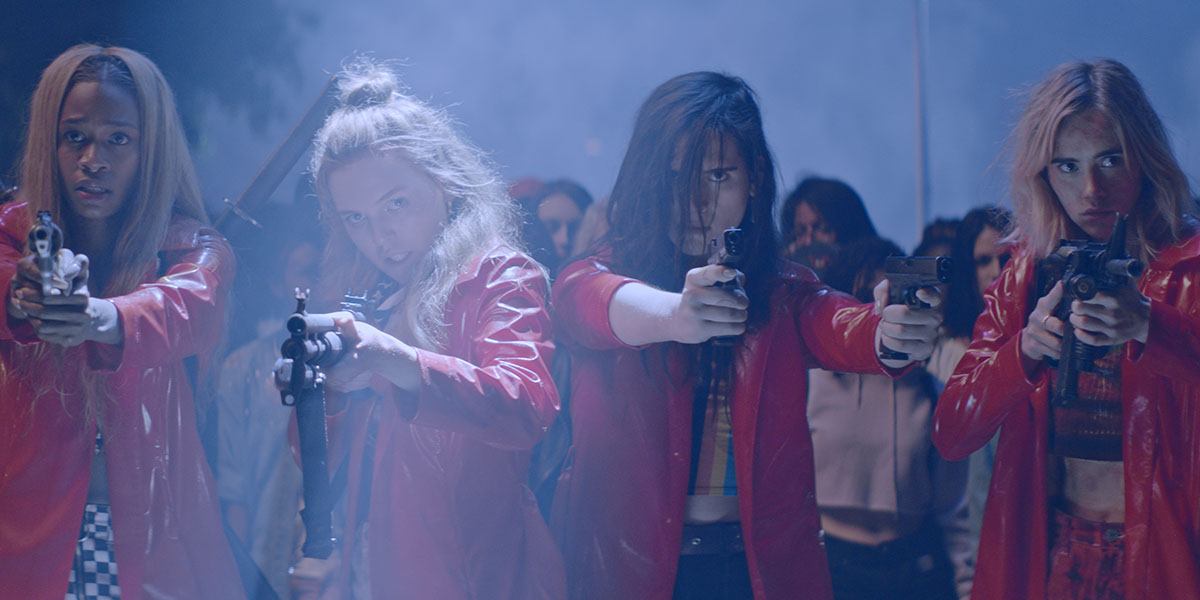
Assassination Nation follows a group of high school girls — Lily (Odessa Young), Bex (Hari Nef), Sarah (Suki Waterhouse) and Em (Abra) — who get pulled into a phone hacking scandal that turns their hometown of Salem into The Purge. After taking down the mayor and principal of their high school, the hacker begins leaking information on everyone and Lily is placed as the culprit of the hacking after people discover the act came from the IP address for her house.

Among those angry with the hack is Nick (Joel McHale), who is revealed to be having a texting affair with Lily via the hack, which causes his wife to leave with his children and him to turn into a gun-toting rage personification of a conservative Facebook commenter (respect for getting McHale for this role).

What starts as a kind of Heathers or Mean Girls divulges into a Purge-like violent romp where the group of girls are trading bullets with the angry male population of the town. In one sequence, filmed to look like one continuous shot, the group of angry townsfolk infiltrate one of the girls’ homes where the four of them are staying and opens up a fire fight that ends with many of the invaders, and one of the girls’ mothers, dead.

Attempting to probe this mounting anxiety over technology and the angry white male is something that filmmakers are going to be addressing in the years to come, but I can’t say that Assassination Nation will be one of the highlight examples of this as it feels more like an exercise in feeding the audience’s impulse for hyper-violent characters (namely attractive women) and supposed social satire (which comes in short supply here).

Levinson tries to make statements on the fall of men over scandals, but makes it less about #MeToo and more about the mob mentality invoked by these scandals (a point he decides not to really engage with but just show) and how technology and a lack of privacy in today’s culture creates chaos because anything and everything can be revealed at the touch of a key.

None of these really come to a head, and as I mentioned before, are torpedoed for a final act that is more festizistic violence by women rather than being anything substantial.

I think a lot of what this movie is trying to probe is worth doing so, but this isn’t the one that does it. Assassination Nation was one of TIFF’s Midnight Madness movies and played perfectly to that crowd, but as a satire of 2018 culture, it feels misguided and out of touch.

2018 TIFF Individual Reviews
Comment
nonfiction_0HERO.jpg

Non-Fiction (2018) by Olivier Assayas

September 25, 2018

Review by Zach Dennis

I was curious about this one as anything related to technological anxiety peaks my interest and Assayas is a director whose films I’m hit or miss with. On top of all that, Assayas is a 63-year-old man musing on the rise in technology so I went in a bit jaded and ready to pounce.

To my chagrin, Non-Fiction is much more nuanced than that basic assessment places it at, and Assayas is able to work both sides in a way that doesn’t feel like it is making some declarative statement on the pitfalls and enhancements of technology on the book publishing world (which is what the movie is set in), but rather how technology has opened up our lives whether we enjoy it or not.

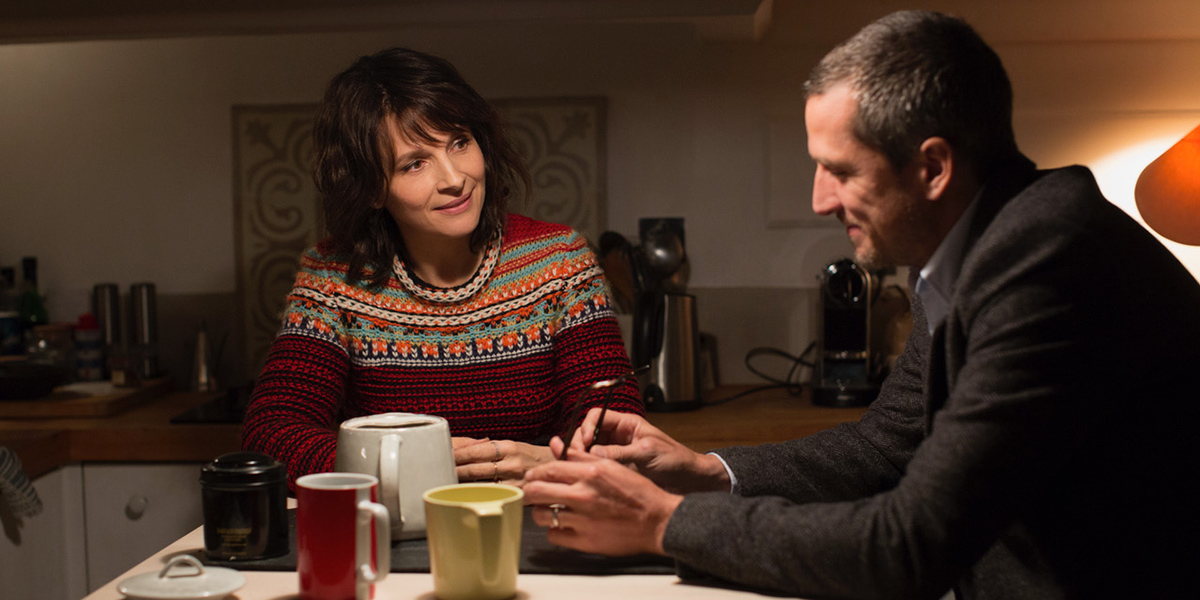
The film follows two couples — Alain (Guillaume Canet) and Selena (Juliette Binoche), and Léonard (Vincent Macaigne) and Valérie (Nora Hamzawi) — and their dealings with affairs, technology and communication. The film has the feeling of an anthology (a point Assayas made when he was introducing the film) as we bounce between different conversations between the various characters — some intersecting, some not — about the array of topics.

Alain works as the head of a publishing house and is trying to make sense of the direction books are headed — whether digital or not — and this decision plays into him denying the latest book by Léonard, a decision that wounds him. Alain’s company has just hired a new digital director, Laure (Christa Théret), who is tasked with making the transition from print to digital better and is also the object of his affections as we discover the two are sleeping together. Selena works as an actress on a TV procedural — something that is draining her even if the pay is good — and she is coping with the idea (she doesn’t know for sure) of Alain having an affair even though she and Léonard are sleeping together and have been for some time.

It is also so very capital-F, French and that’s kind of funny, overall. But Assayas’ theories on technology are founded on the shift in how aware of everyone else we are. It’s refreshing that it isn’t a writer going “all technology is bad” or “the world is ending and everyone is tweeting it” and at least interrogates both sides of the spectrum.

At the end of all this though, the movie is less about the technology and more about how different elements seem to get in the way of conversation and how change is more of the problem over time rather than any specific factor (whether tech or what have you). It’s interesting that Assayas went in a much more obvious route after he interrogated modernity in a sense in both of his recent films — Clouds of Sils Maria and Personal Shopper — and went with a more Eric Rohmer or Richard Linklater approach.

It works, and while I don’t see Non-Fiction having the impact with people that both of those previous movies did as best of the year contenders, it was a welcome change of pace for the director as both of those films were foggy for me and their ambiguity left me a little cold. Non-Fiction forgoes all that and is a nice addition to his canon.

Ironically enough, the final movie of the festival for me also is about social media, the current culture and technology in a completely different light.


2018 TIFF Individual Reviews
Comment
highlife_01.jpeg

High Life (2018) by Claire Denis

September 25, 2018

Review by Zach Dennis

I mentioned struggling to come up with thoughts to describe If Beale Street Could Talk earlier in this recap and I have to say I feel the same with High Life, but in a somewhat different regard. Easily the most opaque viewing of the festival, I’m not sure what I can come up with the give some semblance of analysis with this film.

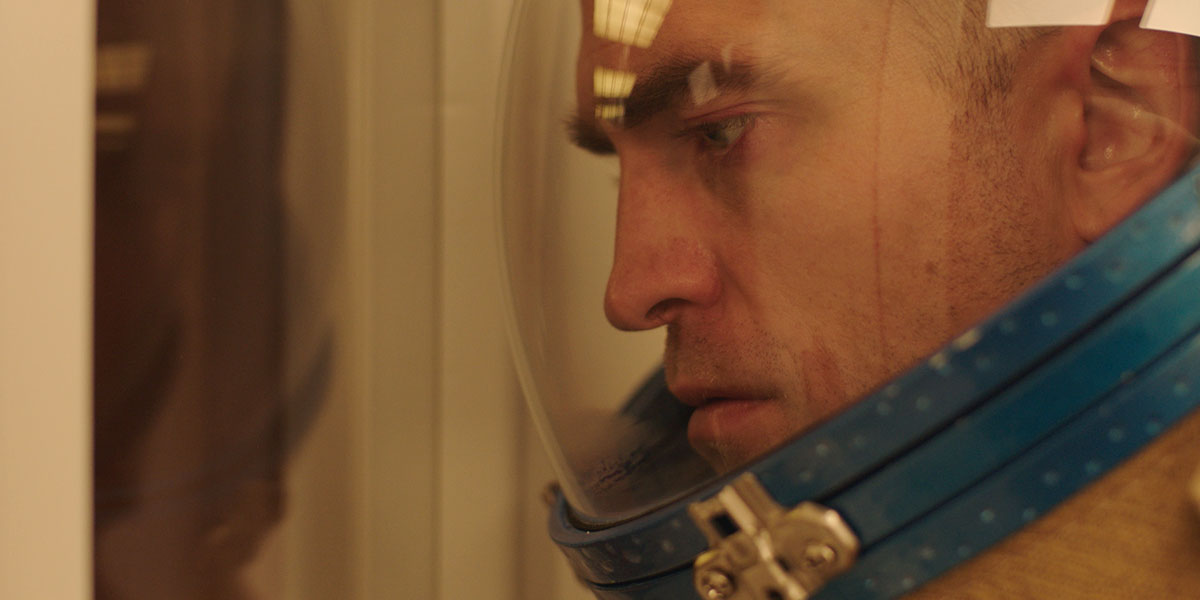
High Life follows Monte (Robert Pattinson), the sole surviving member of a space expedition who is now living on the ship with his infant daughter. In this futuristic period, criminals are sent into space on suicide missions because, fuck’em ya know? Monte is part of a group that also includes Tcherny (André Benjamin), Boyse (Mia Goth), Chandra (Lars Eidinger), Mink (Claire Tran) and scientist Dr. Dibs (Juliette Binoche).

While on the mission, Dibs is using the time to test fertility during space travel, which leads to a scene that most people who saw the film at TIFF are referring to, and I’ll leave ambiguous here. (Google “Juliette Binoche Fuckbox”).

Writer/director Claire Denis shifts between the voyage in progress and the aftermath with Monte and his daughter, who later grows up to teenage age. Denis has spoken about her appreciation for Kristen Stewart and Pattinson in the Twilight movies, and you can see why she found him perfect for the role of Monte through High Life as that cold, calculated lifelessness that he embodies in those movies carries over here, but to greater effect. Pattinson is reserved and observant, removing any sense of a personality or ambition, which reflects the morale of most of the members on the mission. This aloofness, coupled with the ambition of Dibs to use this suicide to further some sort of progress outside of just dying for one scientific discovery, is where High Life finds its drama and what makes the scenes between Monte and his daughter the more impactful. The erosion of the blank canvas that Monte is for most of the movie into someone trying to impart wisdom and skill onto a blank canvas in a different sense is insipiring, and this works because of the work by Pattinson.

I can’t speak at all about the overarching work by Denis, but I found this trip into the science fiction genre to be worthwhile, which is a difficult task for a genre that seems beholden to so many monolithic works of cinema that sometimes you want to ask what more is there to say. Interrogating and exploring humanity through being flung into the vast unknown of the cosmos is nothing new or unique, but Denis’ interest in the complexities of these personalities and the full embodiment of these characters by these actors makes High Life something fresh and probing.

I desperately want to watch this one again before the end of the year, and luckily A24 picked it up so I should be able to. But, it’ll be one that will surely be an interesting discussion on the podcast once everyone catches it.


2018 TIFF Individual Reviews
Comment
roma_01.jpg

Roma (2018) by Alfonso Cuarón

September 25, 2018

Review by Zach Dennis

I’ll be upfront — we toss out the term “masterpiece” entirely too much. What is a masterpiece? It almost feels like referring to a piece of culture with that word should be as theoretically considered as telling someone that you love them...because in essence, that’s what you’re kind of doing there.

Excuse my rambling, but Roma, the latest film from Alfonso Cuarón, has been labeled this way multiple times since its debut at both Venice and here in Toronto, and while I’ll say I did find the film to be a splendid entry for Cuarón, and one that will surely have people talking long past 2018 and the awards circuit, I have trouble with labels.

Roma follows Cleo (Yalitza Aparico), a housekeeper for an upper middle class family living in Mexico City in the 1970s. The family’s patriarch is hardly seen, and assumed to be infedelius with that, and the majority of Cleo’s dealings with the family is between the wife and her children. Cleo has some interactions with the “outside world” — she sleeps with and spends some time with Fermín (Jorge Antonio Guerrero), the friend of her friend’s boyfriend who she spends an afternoon and a bed with — but for the most part, she is isolated to the confines of this family’s home.

There is no denying the personal connection that Cuarón portrays and many other critics have remarked that it bears similarities to the work of Italian director Federico Fellini. I see the connection, but Roma seems much more in tune with the early work of Satyajit Ray or small elements of early Yasujiro Ozu in that it studies a person and their environment.

Over the course of the runtime, you live with Cleo and this family. You live their anxieties, their angers, their fears and their sadness. Hope is not offered too often and the juxtaposition between the homeowner, Sofía (Marina de Tavira), and Cleo feels both distant but connected. It’s obvious that these characters come from different worlds — Cleo forced to work just to live and Sofía having a decent amount of financial security but having her personal life stripped apart — but Cuarón frames this more of a tale of the connection between women rather than a way to identify discrepancies in class.

It is scary to be Cleo and it is scary to be Sofía, but both are brave and tough and this quality is what Cuarón is trying to tell us. We’ve seen a lot of cinema that reflects on the struggle to survive by lower class workers, but there is this care with Cleo that Cuarón takes that makes it feel much more richer and rewarding rather than being some exercise in empathy.

Cuarón has established himself a bit today for his technical marvels and his ability to craft “movie magic” in the more modern sense with Gravity or Children of Men, but the subtlety of Roma and its technical feats may be his best achievement yet. Filmed in black-and-white with all camera work done by Cuarón himself, the film feels as personal and brave as the story, and while I struggle to just label it as a masterpiece, it does show there is still room for these stories and there is room to explore characters like this.

It’s unfortunate that this will play on Netflix as it is such a rich and beautiful film to watch on the big screen, but it is comforting to know that a large audience will be given the option to see this film and decide whether they want to make the leap to labelling it a masterpiece on their own.


2018 TIFF Individual Reviews
Comment
oldmanandthegun_01.jpg

The Old Man & the Gun (2018) by David Lowery

September 25, 2018

Review by Zach Dennis

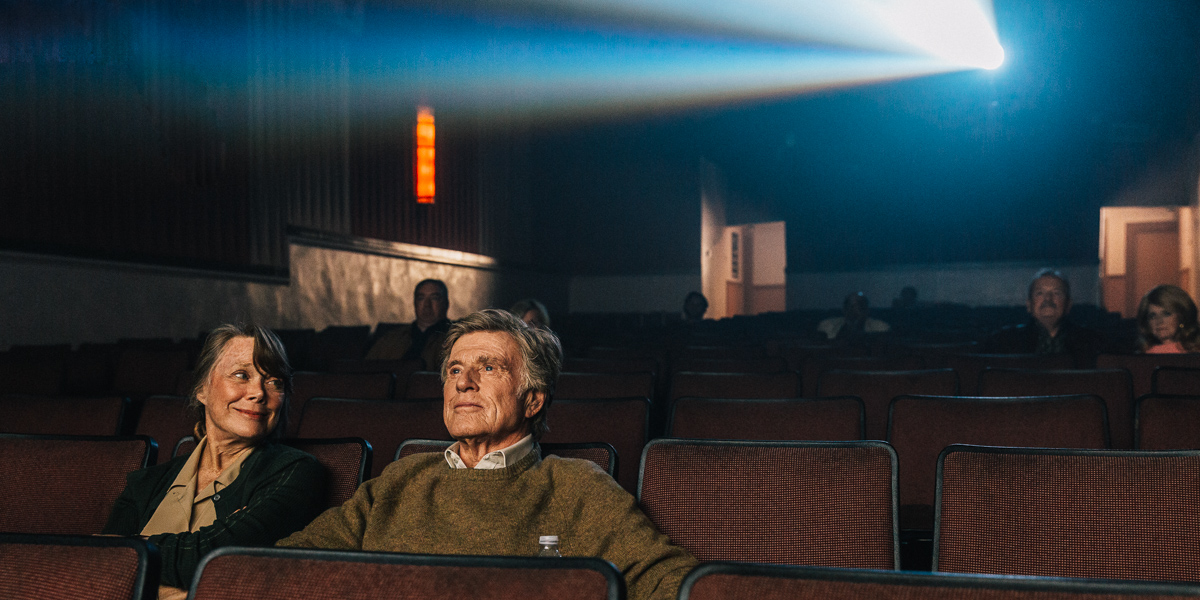
Billed, fittingly, as the final performance by Robert Redford, The Old Man & The Gun feels like an appropriate swan song for the iconic actor. Redford plays Forrest Tucker, a man in his 70s who catches the attention of local authorities in Texas during the 1980s when he and two other elderly men take part in a string of bank robberies around the country.

Joining Redford is Danny Glover and Tom Waits with Casey Affleck, Tika Sumpter and Sissy Spacek rounding out the cast — the latter playing an adorable love interest of Forrest’s.

Writer/director David Lowery has a pencence for cops and robbers, going back to Ain’t Them Bodies Saints and even elements of Pete’s Dragon, and this seems to be his most crowd-pleasing and full expression of that genre. Redford slides into the role of Forrest Tucker, imbuing him with the charm and class that all but erodes the age and transports you to The Sting, Butch Cassidy and the Sundance Kid and The Great Gatsby. He’s wily, sly and as many of the bank clerks remark to John Hunt (Affleck), the cop trying to chase Forrest down, he throws out a smile to make it a little better.

This allows the film to settle into a cozy Americana vibe that’ll go down easy in the autumn months as prestige and late-blooming studio films flood the theaters. Much like its main character, The Old Man & the Gun takes its time getting places, lingering on the conversations between Forrest and Jewel (Spacek) or Teddy (Glover) and Waller (Waits) to add some character and personality to the ride.

Naturally, it all has to come crashing down, but Lowery steers it well enough to all go with the same leisurely flow. Nothing rushed or pushed to force our hands, just a calm sail of a movie that is always a welcome reprise when we want to be reminded of the power of a classic movie star.

And if this is his final curtain call, Redford sails off in fashion.


2018 TIFF Individual Reviews
Comment
firstman_03.jpg

First Man (2018) by Damien Chazelle

September 25, 2018

Review by Zach Dennis

Before I begin with First Man, no, Neil Armstrong doesn’t use the power of jazz to reach the moon.

Upon announcing that this would be his follow-up to La La Land, I was skeptical of director Damien Chazelle going this route following the aforementioned movie and Whiplash as First Man reeked of Oscar desperation — something the director didn’t need since he had just won a best director award from the Academy — not to mention it felt like an unambitious project for a generally ambitious director.

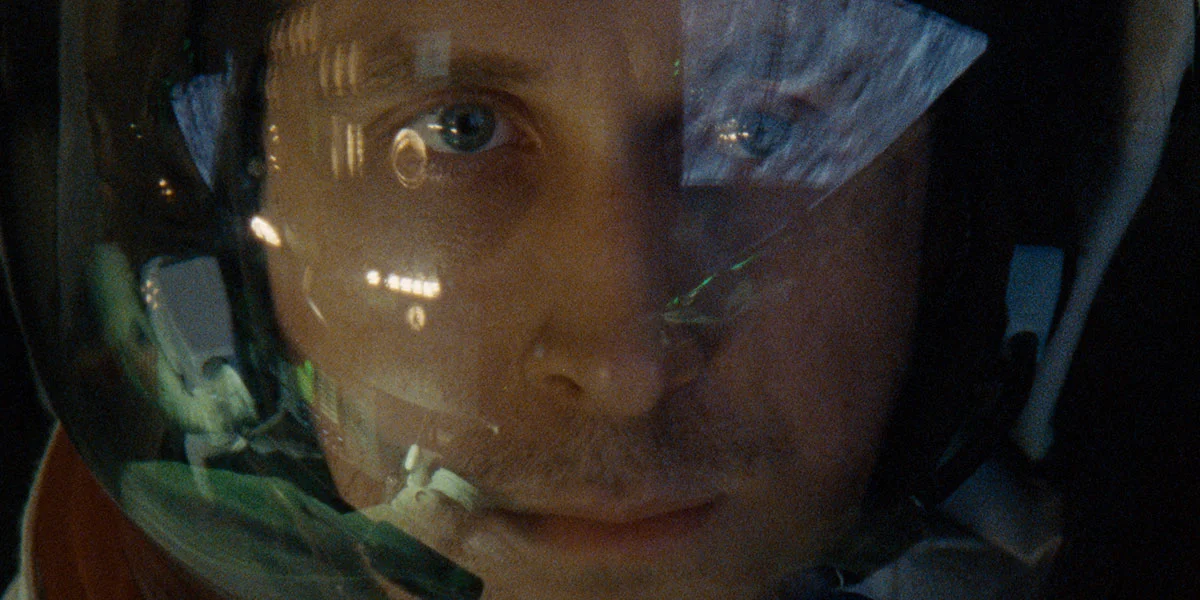
The actual movie didn’t change my mind much. As you can surmise, First Man follows Armstrong (Ryan Gosling) as works his way up from engineer to lead astronaut on the Apollo 11 flight where he became the first person to walk on the moon on July 20, 1969. Rounding out the cast is Claire Foy as Armstrong’s wife, Janet, Jason Clarke as fellow astronaut Edward Higgins White and Corey Stoll as Buzz Aldrin.

Josh Singer, most recent known for his work on Spotlight, wrote the script and he approaches the story with a relatively workmanlike vigor that would seem to gel with Chazelle’s fascination with the process of becoming “great.” Practice, repetition, failure and doubt mold the main characters of Chazelle’s previous features, and it is no different here. Gosling plays Armstrong with a detachment that is supposed to reveal both dedication and focus, but feels more aloof — and honestly, kind of just rude.

Even more at battle are Chazelle and Singer as the former tries to infuse the style and bravado that ensnared Whiplash and La La Land while the other just wants to tell the story in the most optimal way possible. This creates a tension that almost causes a remove from the audience as one moment, we are asked to focus on a minute point being expanded on prior to a mission and the other, lens flashes and kinetic direction whirl us into an almost fantastical space as Armstrong inches closer and closer to his goal.

Chazelle finally overcomes this by the movie’s final moments as the arrival on the moon (much to the sagrign of conservative politicians) focuses on the pure amazement and wonder of walking on the moon rather than hollow patriotism. I saw one Letterboxd user remark that Armstrong’s stringent personality for the majority of the movie is because he is a man raised to conceal emotions and restrain from expressing anything, only to be thrust into this situation no human has ever had to encounter before and is overcome by the sheer majesty of space and being on the Moon.

It’s a nice thought, but not one that I totally buy even if I do find the moon sequence to be worth the price of admission. Overall though, it feels like a sideways move for Chazelle and one that will surely appeal to those looking for promotion of the moments when the United States actually tried to lead the way in innovation rather than wallow in nostalgia and self-aggrandising nationalism.

It did piss off Marco Rubio so we have to love it for something.

While this movie will surely generate crowd praise, I think this next one could be a sleeper hit on the indie scene due to its stars and the charm of its narrative.


2018 TIFF Individual Reviews
Comment
maya_02.jpg

Maya (2018) by Mia Hansen-Løve

September 25, 2018

Review by Zach Dennis

Reversing back into more lyrical, poetic cinema following Climax, the latest feature by a director I’ve come to admire a lot, Mia Hansen-Løve, grew over time into a disappointment as it seems Maya is more of an attempt to evoke the march of time so indicative of her other features, but with less success.

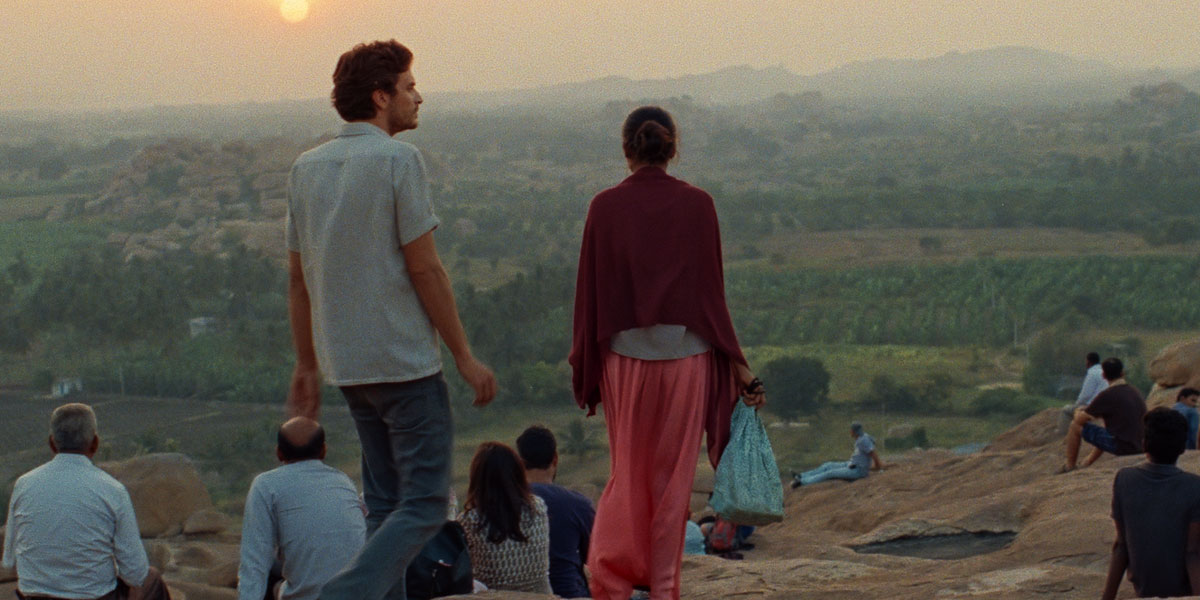
The film follows Gabriel (Roman Kolinka), a French war journalist who is returning home after being captured and held in Syria during an assignment. He and his colleague are returned while another is being still held prisoner, and the ordeal leads Gabriel to escape from life and work for a bit by visiting his godfather in India, where he owns a hotel.

Once there, Gabriel meets the titular Maya (Aarshi Banerjee), the floating young daughter of his godfather, Monty (Pathy Aiyar), who seems to command the ethereal in-between space that we’ve seen many times before with Hansen-Løve. Maya is content with this liminal lifestyle, forgoing high school for work closer to home and spending a spell in London before again returning back. Maya has no rush and this laissez-faire approach attracts Gabriel — someone clearly trying to slow down.

There’s turbulent waters that Hansen-Løve must navigate as the story of a white person running away to India to “find themselves” is too pache to be cute anymore. I would say she maneuvers this rather well, less predicated his journey on an escape into the “unknown exotic India” and more of a return to a place he’s familiar with, masking his character with a history and past in the country (his mother lives there full-time now) rather than some spiritual safari.

But in the end, the appeal of Hansen-Løve’s work is her ability to capture the rhythm of time and its eroding force on the present moment, either bringing prosperity or dread. This isn’t the case for Maya, or better yet, it isn’t executed as well in Maya as the culmination of their eventual romantic connection and quick degradation of the fling never packed the emotional resonance it wanted when Gabriel ended up returning to the hotel after many months since he and Maya shared a night together, and the two run into each other — he still fostering the same attitude as before and her carrying a much more astute and mature posture than her supposed wide-eyed infatuation from earlier

The change doesn’t feel earned and it feels a little like a disservice to Maya as a character. Banerjee imbues her with curiosity and confidence that makes falling into this very generic romantic foible frustrating.

In her previous two features — Eden and Things to Come — the passing of time forced change and decisions by her main characters and it seemed absent here. Gabriel got his getaway that he wanted and Maya seems very much in the same place. It doesn’t have the hopeful romanticism of a Brief Encounter or Before Sunrise, and while it does share similarities to Cold War, which I talked about earlier, both of these seem to leave the building of the characters as one behind for other ambitions.

This was a bummer as Hansen-Løve continues to be one of my anticipated directors, but this trend would continue as another recent favorite of mine left me cold with his latest output as well.


2018 TIFF Individual Reviews
Comment
climax_still_0HERO.jpg

Climax (2018) by Gaspar Noé

September 25, 2018

Review by Zach Dennis

I won’t pretend to be some expert on Gaspar Noé prior to this movie, mainly because this is my first of his movie I’ve seen. Starting with the title, you’re provoked as Climax holds much more punch than Enter the Void or Love as, in this sense, it works as a verb — a way you could describe the entire film also.

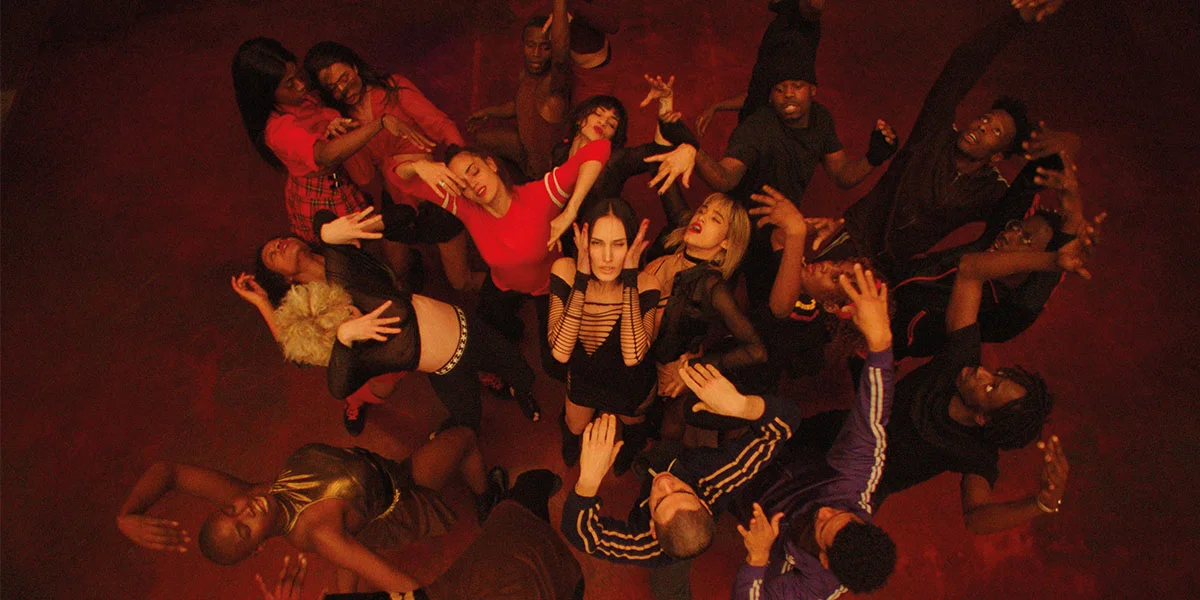
Taking place in an abandoned warehouse in Berlin in the 1990s, Climax follows a troupe of dancers who have been rehearsing for a show over the course of three days and are celebrating the end of rehearsals with a party. The party opens with a run through of the performance, giving a sense of the use of bodies and movement, which will become key to understanding and immersing yourself in the film.

Noe seems to be tapping into the primal, undefined stages of cinema as the mystical flow of the dancing evokes images of the Lumiere’s Serpentine Woman or some of the characters of Mélies. As the night moves along, everyone realizes that something is happening to them (allegedly someone spiked the punch) and the descent into hell begins.

This is probably the best way to describe Climax as less of a traditional narrative exercise and more of a use of body and movement as character. We are introduced to each of the dance troupe members at the beginning of the film in documentary interview style as they answer questions about themselves, their sex lives, their vices and more, but that doesn’t tell us anything because once the music begins and movement takes over, their true selves are revealed.

Many have dubbed this as a dance party orgy where it begins with dance and ends with everyone have sex with one another, but that’s not necessarily the case. While many characters either segway off for intercourse, most of the actual innuendo is in the lead-up conversation or just in the suggestion.

The true eroticism comes from the infatuation with the body that Noé ramps up, watching as people contort, move and pulse in a way that seems inhuman. Climax offers no recourse or answer to the chaos, it just asks you to try to survive — something members of the audience in my screening failed to do.


TIFF-2018-Logo-1024x540.jpg
2018 Toronto International Film Festival - Reviews
Tags lgbt
Comment
ifbealestreetcouldtalk_01.jpg

If Beale Street Could Talk (2018) by Barry Jenkins

September 25, 2018

Review by Zach Dennis

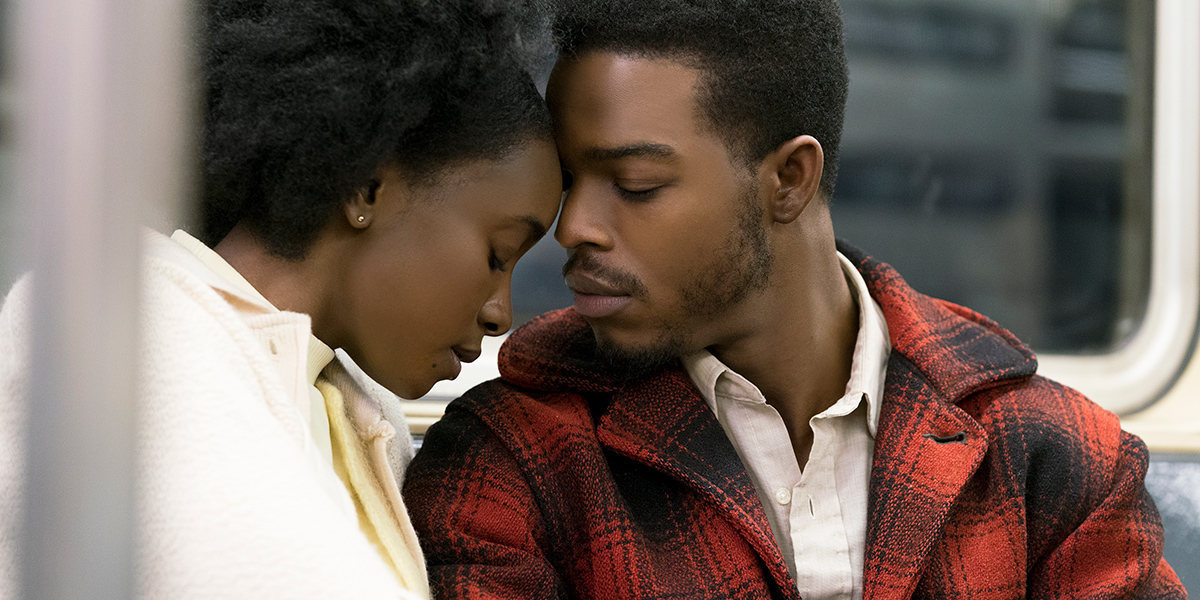
It is such a categorical impossibility to attempt to explain the affecting power of not only If Beale Street Could Talk, but the work of Barry Jenkins. Following up Moonlight, a movie I’ll touch on in a second, Jenkins works from a novel by James Baldwin, in which he tells the story of Tish (Kiki Layne) and Fonny (Stephan James), a couple who expected to be focused on their upcoming nuptials but instead become imbued in a fight to keep Fonny from entering prison for the foreseeable future after he is falsely accused of raping a woman.

Jenkins weaves this story with the courtship of Tish and Fonny, which highlights the animosity between the two families prior to the incarceration and how each are viewed in the eyes of the parents of the other.

It is easy to link Beale Street — both due to Jenkins’ name and the soothing aesthetic he paints the world in — but interlocking the two would be doing a disservice to them both. Make no mistake, they do connect in many ways, as I mentioned before, Jenkins and cinematographer James Laxton coat the film is warm colors — masking it almost like an Edward Hopper painting — but with the comfort and romance of a work by Wong Kar-wai or Douglas Sirk.

Between the swoon of Tish and Fonny’s courtship is the reality of being black in America, a reality deeply interrogated in Moonlight, but taken in a much more subtle and deft way by Jenkins for Beale Street. In one scene, Fonny sits down with his friend, Daniel (Brian Tyree Henry), a moment that unbeknownst to him would lead to his lock-up, and discusses the horror of being imprisoned. Daniel spins tales of the loss of agency he had in jail, how white men could do whatever they wanted to him because he was helpless and incarcerated.

The world of Beale Street lacks the pronounced, “Oscar moments” that someone would expect from a movie, penned from a James Baldwin story, tackling race in 2018, but that subtlety speaks volumes. We see the egregious racism on a day to day basis as the constant flow of the Internet and social media has allowed us the window into this world more readily than ever before, but that leap in technology doesn’t always give us a lens to the smaller moments — the ones that almost sting more.

As I said in a tweet following the movie, nothing in Beale Street is resolved but everything is felt. The emotions are felt, the heartbreaks are felt and the unattainable edges are left unreached. It could be described as depressing to see this, but Jenkins handles it in such an empathetic and poetic sense that there has to be some glimmer of hope at the end...there just must be.


2018 TIFF Individual Reviews
Comment
burning_03.jpg

Burning (2018) by Lee Chang-dong

September 25, 2018

Review by Zach Dennis

This movie is so frustrating as I want to dig deep into it, but that shatters the facade!

Burning, which marks writer/director Lee Chang-dong’s return to movies after an eight year absence, is so fickle and unassuming that — for me at least — its mastery passed over me for the following hours after watching it. Coming from a Haruki Murakami short story titled “Barn Burning,” the story follows Lee Jong-su (Ah-In Yoo), who is delivering a package when he chances upon Shin Hae-mi (Jong-seo Jeon), a friend and neighbor from his past who he fails to initially recognize. The two go out for drinks later and Hae-mi asks Jong-su if he’ll watch her cat while she’s out of the country on a trip to Africa.

Smitten with finding his friend, who he immediately becomes attracted to, he agrees and the two end up sleeping together on the day Jong-su comes by to learn about his duties.

Time passes — all the while without Jong-su actually seeing her cat while watching it — and Hae-mi returns on the arm of the devilishly suave and charming Ben (Steven Yeun). Jong-su is quickly suspicious of Ben, who feels like the embodiment of wealth and privilege, both in the way he speaks of life (“I don’t work, I play.”) and his mellow, satisfied demeanor towards everything.

Yeun is exceptional, playing Ben with echoes of Patrick Bateman in American Psycho and Danny Ocean in Ocean’s 11. Nothing tangibly says that something is off about him, but his performance enforces Jong-su’s anxiety and distrust of his relationship with Hae-mi.

The beauty of Burning is in its subtlety. It would be difficult to say it unravels in a Hitchcockian-sense as the cues feel even more minimal than one would expect but the underpinning flame elevating the plot feels almost opaque and non-existent until the film’s final moments.

In a Q&A following the film, Lee Chang-dong said that the current culture inspired him to take Murakami’s story and reconfigure the plot to create a longer narrative, and I can see why modern life would influence Jong-su’s journey.

Overall, Jong-su is an incredibly unassuming and absent-minded character. A lack of recognition on the space around him culminates in a lack of understanding of the film’s third act events as he tries to make sense of where everything led him.

Digging further into this point would unbridle the majesty of this movie so I’ll leave it there, but there’s something incredible about the way Lee Chang-dong allows the narrative to slowly (and excuse this pun) burn for such a long runtime before ending in an almost ambitious and unexplainable way.

Like I said before, the film left me thinking for a long time and the more and more I did ruminate on how it worked, the more I came to greatly appreciate it. This is probably one that people might miss as it won’t be a flashy awards player, but it is in the conversation for best of the year and I hope more people see it so we can have a longer discussion on what it's saying.


2018 TIFF Individual Reviews
Comment
americandharma_0HERO.jpg

American Dharma (2018) by Errol Morris

September 25, 2018

Review by Andrew Swafford

In our final TIFF podcast diary, I spent probably-too-much time waffling on about the controversy surrounding American Dharma, Errol Morris’s portrait of alt-right political mover Steve Bannon. Should or shouldn’t it exist? Can a depiction of fascist ideology ever be truly subversive or can’t it? Should Morris have been tougher on Bannon or not? These are all questions I can’t answer with certainty. So I’ll cut to the chase: I thought American Dharma was powerful and nerve-rattling. I think people should see it.

The key to the film, for me, was in Morris’s intro, when he described the film as “a horror movie.” He wasn’t wrong: I felt on edge constantly while watching American Dharma. There’s something intimidating and unsettling about looking up at a gigantic projection of Bannon, confident and calculated and not obviously malicious. Morris photographs him from a slight distance, never quite looking the man in the eye with his camera as he did in his earlier documentaries about disgraced right-wingers, The Fog of War (Robert McNamara) and The Unknown Known (Donald Rumsfeld). The setting, however, seems to be the inside of Bannon’s head: a reconstruction of a military outpost from 12 O’Clock High, one of Bannon’s favorite films and a subject of much discussion throughout American Dharma. Bannon explains his role as Breitbart chairman and Trump strategist like a warlord explaining how to conduct a coup: it is less concerned with ethics and moreso with efficacy.

Bannon understands our distractible, weaponizable media landscape intimately, a fact most apparent when he discusses  the oft-untapped voting potential of toxic comment sections and widespread fodder-for-radicalization to be found on MMORPG forums. Bannon views politics not as a public servant, but as a game theorist, most concerned with the question of how to stack the odds in his team’s favor. His team, of course, is a particularly apocalyptic brand of white nationalism--but Bannon would never call himself a white nationalist. As Natalie Wynn has pointed out, Bannon’s kind are too canny at manipulating optics to allow their cover to be blown with a phrase like this. Instead, Bannon renounces all labels (“Let them call you racist,” he famously said), not allowing himself to be distracted from his work: undermining the very fabric of multiculturalism in America, under the guise of eliminating economic inequality (for white people) and therefore preventing violent revolution. He may be out of a job in the white house, but his work is still being done--by the current Breitbart team carrying on his legacy, by Stephen Miller, by Donald Trump, etc--and I think it would behoove those who detest his ideology to study up on Bannon’s war tactics if we don’t want the American people to be duped yet again.

This is key: like Morris’s other interview docs, American Dharma is not a debate. Despite this, some of the movie’smost vocal critics have pointed the finger at Morris for not “challenging” Bannon enough, not “pushing back” against his obvious falsehoods and fallacies. I see this criticism as symptomatic of a culture that values political pwnage: we obsessively watch and share YouTube videos of talking heads we like “totally DESTROYING” talking heads we hate, thinking that this accomplishes something. I have two lines of questioning for these critics: (1) Do you think Morris has it within his power to change Bannon’s mind? Or even the minds of those who might be inclined to sympathize with him? (2) Do you think that if Dinesh D’Souza made an interview documentary in which he “totally DESTROYS” Bernie Sanders or Alexandria Ocasio-Cortez, you would watch it? Of course not, and of course you wouldn’t. Transparent propagandizing--even in the form of “civilized debate”--is too easily dismissed by the opposite side of the political spectrum. I think what American Dharma offers is far more pragmatically valuable: an opportunity to study the enemy; an opportunity to understand evil and better prepare ourselves for doing battle with it again--because Bannon and his kind still remain undefeated where it counts.


2018 TIFF Individual Reviews
Comment
everybodyknows_USEFORANNOUNCEMENT.jpg

Everybody Knows (2018) by Asghar Farhadi

September 25, 2018

Review by Lydia Creech

LYDIA: It seemed appropriate for me to start and end my time at TIFF with surprise thrillers. Going in, I didn’t know much more than the name of the director and stars. I expected it to be a well-rounded family drama, like the other Farhadi films I’d seen. It was, but I was surprised by the central kidnapping plot and atmosphere of family secrecy (poorly kept, as it turns out).

Penelope Cruz and Javier Bardem play former, though amicably ended, lovers. She has come from out of town with her children to attend a wedding. However, during the celebration, her daughter is kidnapped, and suddenly Cruz’s character finds that she has to rely on her old boyfriend to help manage the rescue/ransom efforts. Unfortunately, in the process, long held familial resentments start to bubble to the surface.

The telling was twisty and Cruz and Bardem have great chemistry (they should; they’re married). After awhile, I could kind of see where the arc of the story was going, but it was well done. It was interesting to see Farhadi do something that slots more squarely into genre filmmaking. I don’t know if it will be up for any Oscars this year (doubtful?), but hopefully Farhadi is allowed to attend the ceremony if it does.


2018 TIFF Individual Reviews
Comment
180721_3765699_Jamie_Lee_Curtis_on_Laurie_Strode_s_Journey__1500x844_1282604611632.jpg

Halloween (2018) by David Gordon Green

September 25, 2018

Review by Lydia Creech, Andrew Swafford and Zach Dennis

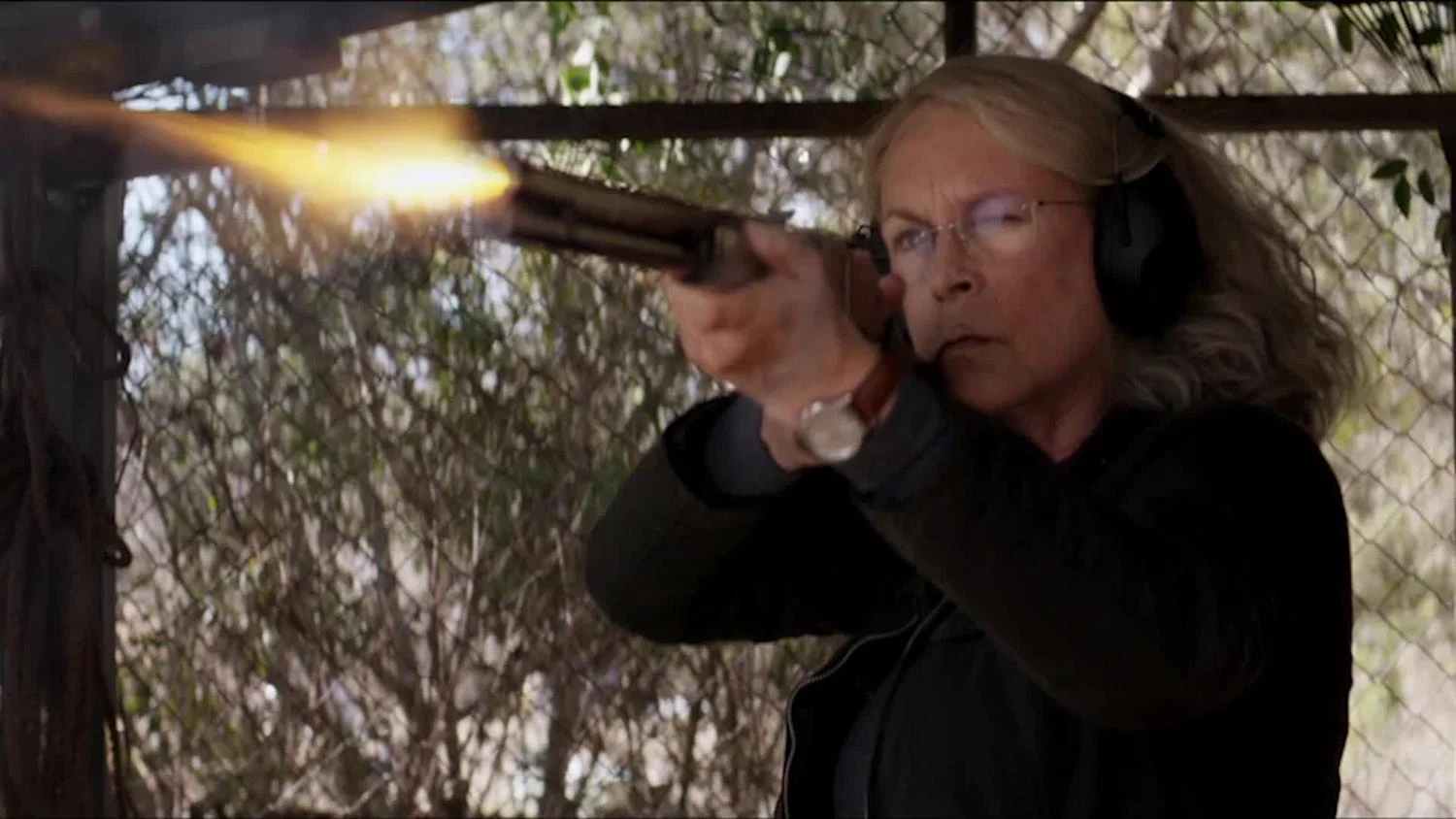
LYDIA: This is one of the Midnight Madness movies that everybody seemed to be anticipating the most (including me!). This is a direct sequel to John Carpenter’s 1978 original--basically dismissing every other sequel with one line of dialogue. It picks up 40 years after to find Michael Myers locked up in a mental institution, but he still haunts Laurie Strode, the original Final Girl. She’s built her life around the trauma of that night, which has had ripple down effects to her own daughter and granddaughter (transgenerational trauma -- see also: Hereditary).

To me, exploring the PTSD of the Final Girl(s) sounded like a excellent place for such an iconic horror franchise to go (I always think about Sally and what the rest of her life was like after she escapes Leatherface in the back of a pickup in Texas Chainsaw Massacre). While this informs part of what new Halloween is doing, it’s also very much responding to other films in the slasher genre that were responding to old Halloween. The word I used on the podcast diary was “clever,” and I still am a little ambivalent about those aspects.

ZACH: I was both happy and disappointed by the PTSD of the Final Girl(s) concept that you mentioned, Lydia. The final act of the movie is this multi-generational assault against the figure that has haunted their family and caused so much harm for many years, but leading up to it, there are times when it attempts to play like the original 1978 movie and times when it wants to almost do its own thing and follow a more traditional modern horror route. The latter yields some decent results, and the addition of Danny McBride as a screenwriter allows these small moments of humor that were actually very well done.

But at the end of the day, I almost felt like Laurie wasn’t used as much as she should have been? Like we are introduced to Michael all these years later and the same to her, but it never felt like she was given a center stage approach. What did you think, Andrew?

ANDREW: I definitely agree that Laurie is sidelined for too much of the film--it really comes alive in the final act when the movie gets to be more of a cat and mouse game between her and Meyers in Laurie’s booby-trapped house. From the first trailer, I was excited about the idea of a new slasher narrative butting up against a rape-revenge-style narrative driven by Laurie and her many newfound guns (there are so many guns in this movie, y’all, and they all follow the rules of my video essay. It’s almost too much.) But unfortunately, I felt like we got too little too late in that department.

And to go back to your thought about that pick-up truck from Texas Chain Saw, Lydia, I thought it was a interesting detail that we see some girls get in a very similar truck at the end of the new Halloween. The movie seems to leave it’s theme of trauma fairly ambiguous and maybe even underexplored: we see how a person can be negatively affected by never feeling safe (Laurie) and how a person can be equally negatively affected by having too many safety measures put upon them (Judy Greer’s character--Laurie’s daughter). It ends up advocating for some sort of happy medium that just is just a little too vague to be interesting? Just watch Martyrs, please.

To come back to Zach’s point about the addition of Danny McBride as a screenwriter...I don’t think any of us can say for sure where the film’s sense of humor stems from, but this is certainly a movie that goes out of its way to be funny in a way that the original Halloween didn’t. So much of the original movie’s power comes from the unknowability of Meyers’s evil, and now we kind of know too much--so the movie has to be a little knowing in order to be compelling. In that way, it felt to me like a sequel to Scream just as much as it did the original Halloween; it feels an obligation to point out the tropes it’s rehashing as it’s rehashing them, but with very little of Scream’s critical eye. More of a “I understood that reference!” approach to genre traditionalism.

I will say that this is a very handsomely lit movie--I appreciated how eerie it looked, using a lot of movie-world objects like headlights and porchlights to light the scenes, often cutting through fog in the process. But that classically beautiful mode often felt like it was clashing with the cutting jokiness of the script. Felt a bit hollow in that respect. It totally works and I had a good time, but I felt a little underwhelmed when it was over?

LYDIA: Exactly, and I think that is what left me cold about new Halloween’s inability to play straight. I guess I don’t enjoy feeling like I’m conspiring with the movie (or being pandered to). I don’t think it’s quite fair to say the original Halloween isn’t funny (Carpenter has a twisted sense of humor), but it had to work harder to surprise the audience with moments of levity (important in horror movies!), rather than fall back on a pointed reference. Regarding rehashing without critiquing, Myers kills more people in the first sequence around the neighborhood (a floating camera over the shoulder instead of first-person Panaglide) than the entire original, and I got the sense I was supposed to be into it?

ANDREW: The midnight movie crowd certainly was, and like I explained in the podcast, it felt like seeing the theory laid out in Carol Clover’s Men, Women and Chainsaws made flesh before our eyes. The audience roots for both teams: first the killer, then the victim. Throwing in a lot of winks makes people not question that equation too much, I guess.


2018 TIFF Individual Reviews
Comment
walled-unwalled_02.jpg

Wavelengths 2: Another Brick in the Wall (2018) by Various Filmmakers

September 25, 2018

Review by Zach Dennis and Andrew Swafford

ANDREW: Each of the Wavelengths avant-garde short programs had some sort of unifying theme--in this case, walls, spaces, and enclosures.

The first short in this program, Ada Kaleh, establishes the theme immediately: we see extreme close-ups on a blue wall, it’s paint chipped away and the exposed brown stone appearing (perhaps incidentally) to look like continents. The wall is the whole world, and the rest of the short treats the inside of the building as such. It’s an apartment building shared by a group of young bohemian friends, and the camera slowly circles 360-degrees to capture them in moments of repose (much like Chantal Ackerman’s classic short La Chambre, for those familiar). We don’t get a good look at them, but we examine the space they inhabit between these walls, which speak plenty for themselves. It’s a gorgeous, languid moment in time, encapsulated by space.

As with any shorts program, certain shorts resonated with me more than others, and I get the vibe that the next two--The Glass Note and mumok kino--didn’t really click for either of us. Anything to say about these first three before we jump into one of your favorites, Zach?

ZACH: I echo your praise of Ada Kaleh. It took me awhile to become absorbed in what Helena Whittmann was trying to present. There’s something soothing and kind of exhilarating about just exploring the space these people inhabit. It’s like...we don’t need to talk with them or engage with them in a more traditional narrative sense. By the end, you feel like you know them and what they’re about — all without hearing a word from them. It was like extreme people-watching and maybe I’m too much of a peeping tom. Lock me up.

I agree on the other two. The Glass Note was, to me, the epitome of “artsy-fartsy avant-garde short films” and I kind of tuned out quickly until the Terminator-esque animation of a chair appears near the end.

But, I very much would like to talk about Trees Down Here, which comes from filmmaker Ben Rivers, and captures these interactions between the nature and architecture on the campus of Churchill College at the University of Cambridge. The owl is the true star, but this harmony between these man-made constructed fixtures and the beings of nature was something inspiring. What did you think?

treesdownhere_03.jpg

ANDREW: I enjoyed Trees Down Here quite a bit, especially the focus on the short’s two animal actors--the snake and the owl, which critic Michael Sicinski insightfully called “Two classical emblems of knowledge, the benevolent wisdom of the oracle and the decadent lure of the forbidden.” They kind of watch over this uninhabited human space, which simultaneously seems under construction (we see the blueprints, for example) and abandoned, only to be reclaimed by nature.

I thought that short paired really well with the next one, which was one of my favorites: 1986 Summer by Toshio Matsumoto. This was a rediscovered lost film, and I watched a few of Matsumoto’s other films to prep for it (notably Atman, which shares a lot of stylistic qualities with 1986 Summer). Matsumoto is a pretty wild editor, and cuts back and forth between two different moving images so fast as to create a strobe effect and a superimposition at the same time. In the case of 1986 Summer, he’s splicing together images of sunlight coming through branches with images of a brick (school?) building. And for the latter, he’s always zooming out--looping the same hard zoom over and over--which makes for a disorienting effect, like you’re being magnetically repelled from the building and off into the trees. As I said on our third podcast diary, I think the quality that I admire most in avant-garde shorts is their capacity to evoke singular sensations that narrative film can’t quite replicate--and 1986 Summer certainly did that.

ZACH: 1986 Summer is very much about enveloping you into this aura. While some of these passed over me, this one was so effective because of the way Matsumoto uses the superimposition and zoom techniques that you mentioned, but also paired it with the sound of these figures that we are seeing — making it seem almost overpowering in its sensory overload. Kinda appealing.

The next two shorts — Words, Planets and The Invisible Cinema 3 — didn’t have much of an impact on me. Do you have anything to say about them, Andrew?

ANDREW: I don’t, sorry.

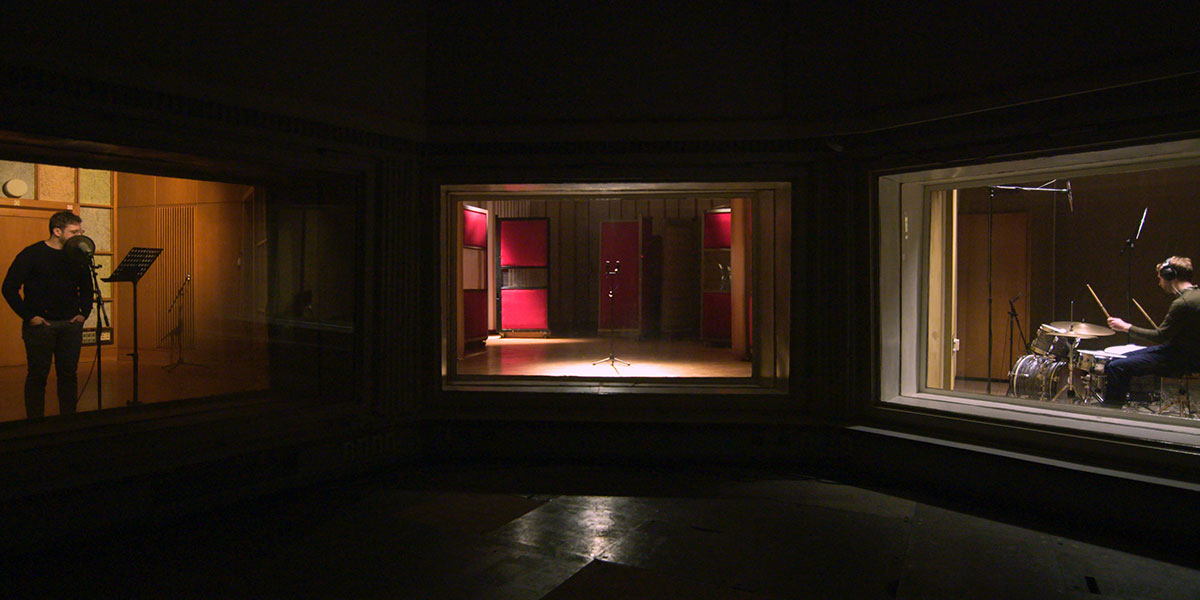
ZACH: Then I think this is a good time to move to one of my favorites of the entire festival — Lawrence Abu Hamdan’s Walled Unwalled. More of a documentary than what most people would associated as avant-garde cinema, the film features Hamdan in the booths of Berlin’s FunkHaus Studios, which were the former GDR’s state radio’s home, with various people moving among the booths and a drummer giving a steady beat throughout the film.

Hamdan tells a series of stories — beginning first with a story of a man who was growing weed in his house and had a case go all the way up to the Supreme Court because when authorities attempted to arrest him at his house, there was a disagreement over whether smelling the weed from outside the house was public or private due to the smell emanating from inside his private space. The second story is about Oscar Pistorius, who was on trial for murder, and details the neighbor’s claims that screams could be heard from the other side of the walls when gunshots rang out. The defense stated that the defendant could not hear screaming through the concrete walls, and was therefore unable to determine if an intruder was present in his home when he killed his girlfriend through the bathroom door with a shotgun.

The third and final story is about a specialized prison in Syria, which was designed so that the prisoners going in had zero idea of the layout of the building or how many other prisoners were inside. Once there, they were blindfolded and taken to their cell, which were specifically designed to allow sound to reverberate off the walls — bouncing all around the prison — and giving the allusion that you were the next victim of torture. As prisoners were tortured by guards, the anxiety of hearing what sounded like the act being done in the next room caused a dramatic psychological toll on the men in there.

The way the stories are woven together shows just how powerful walls and spaces, and how they’re used, can have effects on the people near them, which is something you never think about. We are surrounded by different types of walls and confined spaces on a daily basis but never take into account what that necessarily means.

ANDREW: I agree that this was a major highlight! I honestly would watch a feature from these guys along the same lines--oral storytelling in an interesting location that uses the space well. Among my favorite details of the film were the shots in which we’re looking at the storyteller’s face through glass, but a projector on our side of the glass is putting transparent words and images over his face, which to be highlighting the vague sense of permeability that the walls in the stories had.

Overall, I found this shorts program to be a bit spottier than Earth, Wind, and Fire--as evidenced by the significant number of films that we didn’t have much to say about--but the hits were really strong!

ZACH: I agree with that. I really enjoyed how Earth, Wind, and Fire all came together, and felt that this block was a little more, as you put it, spotty. Now, there were a couple highlights as we discussed so it wasn’t a total loss and I came away, overall, really enjoying the Wavelengths program as a whole (from what I saw) and would prioritize going to a block or two if we get to go to Toronto again. I blame Darren….and Nathan.


2018 TIFF Individual Reviews
Comment
firecrackers_0HERO.jpg

Firecrackers (2018) by Jasmin Mozaffari

September 25, 2018

Review by Lydia Creech

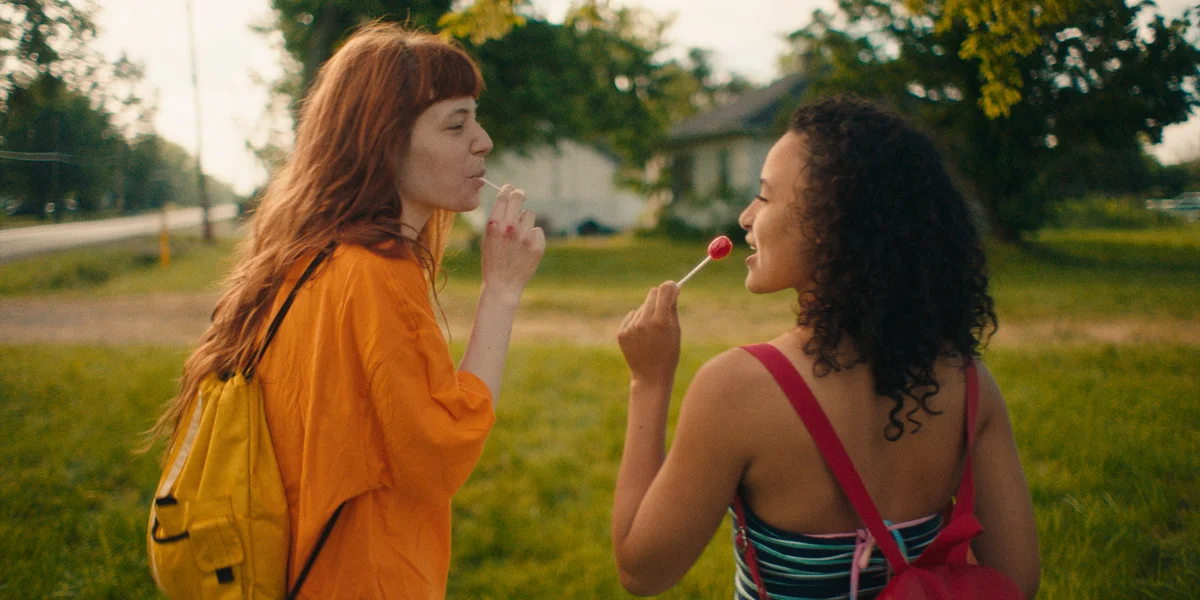
LYDIA: This was the last film of the festival that I had sought out specifically because it is directed by a woman. The story is about two best friends who live in an impoverished, rural town, and they dream about escaping together for a new life in the Big City (NYC, specifically). They don’t fit in--Lou is bullied for being queer, and Chantal is a mixed girl--and moreover they have a hard time for not wanting to fit in. Unfortunately, the night before they leave, an encounter with Chantal’s abusive (ex?)boyfriend go wrong, which sets off a string of obstacles.

The thing I liked the most about this movie was how it gets at the way girl best friendships are weird. Lou and Chantal are incredibly close and have built a world that excludes other people. But when other people or their own problems--that they can’t share--intrude, it rattles everything, and they fight and get disappointed in the other. Lou seems a little bit in love with Chantal, and Chantal seems to judge Lou for not being more pleasant or less combative. Neither can figure out how to get out of their predicaments on their own, and the compromises they have to make feel that much more tragic for being painful reality checks.

In the end, I’m not sure how much of an uplifting picture it is (even if they do get away to The City, I was awfully concerned about how they would manage to live), but it was relatable and I was glad to have seen it.


2018 TIFF Individual Reviews
Comment
22july_01.jpg

22 July (2018) by Paul Greengrass

September 25, 2018

Review by Andrew Swafford, Lydia Creech and Zach Dennis

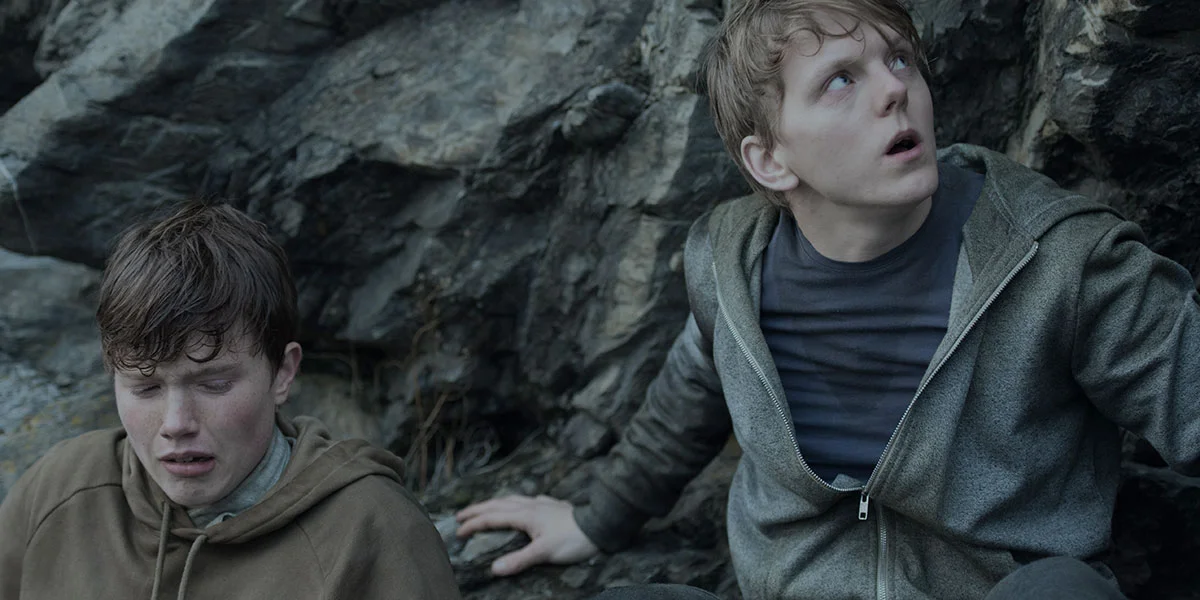
ZACH: Here is one that sparked a decent amount of discussion amongst the three of us. I was most curious to hear Andrew talk about it due to his recent video essay on guns in movies, but it also marked the return of director Paul Greengrass, who threads this line between more blockbuster fare with the Bourne movies — and even Green Zone to an extent (remember THAT movie?!?) — and docu-drama journalistic pieces such as United 93, which takes a real-life event and explores the tragedy and humanity within the event. This time with his latest film, 22 July, he focuses on the mass murder of 77 people (including 69 young people) by the hands of a right-wing terrorist in Norway on July 22, 2011. The event was the worst terrorist attack in the country’s history, and Greengrass begins by playing out the actual attack before using the remainder of the movie to examine what happens afterwards for the survivors and the terrorist, who is being held in prison ahead of trial.

I get what Greengrass is attempting to accomplish here, but this one really left me cold. I didn’t necessarily understand why we had to witness the actual attack, and as I pointed out in the podcast, why it needed to have the filmmaking technique that Greengrass employs in action sequences in his other movies, but I seemed to be, not in the minority, but not necessarily aligned with you all. What did you make of it, Lydia?

LYDIA: It feels like this is a movie that very badly wants to be Important. Greengrass clearly has a lot of different things on his mind, but the way they wound up being explored in the movie felt very confused and too light. There are several thematic threads about the uses of political violence or issues of free speech or how young men are radicalized online but none really get the time to be more than a passing mention. I guess the idea is to throw up many intersecting contemporary issues, but that’s leaving the audience to have too much to parse how they all fit together. As an exploration of far-right ideology, I don’t think Greengrass quite gets to the heart (?) of it.

ANDREW: I think I was a bit more sympathetic to this one than you guys were on the day of the premiere, but the beleaguered form of it definitely makes for an experience I’m not eager to revisit. I completely agree with Zach that the trademark Greengrass shakycam being constantly employed throughout the movie’s seemingly endless string of dialogue scenes is really wearying, and unnecessarily so. And I also agree with Lydia that this thing is definitely messy and could use major streamlining in the editing room--he wants to pursue every avenue of the shooting’s aftermath, and each individual throughline ends up underserved.

However, I was decently compelled while watching (but maybe that’s just my personal interest in the subject talking) and I did even find a few things to admire! One, as I laid out in our third podcast diary, is the film’s judicious insistence that this shooting--and others like it--was a product of ideology, not mental health. We always want to cry “mental health” when someone like Dylan Roof shoots up a church, conveniently ignoring his stated allegiance to white nationalism--or Elliot Roger and Mens Rights, or whatever else. The film also felt far less disingenuous in it’s handling of victimhood than Vox Lux did: these characters at least seemed to experience trauma (which Greengrass approximates with editing and non-diegetic sound), however underdeveloped it may be in the grand scheme of the film. A low bar, though, for sure.

ZACH: It’s true that the movie is more interested in going “this guy is a terrorist and it isn’t anything else” and I do respect that. I think I mentioned it in the podcast diary, but that should have been the focus of the movie rather than what seemed like Greengrass going through the motions of the events of the film. The psychological toll it took on the victims, and even the man who was tasked with being the terrorist’s lawyer, was extremely compelling. For instance, the main character is seriously injured during the attack and his brother gets away unscathed and seems to be living with this survivor’s guilt that is constantly hinted at but never actively engaged.

The main character also struggles with moving forward in life and carrying on but this seems more like a bit of plot momentum rather than an actual exploration into his psyche and what he must be thinking at all times. Greengrass offers PTSD glimpses but I would say that’s about it. I also would have like to engage more with this concept of modern terrorism in the vein of Dylan Roof, Nicolas Cruz and this terrorist here, Anders Behring Breivik. It just seems like Greengrass didn’t understand what was interesting about this story or what needed to be explored outside of the obvious points, but that was something that was probably covered extensively in the news coverage afterwards or the book this is based on.

Movies are a visual art and have the ability to engage psyche and the interiority of its characters. 22 July just never does that and it seems like a massive loss to ignore it.


2018 TIFF Individual Reviews
Comment
image-w1280.jpg

The Grand Bizarre (2018) by Jodie Mack

September 25, 2018

Review by Andrew Swafford

Before getting into The Grand Bizarre, I should note that this feature was paired with a 20-minute short film I really liked called Those Who Desire. It’s about Spanish competitive pigeon breeding? I thought it was really special. You can hear me talk about why on our third podcast diary.

The Grand Bizarre is a cyclone of images and ideas, presented in the form of avant-garde stop-motion animation. Filmmaker Jodie Mack tirelessly animates textiles, globes, mirrors, suitcases, books, and more, imagining that they have full and complex lives of their own outside of human utility--a different kind of internet of things. Rugs are stacked and unstacked at lightning speed; globes spin concurrently and smash into each other; information streams across the pages of books like data being processed through a supercomputer. And often, all these images are overlaid atop one another at once, as in the image above, a multi-layered stencil of papercraft that Jodie Mack referred to in her Q&A as an “information vortex.”

It’s easy to get lost in the interconnected synapse-firings of The Grand Bizarre, but on a fundamental level, Mack has made a movie about cultural exchange. Textiles, the material basis of much of Mack’s short form work, here serve as a primary case study: in the global marketplace, culturally-specific patterns and color combinations change hands so rapidly that the cultural origin of these patterns becomes invisible to us. A Mexican-style quilt can be bought at any neighborhood Hobby Lobby, but the only way one can call themselves Mexican is if their ancestors were colonized by the Spanish. From Mack’s perspective, seemingly any given cultural artifact is a product of an interconnected world constantly in dialogue (and business) with itself, hence the title (a pun on “Grand Bazaar”). Incessantly globetrotting with no permanence or linear trajectory, much of Mack’s film is shot along airport conveyor belts and on dockyards, with forklifts tetris-ing shipping containers moving in fast-forward. As only avant-garde cinema can, the film gives a sense of everything happening everywhere, right now, all the time.

60 full minutes of this sensation might sound overwhelming at best or exhausting at worst--your mileage may vary--but Mack underpins the film with a sense of rhythm not only through her editing style, but also her music. Just as her brilliant Pink Floyd homage Dusty Stacks of Mom was, The Grand Bizarre is driven by thumping beats, this time of the wonky EDM persuasion. The soundtrack is an incomprehensible assemblage of samples, granting loops of birdcalls and Skype sounds the same level of sonic importance as drums and keys. With about a dozen discreet tracks sprinkled throughout, I’d love the see the soundtrack released as a standalone album--a type of avant-garde Lemonade--but perhaps its fitting that it can’t be unstiched from the tangle of images making up The Grand Bizarre.

I’d be lying if I didn’t say parts of the film left me scratching my head, but just as often these were the parts that granted me lightbulb moments much later on. With The Grand Bizarre, Jodie Mack has truly made a galaxy-brain level film--and I hope it makes its way into this mess of an interconnected world soon.


2018 TIFF Individual Reviews
Comment
46190-monrovia__indiana_-_frederick_wiseman__film_still___3_.jpg

Monrovia, Indiana (2018) by Frederick Wiseman

September 25, 2018

Review by Lydia Creech

LYDIA: Ever since Wiseman came to my (graduate) alma mater for a film series showcasing his documentaries and a masterclass, I have been excited to follow his career. Not only does he keep picking subject matters close to my heart (I went to Bloomington, just south of Monrovia, for library school), but the way he approaches them is also surprising and insightful.

In his intro, he spoke of simply desiring to document a “small town” for his next project. This year at TIFF, there were several documentaries that dealt explicitly with current American politics and rise of Trump specifically, and I was wondering, for a small town in a county that voted 75% for Trump in 2016, if Wiseman would address that (and whether or not I wanted another film about it…).

However, it is not Wiseman’s way to be biased in favor of one point of view over another. The way he frames Monrovia is straightforward. He shows us the surrounding farm country and Main Street (the only street?) and all the buildings, and then moves inside each to show the workings. We sit in on town council meetings (lots of talk about a new housing development, and how that will change the town’s demographics…. hmmmm…..), or see how large farms are run, or listen to the regulars at the cafe gossip about their ailments. As always, he presents these things without judgement or commentary, leaving the audience to draw their own conclusions.

Some of the stuff he picks to show us (we should never forget that he edits down from hours and hours of raw footage) horrified me--an Evangelical wedding ceremony, a tail docking surgery at a veterinary clinic--but is very mundane and ordinary to the people who live in Monrovia. Other things you can tell Wiseman finds rather amusing--the squabbling councilmembers, the tacky, “humor” shirts on sale at the local fair (you can imagine the slogans on them), a mattress sale convention in the high school gym--and just by showcasing these things as worthy of documentary treatment, he makes them interesting.

I grew up in a small town (in Tennessee, but still), and so much of what went on in Monrovia felt familiar to me. I’m glad to have seen Wiseman turn his camera to the topic.


2018 TIFF Individual Reviews
Comment
A_STAR_IS_BORN_MUSTUSE.jpg

A Star is Born (2018) by Bradley Cooper

September 25, 2018

Review by Zach Dennis

Nothing surprised me more at the festival than my overwhelming enjoyment and appreciation of the latest of A Star is Born — this time directed by and starring Bradley Cooper alongside Lady Gaga. The film is widely uneven, featuring an electric first half that simmers into a tepid second half before a bittersweet, and almost melancholy, ending.

The story is much the same. Cooper plays washed up rock star, Jackson Maine, who comes upon Allie (Lady Gaga) while she is performing at a drag show. The two hit it off and enjoy another drink, a punch (not at each other) and a conversation outside a grocery store.

The courtship is effective because Cooper films it in an intimately public way that not only evokes the notion of this rock star coming across a “nobody” and hanging out with them (I would guess that they wouldn’t head to some world-renowned restaurant immediately) and plays into this persona of Jackson Maine as the working man’s star (A reason I saw him as a mix between Bruce Springsteen and Chris Cornell).

This working class mentality bleeds through the filmmaking as their first date feels timeless and leisurely — stopping the clock for awhile to just let these people live and breath rather than compete for quips and jokes in order to impress the other. Instead, it feels natural. Gaga (the true stand-out of the movie) has such a free-flowing rapport with Cooper, and this unpretentiousness evoked the relaxing nature of Jacques Tourneur, who slowed time because getting to know and feeling for the characters requires patience.

The patience doesn’t last too long as the magic fades and Allie earns a record deal and begins to have her star shot to the top. The rise doesn’t include Jackson as he begins to fade into the background and returns to the booze and drugs of his early years for consoling.

It would be easy to discredit this movie due to the fact that it is the fourth remake of this story that has not changed as much as you’d expect since 1937, but Cooper is smart to incorporate elements of modern stardom that weren’t relevant or even anticipated in any of the other iterations. Dedicating time to explore addiction and mental health feels especially prescient to Cornell or Chester Bennington, and even broadly with someone like Kate Moss or Anthony Bourdain. Not only that, but the institution of social media and its effects on culture at large is a giant enough shift to demand exploration even if the story lays too heavily on old tropes.

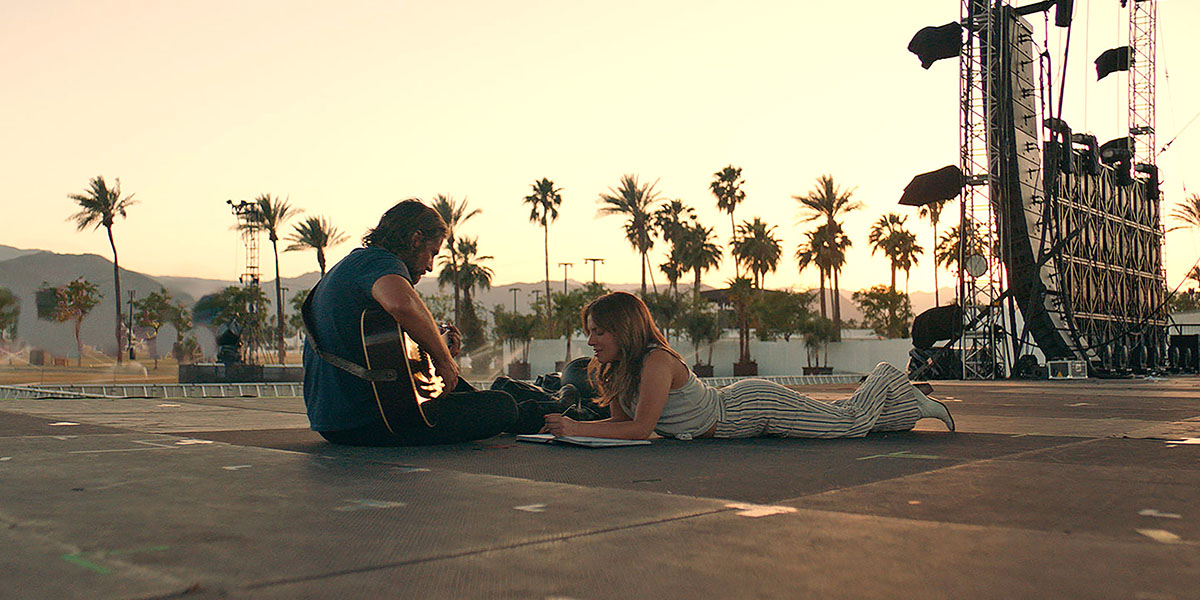
I’ll be interested to see where Cooper goes next as a director as he shows promise in this one, not only with the narrative but also technically. In multiple instances, he goes with a medium close-up shot on a face (usually Gaga) and holds long enough to allow the emotions to pour out. In one case, we watch as Allie enters the stage after Jackson asks her to sing her song at his gig. The camera holds on Gaga as she moves from backstage to the mic, and as the uncertainty turns to courage — creating a moment of pure movie bliss.

A Star is Born will naturally turn its attention to awards season as I’m sure it’ll be a heavy favorite, but I’m hoping people won’t just view it under that lens. I’m impressed with it and the amount Cooper was able to do with a first film.


2018 TIFF Individual Reviews
Comment
titoandthebirds_0MUSTUSE.jpg

Tito and the Birds (2018) by Gabriel Bitar, Gustavo Steinberg and André Catoto Dias

September 25, 2018

Review by Zach Dennis

It’s always wonderful to explore international animation and I applaud distributor GKIDS for being a great resource for that. I don’t have any inside knowledge on whether or not Tito and the Birds would be on their radar, but it certainly fits the bill of unique, vivid animation that they’ve become known for.

Coming from Brazil, Tito and the Birds follows the titled character who is upset with his inventor father’s leaving from their home and attempts to pick up his life-long work in an attempt to bring him back. Tito’s father left after his project — a machine designed to translate the speech of pigeons and other birds — backfired and caused an explosion that injured Tito.

The world is in chaos, so fuck it, let’s ask some birds what they think could solve the problems. Tito’s world doesn’t break too differently from ours. A fear-mongering television personality flaunts his influence on the public to incite hysteria for anything and everything, namely a new disease called “The Outbreak” that (stick with me, please) causes people to turn into rocks.

Naturally, the pigeons know what to do, but they’re, well, pigeons, so it wasn’t the immediate thought in most minds as to finding the solution of massive medical emergencies.

Tito and the Birds blends elements of Expressionism and Impressionism, fitting the hysteria over the disease. Many sequences pull and curl with the movement of the characters, and the jagged texture in sequences where people look to the television or their phone for updates from the talking head accentuate the paranoia being evoked.

There have been better international animated offerings than Tito, but it is another example of why continuing to offer them is essential and important as it allows for the medium to explore themes and limits that American animation wouldn’t dare to touch. After viewing The Front Runner earlier the same day, which also features much contemplation on the changing tides in media and how it has led to a re-branding of the output of news, but Tito and the Birds seems to attack the same issue more astutely.

In the age of Fox News, it isn’t too difficult to find a connection between the media personality in Tito and someone like Bill O’Reilly, Tucker Carlson or Alex Jones. Not only just the radicalism of this personality, but also how the influx of money influences his manipulation as later in the movie, we find him attempting to find a cure for the disease in order to make profits from it.

I’ll be curious to see if Tito and the Birds can find a way into the U.S. whether through GKIDS or another route, but it certainly joins the ranks of international animation breaking away from the American standard we’re used to seeing.


2018 TIFF Individual Reviews
Comment
Older Posts →

Powered by Squarespace